




A solid ¾-inch hardwood floor can typically be sanded and refinished 4–6 times over its life. Each full sanding removes only about 1/32–1/16 inch of wood, and with a refinish lasting 10–15 years, one oak floor can serve a Seattle home for a century. Engineered floors are a different story: their sandable wood is only as thick as the veneer on top — anywhere from zero sandings to two or three. Below: how to tell exactly how many sandings your floor has left.
“Can this floor take another sanding?” is one of the first things we check at almost every in-home estimate we do across King and Snohomish County. It matters more here than most places, because so much of our local housing stock — from pre-war Seattle Craftsman homes to 1990s Eastside builds — still has its original wood floors. The answer is rarely a guess: the floor itself tells you, if you know where to look. Here is how we read it.
The Three Numbers That Set the Limit
the usable wood above the tongue on a standard ¾-inch solid hardwood board. That quarter inch is your floor’s entire sanding budget for its whole life.
how much wood a proper full sanding removes. A careful refinisher takes the minimum needed to reach clean wood — an aggressive one can burn two sandings’ worth in one visit.
full sand-and-refinish cycles a solid ¾-inch floor typically survives. At 10–15 years per cycle, that is 60–100+ years of floor.
Divide the first number by the second and you get the third. That is the whole science of it — but the two variables hidden inside are who does the sanding and what shape the floor is in. Deep gouges, pet stains, or cupping force a deeper cut to reach flat, clean wood, which spends more of the budget. A floor that is merely dull and scratched in the finish layer barely dips into it.
Where the Limit Actually Comes From
Solid strip flooring is milled with a tongue and groove roughly centered on the board’s edge. On a ¾-inch board, that leaves about ¼ inch of solid wood above the tongue. Sand past that and three things happen in quick succession: the tongues start cracking underfoot, the fastener heads surface (you’ll see little steel crescents appear in the wood), and board edges begin to splinter because there is nothing left holding them together. A floor sanded to that point cannot be rescued — it can only be replaced. That is why an honest assessment before sanding matters so much.

Solid vs. Engineered: Your Sanding Budget by Floor Type
| Floor type | Sandable wood | Typical lifetime sandings |
|---|---|---|
| Solid ¾″ hardwood, never sanded | ~¼ inch above the tongue | 4–6 |
| Solid hardwood, sanded 2–3 times before | What previous crews left behind | 1–3 more — have it measured |
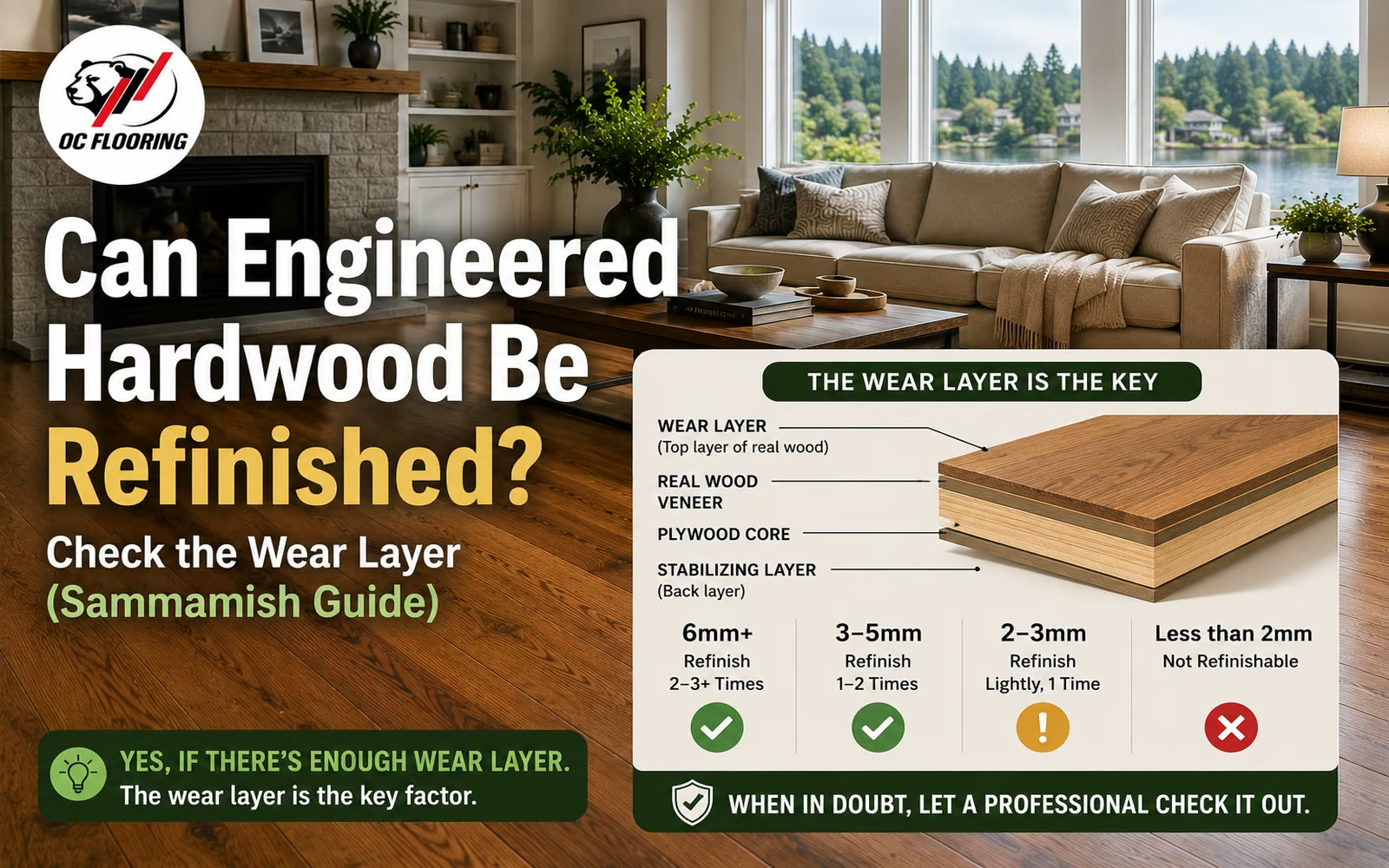
| Engineered, 4–6 mm wear layer | The veneer only | 2–3 careful sandings |
| Engineered, 2–3 mm wear layer | The veneer only | 1 light sanding |
| Engineered, under 2 mm wear layer | Effectively none | 0 — screen and recoat only |
One caution on engineered floors: the number printed in the brochure is the veneer’s total thickness, not what is sandable. Factory bevels and the risk of sanding through at board edges eat part of it. When an engineered floor comes to us with a 2 mm wear layer, we usually steer the owner toward a buff and recoat instead — it renews the finish without touching the wood at all.
How to Tell How Many Sandings Your Floor Has Left
You do not need to pull up a board. Here is what we actually do at an estimate:
- Pull a heat register. A floor vent gives you a free cross-section of the board right at the cut edge. You can see exactly how much wood remains above the tongue — thirty seconds, no damage.
- Look for surfacing nails or staples. Shiny fastener heads showing through the finish mean the wear layer is nearly spent.
- Check the edges of boards for cracks and “smiles.” Hairline splits along board edges suggest thin wood flexing over the tongue.
- Feel for a dip at the walls. Previous refinishers’ edge machines cut faster than their big machines. A trough around the room’s perimeter means earlier sandings took more than their share.
- Count the history. A 1925 Seattle floor has likely been sanded two or three times already; a 1995 Sammamish floor probably never has. Age is not the limit — sanding history is.
The Habit That Doubles a Floor’s Life: Recoat Before You Have To
Here is the part most homeowners never hear: floors rarely die of old age — they die of finish neglect. The finish is a sacrificial layer. As long as wear stays in the finish, the wood underneath is untouched and no sanding budget gets spent. Once traffic wears through to raw wood, gray oxidized patches appear, and only a full sanding can fix them. A screen and recoat — a light abrasion of the existing finish plus a fresh coat, $1.99/sq ft at our shop — done every 3–5 years in busy homes resets the clock without removing any wood. Floors maintained this way can go decades between real sandings, which is how 100-year-old floors still have sandings left.
Local Notes: What We See in Seattle-Area Homes
Pre-1950 Seattle, Everett and Snohomish homes: usually old-growth Douglas fir. It is softer than oak, has often been sanded before, and fir’s thin grain punishes aggressive machines — this is exactly where a gentle final-pass machine matters (we wrote about our TRIO finishing sander for this reason). These floors often have one or two careful sandings left, and they are worth it: you cannot buy that wood anymore.
1980s–2000s Eastside, Lynnwood, Mill Creek, Marysville: almost always 2¼-inch red oak strip, and usually on its very first sanding. These floors have their entire budget ahead of them — four or five more refinishes, comfortably past the year 2100 with decent care. Our dry furnace winters do cause seasonal gapping, but gaps do not consume wear layer; keeping indoor humidity around 35–50% keeps the movement small.
Sanding and Refinishing Limits, Answered
How many times can solid hardwood floors be refinished?
How much wood does one sanding actually remove?
Can engineered hardwood be sanded and refinished?
How can I tell if my floor has already been sanded too many times?
What happens if a floor gets sanded past its limit?
How long does each refinish last?
Is there a way to make my floors last longer between sandings?
My house was built in the 1920s. Are the floors still refinishable?
Do prefinished hardwood floors follow the same rules?
Wondering How Much Life Is Left in Your Floor?
We’ll measure your actual wear layer — at a floor vent, in minutes — and tell you straight whether to sand, recoat, or wait. Free in-home estimates across King & Snohomish County.
Related reading: Refinish or replace? How to decide · What refinishing costs in 2026 · Living through a dust-free refinish · Our refinishing service