



Light and gray pet urine stains usually sand out during refinishing. Black stains usually don't — the urine has reacted deep with the wood, and those boards typically need to be replaced and woven into the floor before finishing. Either way, the floor is almost always saveable: a refinish with board repairs costs a fraction of a new floor, and done right, you won't find the repair afterward.
Every week we walk into a home where someone is embarrassed about their floors — an aging dog, a rescue that took time to house-train, a rental that came back rough. Here's the first thing we say: we have seen far worse, and we fixed it. This guide explains what pet urine actually does to hardwood, which stains sand out and which don't, what genuinely works (and the popular DIY advice that makes things worse), and what repairs cost in the Seattle area in 2026.
Why Urine Turns Wood Black (the Chemistry That Decides Your Repair)
Fresh urine is mildly acidic, but as it breaks down it becomes alkaline and releases ammonia. That ammonia reacts with tannins — natural compounds in wood — and literally changes the wood's color from within. Oak, the most common floor in King and Snohomish County homes, is high in tannins, which is why oak floors show dramatic black rings. The color isn't sitting on your floor; it's a chemical reaction inside it. That's why mopping, vinegar, and magic erasers can't touch an old stain — and why the depth of the reaction decides whether sanding can.
The 30-Second Triage: What Kind of Stain Do You Have?
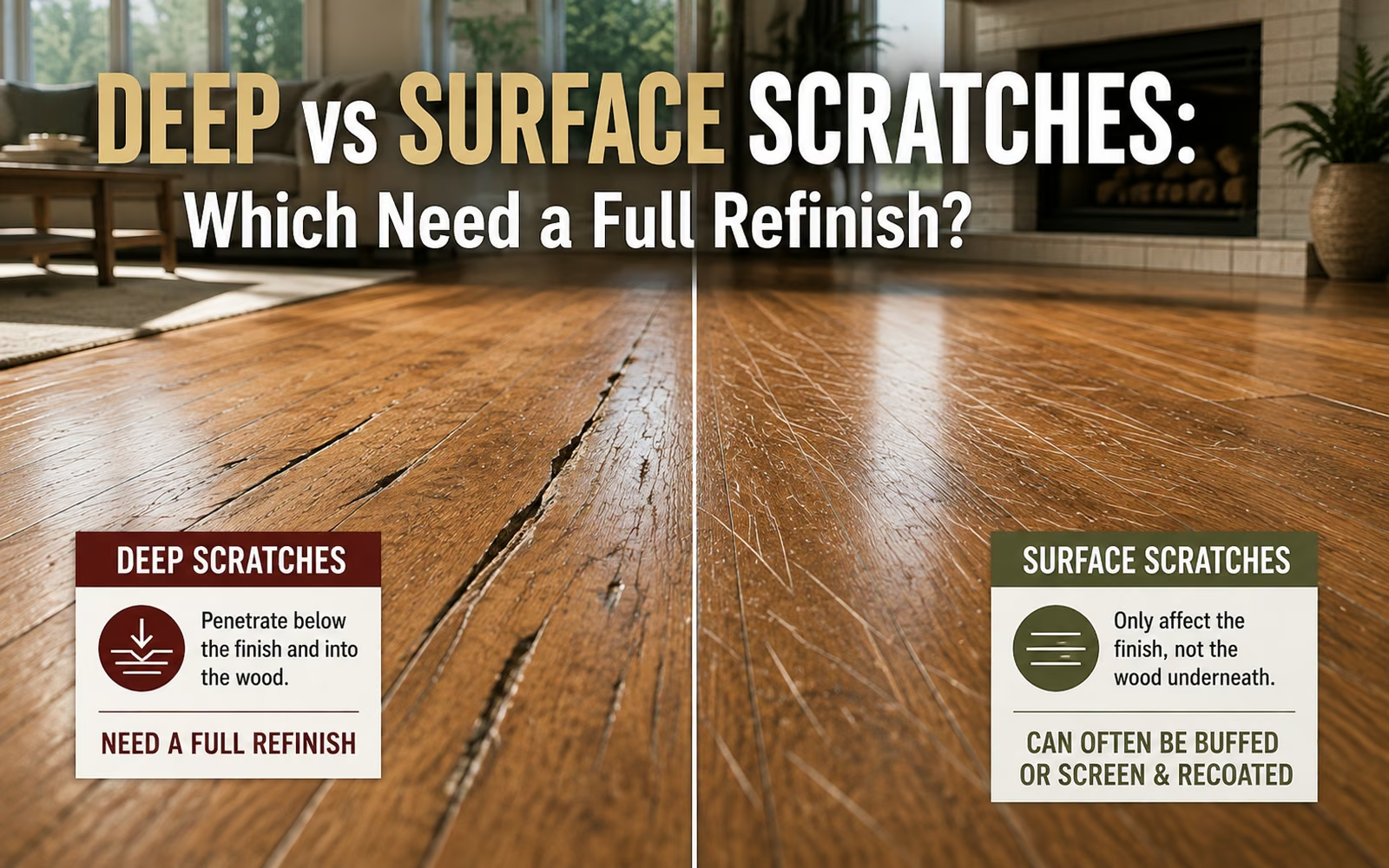
White or cloudy haze
The urine only attacked the finish, not the wood. A sand-and-refinish removes it completely — sometimes even a screen & recoat if it's shallow.
Gray to brown patch
The reaction reached the top of the wood. Most gray/brown stains sand out during a full refinish; a few stubborn ones lighten dramatically and vanish under a mid-tone stain.
Black with dark edges
The ammonia-tannin reaction has gone deep — often through the board. Sanding enough to remove it would dish the floor. We replace these boards and weave in matching wood.

What Works and What Doesn't
| Method | Works on | Honest verdict |
|---|---|---|
| Enzyme cleaners (Nature's Miracle etc.) | Fresh accidents, odor in finish | Great for new accidents — useless on old black stains. Keep a bottle at home anyway. |
| Hydrogen peroxide soaks | Light surface stains | The internet's favorite. Can lighten mild stains, but raises the grain, and often leaves a bleached halo you'll see in sunlight. On a floor you're not refinishing anyway, risky. |
| Wood bleach / oxalic acid | Gray water-type marks | A pro tool with a narrow use case. On deep ammonia stains it produces blotchy, two-tone wood more often than clean results. |
| Full sand & refinish | Haze, gray and most brown stains | The reliable fix. Removes finish + the top layer of reacted wood, then rebuilds the surface. |
| Board replacement + refinish | Black stains, warped or spongy boards | The right call for deep damage. Matching boards woven in, then the whole floor sanded and finished as one — the repair disappears. |
| Staining the floor darker | Faint leftover shadows | A legitimate finishing move: a mid-to-dark stain camouflages slight remaining discoloration. Not a substitute for sanding — a partner to it. |
One warning about a common DIY chain reaction: aggressive spot-sanding by hand, then a peroxide soak, then a hardware-store poly patch. Each step is reversible — together they create a dished, bleach-haloed, sheen-mismatched patch that's more visible than the original stain and now needs professional correction anyway. If the stain doesn't respond to an enzyme cleaner, the honest next step is a refinishing assessment, not a stronger chemical.
How We Fix Urine-Stained Floors (the Professional Sequence)
- 1. Moisture-meter and probe check. We map every stain and check boards for sponginess and subfloor damage — the stains you see aren't always the whole story (blacklight helps find old dry accidents).
- 2. Replace what can't be saved. Black-stained and warped boards come out. We weave in matching species and width — in older Seattle and Everett homes that can mean sourcing reclaimed oak or fir so grain and age match.
- 3. Seal odor at the source. Where urine reached the subfloor, we treat and seal it with an odor-blocking primer (shellac-based) before new wood goes down. This is the step DIY repairs skip — and why the smell comes back in humid weather.
- 4. Sand the entire floor. Not just the repair spots — the whole floor comes down to fresh wood so color and flatness are uniform.
- 5. Stain (optional) and finish. Three coats of premium waterborne finish. If faint shadows survived sanding, this is where a well-chosen stain makes them vanish completely.

What It Costs in the Seattle Area (2026)
Refinishing runs $3.99/sq ft (natural finish) or $6.50/sq ft (custom stain color) with a 500 sq ft minimum — full pricing and an instant calculator are in our 2026 refinishing cost guide. Board replacement is quoted per board at your free estimate, depending on species, width, and how many need weaving in. For perspective: even a floor needing a dozen replaced boards plus a full stain-grade refinish typically lands at a small fraction of what tearing out and installing new hardwood would cost — and nobody will ever know your dog's history with that corner.
After the Refinish: Keeping It Pet-Proof
- Modern waterborne finishes buy you time. Today's catalyzed waterborne coatings resist pet accidents far better than the oil finishes in most older homes — accidents wiped up within hours leave nothing behind.
- Add a third topcoat in pet zones. A small upcharge that meaningfully extends protection near doors and feeding areas.
- Recoat every 4–7 years. A screen & recoat refreshes the wear layer before urine can ever reach wood again.
- Keep an enzyme cleaner on hand and treat accidents the same day — odor compounds never get a chance to bond.
Pet Stain Questions We Hear Every Week
Will sanding remove pet urine stains from hardwood floors?
Why did the urine stain turn black?
Does hydrogen peroxide remove urine stains from wood floors?
Can the urine smell be removed, or will it come back?
How many boards will need to be replaced?
Is it cheaper to refinish or just replace the whole floor?
Can I just stain the floor dark to hide the stains?
Do urine stains ruin engineered hardwood too?
How do I find old stains I can't see?
Embarrassed by the Floors? Don't Be. We've Fixed Worse.
Free, judgment-free in-home assessment anywhere in King & Snohomish County. We'll map the damage, count the boards, and give you a firm written price on the spot.
Related reading: 2026 refinishing cost guide · Hardwood floor refinishing · Flooring repair