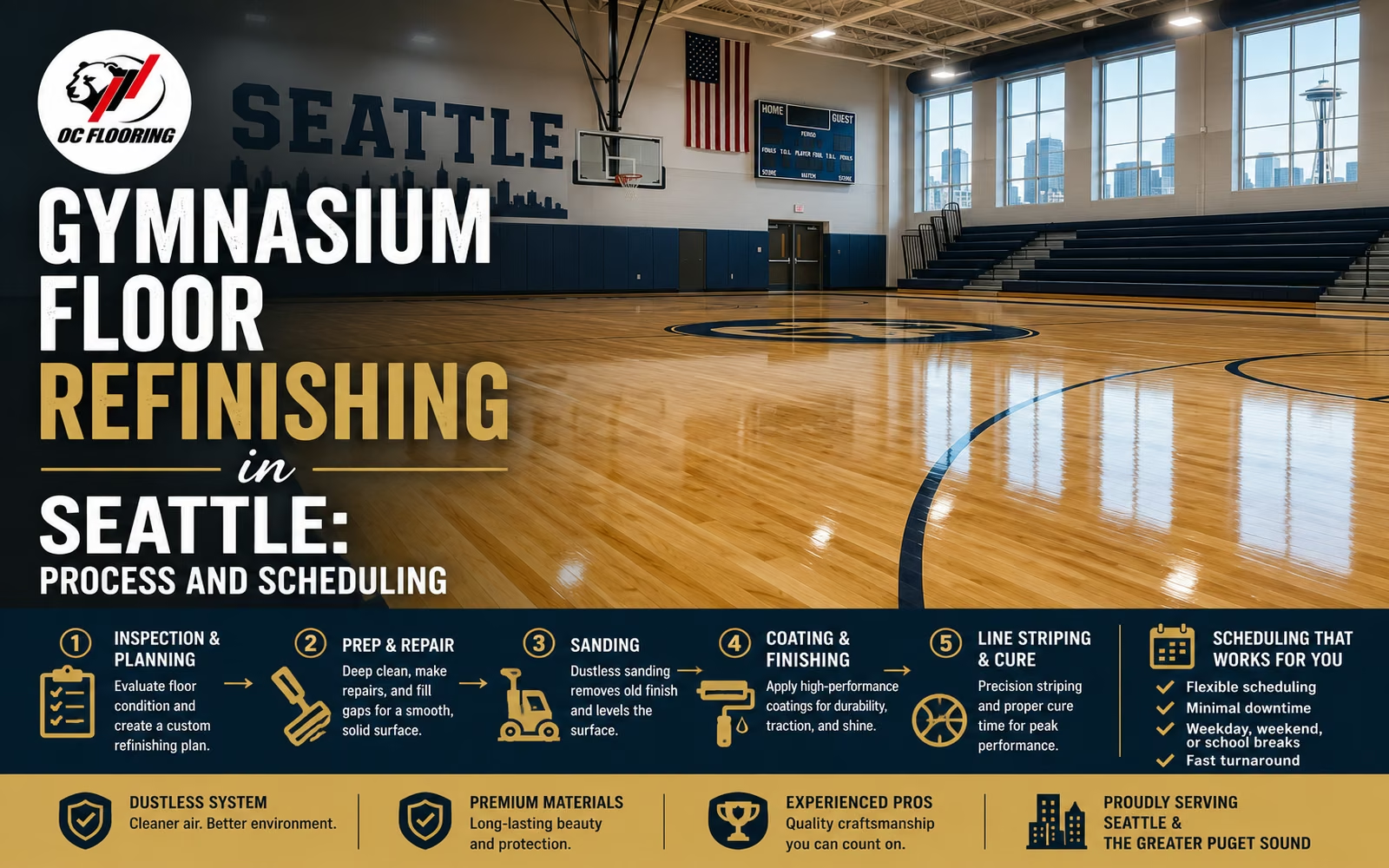



OC Flooring provides commercial wood floor sanding, refinishing, and new flooring installation across the Seattle area — offices, retail, restaurants, studios, and lobbies — scheduled nights and weekends around your business hours. Dustless sanding keeps merchandise and workstations clean, and fast-curing waterborne finishes mean floors sanded Friday night take foot traffic Monday morning. The quiet secret of commercial flooring: a screen & recoat from $1.99/sq ft every 3–5 years keeps a wood floor out of the replacement cycle indefinitely.
Commercial flooring decisions are really downtime decisions. A retail floor that closes the shop for a week costs more in lost sales than in sanding, no matter what the invoice says. We're OC Flooring — since 2013 we've refinished and installed floors across King and Snohomish County, and commercial work runs on a different playbook than residential: off-hours scheduling, phased sections, and finish systems chosen for cure speed as much as durability. Here's the playbook.
Three Facts From the Commercial Side of the Trade
the wood under nearly every gym and sports floor in America — chosen because it's dense, light-colored, and shrugs off decades of pounding. If you've inherited a maple floor, you've inherited a workhorse.
the Janka hardness of hard maple, versus around 1,290 for red oak. Species hardness is why some commercial floors survive forklifts of foot traffic and others dent under office chairs.
the recoat cycle that keeps a high-traffic wood floor alive indefinitely. Recoat before the finish wears through and you never pay for a full resand caused by neglect.
What We Do for Commercial Spaces
Our commercial work centers on what we're best at: sanding and refinishing existing wood floors — office suites, storefronts, restaurants, salons, yoga and dance studios, lobbies, and event spaces — plus new installation of hardwood, luxury vinyl plank, and laminate where wood isn't the right tool. We also handle stairs and board-level repair. Installation labor runs $3–$4.25/sq ft with materials quoted separately, so you can compare product options on real numbers. Licensed, insured, and happy to provide documentation for your landlord or property manager before work begins.

The Real Enemy Is Downtime, So We Plan Around It
Every commercial quote we write starts with your hours, not our scope. The levers that keep you open:
- Nights and weekends. Sanding Friday close-of-business, coating Saturday and Sunday, trading Monday open — the standard retail rhythm.
- Phased sections. Restaurants and offices rarely need the whole floor at once. We refinish in zones so operations shift rather than stop.
- Dustless sanding. Vacuum capture at the machine means inventory, electronics, and workstations don't need to be shrouded and deep-cleaned afterward — often the hidden cost that dwarfs the flooring bill.
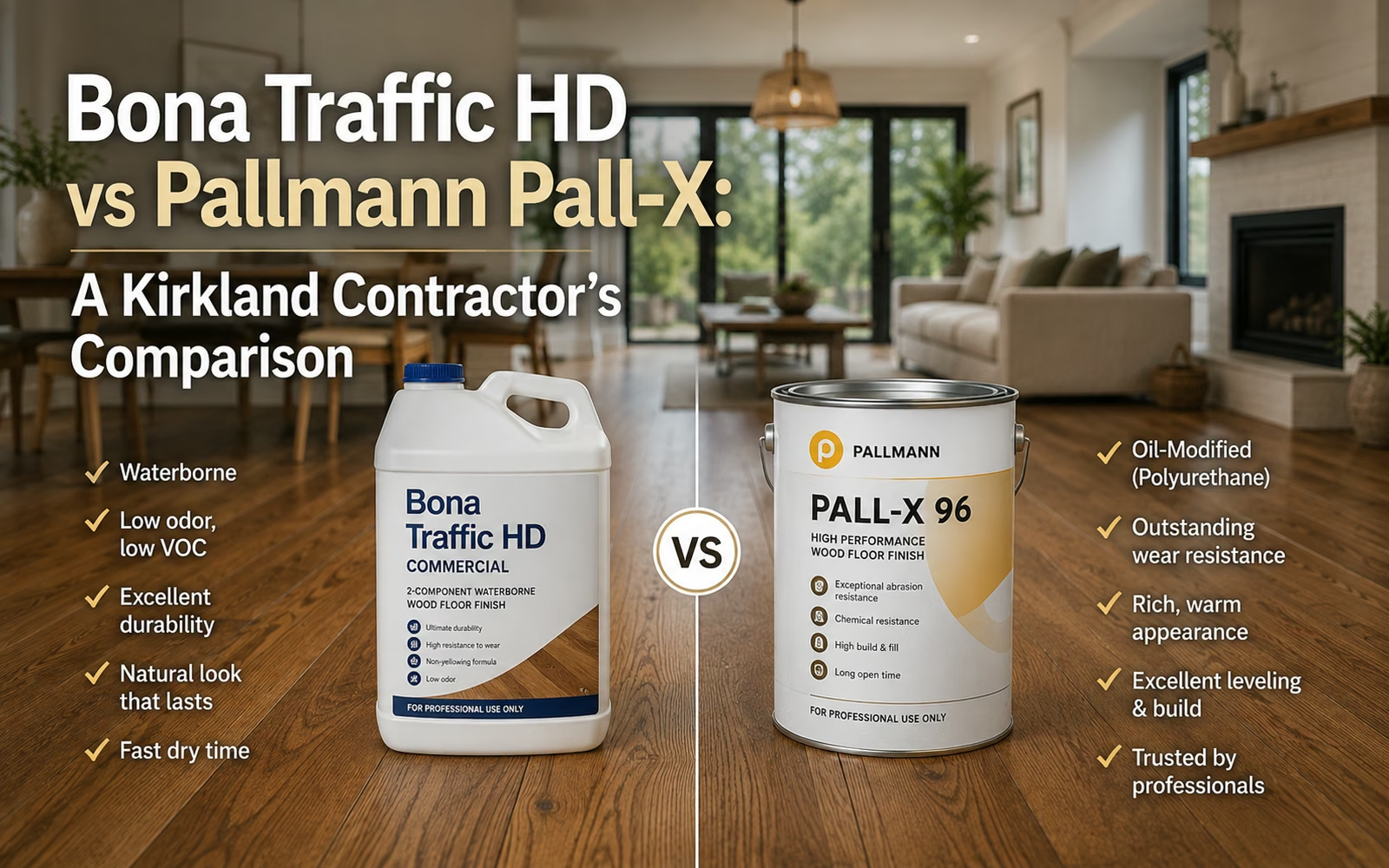
- Waterborne finish systems. Our standard Bona waterborne finishes take light foot traffic far sooner than traditional oil systems and don't fill the space with lingering fumes your staff will smell all week.
Which Floor Earns Its Keep in Which Space
| Space | What we’d put down | Why |
|---|---|---|
| Office suite | LVP or engineered hardwood | Rolling chairs and coffee spills; LVP shrugs off both |
| Retail storefront | LVP, or refinished existing wood | Waterproof, dent-resistant, wet-umbrella-proof at the entry |
| Restaurant / café | LVP front-of-house, sealed hardwood for ambience | Nightly wet mopping is brutal on unsealed wood |
| Yoga / dance studio | Hardwood on a recoat schedule | Feel underfoot is the product; keep the finish fresh |
| Salon / barbershop | LVP | Chemicals, water, and constant chair traffic |
| Lobby / event space | Refinished hardwood | Nothing else makes the same first impression |
The Recoat Cycle: The Cheapest Money in Commercial Flooring
Commercial wood floors rarely die of age — they die of deferred maintenance. Finish wears through in traffic lanes, then grit grinds into bare wood, and suddenly a $1.99/sq ft problem has become a full resand or a replacement. The economics are lopsided: a screen & recoat at $1.99/sq ft done every 3–5 years — one weekend, no bare-wood sanding — versus a full refinish from $3.99/sq ft once wear breaks through, versus tear-out and replacement if it goes long enough. The test is simple: pour a tablespoon of water on your busiest traffic lane. If it beads, your finish is alive and a recoat will renew it. If it soaks in and darkens the wood, you're already past recoat territory in that lane — book the resand before the lane deepens.
A Seattle Note: The Wood Hiding in Older Commercial Buildings
A lot of Seattle, Ballard, Georgetown, and Everett commercial stock — early-1900s storefronts, converted warehouses, walk-up offices — has original fir or maple under decades of carpet, vinyl tile, or paint. Those floors are often thick, old-growth material that refinishes beautifully and gives a space the kind of character new products imitate at great expense. If you're leasing or renovating an older building, have the floor assessed before you price new flooring over the top of it: the best commercial floor in your budget may be the one already nailed down. We check thickness and condition as part of any free commercial estimate, and we'll tell you plainly if what's under there isn't worth saving.
What a Commercial Estimate Includes (and What to Have Ready)
A commercial walkthrough takes longer than a residential one because the variables are operational, not just physical. We'll measure the space, assess finish wear lane by lane, check moisture where slabs or grade-level entries are involved, and map the phasing plan against your hours. What speeds it up on your side: your real operating calendar (including private events and delivery days), any landlord requirements for insurance certificates or work-hour restrictions, and a decision-maker who can approve the phasing plan. You'll get a written, itemized quote with the schedule built in — sq ft rates, per-zone sequencing, and what happens if we uncover subfloor surprises mid-project, priced before we continue rather than after. No commercial job should ever contain the word “surprise” on the invoice.
Commercial Flooring Questions From Seattle Businesses
Do you refinish commercial wood floors in Seattle?
Can floor work be done outside business hours?
How often should commercial wood floors be recoated?
What flooring is best for retail and office spaces?
Do commercial floors need a different finish than homes?
Can you refinish a gym or studio floor?
How do you minimize downtime during commercial flooring projects?
Do you provide certificates of insurance for commercial jobs?
Let's Talk About Your Space — Off-Hours Welcome
Free on-site commercial estimates across the Seattle area: we'll assess what you have, price refinish vs. replace honestly, and build the schedule around your business hours.
Related reading: Screen & recoat service · Vinyl plank & laminate installation · The refinishing timeline · Best flooring for the PNW climate