


Solid hardwood is one board top to bottom; engineered is a real-wood veneer bonded to a cross-laminated core. The spec that matters most is the wear layer: under 2 mm can never be sanded, 3 mm buys 1–2 refinishes, 4–6 mm behaves nearly like solid.
Over 50 years, a renewable floor — solid, or engineered with a thick veneer — costs dramatically less per decade than a thin-veneer floor that must be replaced when its finish wears through.
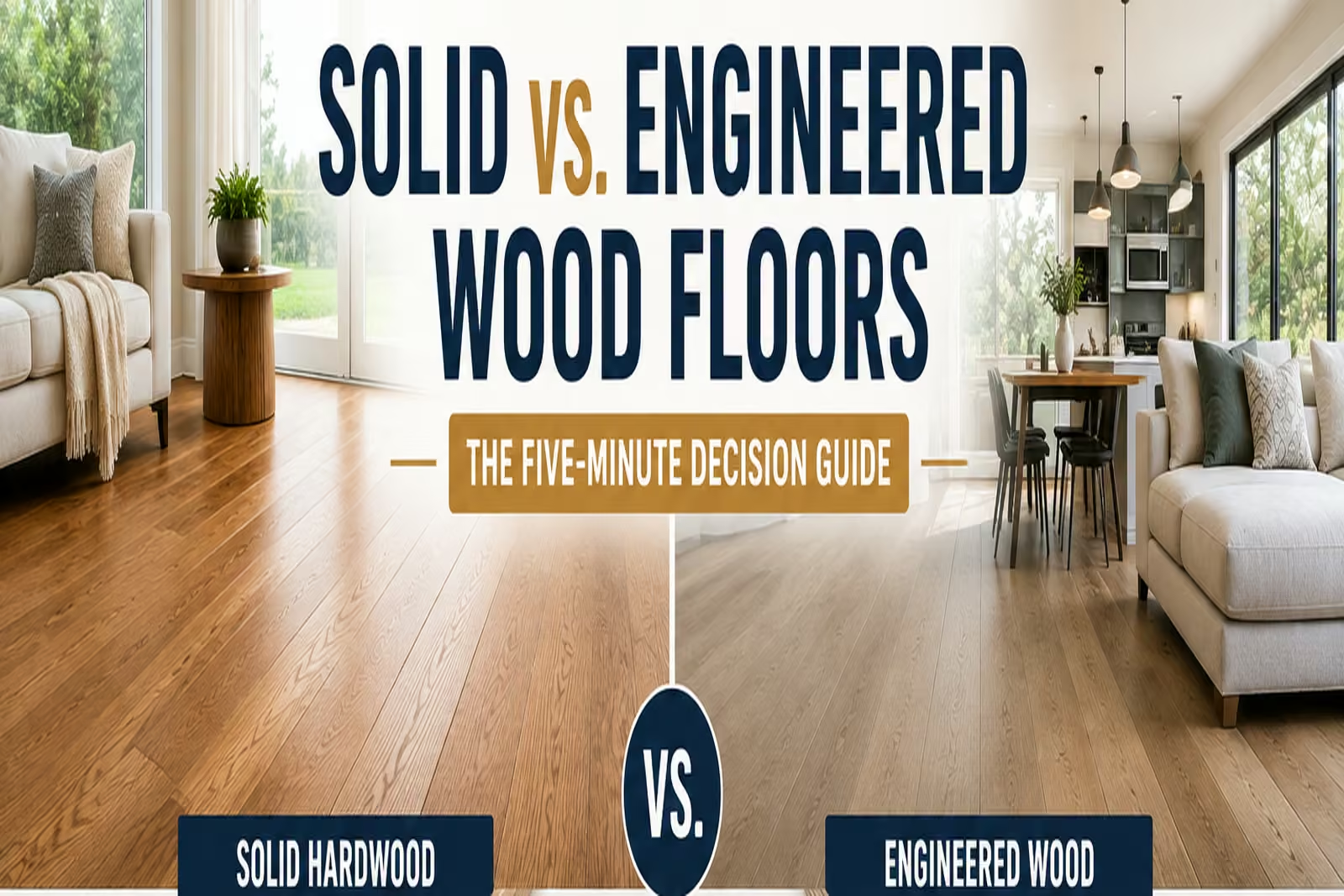
Our five-minute decision guide tells you which product fits your slab, basement, or radiant heat. This guide is the other half: how these two floors are actually built, why one moves with the seasons and the other holds still, and what each really costs by the time your mortgage is a memory. If you're about to spend five figures on wood, ten minutes here is cheap.
The Numbers That Run This Comparison
each ply in an engineered core is laid perpendicular to its neighbors, so one layer's urge to swell across the grain is pinned by the next layer's refusal to stretch along it. That standoff is the whole invention.
the range of veneer wear layers sold today — a tenfold spread hiding behind nearly identical showroom faces. It is the single most important line on an engineered spec sheet.
the sandable wood above the tongue on a ¾-inch solid board — the reservoir that lets one floor be renewed for a century instead of replaced.
How Each Floor Is Built
Solid hardwood is exactly its name: a single board of oak, maple, or walnut, milled with a tongue and groove. Everything above the tongue — roughly a quarter inch — is sandable wood, which is why solid floors survive 4–6 full refinishes across their lives.
The same single-piece construction is also its weakness: one board of wood swells and shrinks freely with humidity, which is why solid floors gap in a Northwest furnace winter and why they're banned from slabs and basements.
Engineered hardwood is a sandwich. On top, a veneer of genuine hardwood — this is real wood, not a picture of it. Below, a core of 3 to 9 plies cross-laminated at right angles (better products use more, thicker plies), or in budget lines a slab of high-density fiberboard. The cross-lamination cancels most of wood's seasonal movement, which is what earns engineered its slab, basement, and radiant privileges.

Veneer Cuts: The Detail Salespeople Skip
Two engineered floors with identical species and thickness can look like different products, because veneer is cut two ways. Sawn-face veneer is sliced the way solid lumber is milled, so its grain reads exactly like a solid board.
Rotary-peeled veneer is shaved off a spinning log like paper towel off a roll — economical, but it produces a wide, wavy, plywood-like grain pattern that's the fastest visual tell of a budget floor. If a deal seems too good, check the cut before the price.
Wear-Layer Math: Millimeters → Sandings → Decades
| Wear layer | Refinishes | Realistic service life | Honest translation |
|---|---|---|---|
| Under 2 mm | 0 — recoats only | One finish lifetime, 15–25 yrs | A handsome floor you will eventually replace, not renew |
| 2–3 mm | 1 careful sanding | 25–40 yrs | One second act, in skilled hands |
| 4–6 mm | 2–3 sandings | 40–70 yrs | Behaves like solid for most owners' horizons |
| Solid ¾″ | 4–6 sandings | 80–100+ yrs | The century floor — outlives its first two families |
Note what's not in that table: total plank thickness. A chunky 5/8-inch plank with a 1.5 mm veneer is still a zero-sanding floor — the plies below the veneer are structure, not a reserve. Manufacturers know thickness feels like quality in the hand, and price accordingly. Read the wear-layer line.
The 50-Year Ledger
Run a 1,000 sq ft main floor through five decades. Solid hardwood: one purchase and installation, then a refinish roughly every 15 years — at our $3.99/sq ft natural-finish rate, that's about $4,000 per refinish, three times over the period. The floor at year 50 is the same wood, sanded fresh, with sandings still in reserve. Thin-veneer engineered (under 2 mm): cheaper on day one, but when the finish wears through there's nothing to sand — the whole floor comes out, and you buy materials, tear-out, and $3–$4.25/sq ft installation labor again.
Do that twice in 50 years and the “cheap” floor has cost more than the solid one, before counting the disruption of living through two replacements. Thick-veneer engineered splits the difference: higher purchase price than the budget lines, but its 2–3 sandings usually carry it the full 50 years — often the best total-cost answer for slab homes that can't take solid at all. The pattern is simple: you pay for a floor once, but you pay for a non-renewable floor every time it wears out. Full refinishing rates are in our 2026 cost guide.
Quality Tells When You're Comparing Boxes
- Wear layer in millimeters — in writing, not “thick sawn face” marketing language.
- Core construction — more cross-laminated plies beat fewer; plywood cores handle moisture accidents better than HDF.
- Veneer cut — sawn face for solid-look grain; rotary only if the price reflects it.
- Emissions compliance — engineered flooring is glued wood, so look for TSCA Title VI / CARB compliance on formaldehyde emissions; reputable brands print it plainly.
- Board length — budget lines quietly ship short boards, and a floor of 12-inch pieces reads busy no matter the species.
Local footnote: which construction you can use is usually settled by your house — slab condos and daylight basements point engineered, crawlspace-era homes welcome either. That's the situation guide's territory; between the two posts, you have the whole decision.
Engineered Construction and Cost — Deeper Questions
What is the core of engineered hardwood made from?
Is a plywood core better than an HDF core?
How many millimeters of wear layer do I actually need?
Why does engineered hardwood move less than solid in our climate?
What's the difference between sawn-face and rotary-peeled veneer?
How does the 50-year cost compare between solid and engineered?
Do engineered floors contain formaldehyde?
Does a thicker engineered plank always mean better quality?
Do buyers or appraisers value solid hardwood over engineered?
Run Your Numbers With Us — Free and In Person
Bring us your square footage and your horizon; we'll price solid and engineered honestly, wear layers and all. Installation from $3–$4.25/sq ft labor, free estimates across King & Snohomish County.
Related reading: The five-minute decision guide · Refinishing cost guide · Where to buy hardwood flooring · Hardwood installation