


Most solid hardwood floors can be refinished — but not all of them. The dealbreakers: wood already sanded to its limit (exposed nail heads are the tell), engineered flooring with a wear layer under 2mm, boards that have buckled off the subfloor, rot or advanced water damage, and floors that are actually laminate or vinyl wearing a wood costume. Everything else — dullness, scratches, most stains, even paint — is usually fixable. Here's how to check each one yourself.
We make our living refinishing floors, so believe us when we say: we'd love to tell you every floor can be saved. It can't, and finding out mid-project is the expensive way to learn. Here are the honest limits of refinishing — how we assess a floor at an estimate, and the checks you can do yourself with a flashlight and five minutes before anyone quotes you anything.
The Numbers That Decide a Floor's Fate
roughly how many full sandings a 3/4-inch solid hardwood floor has in it over its life — there's only about a quarter inch of usable wood above the tongue-and-groove joint.
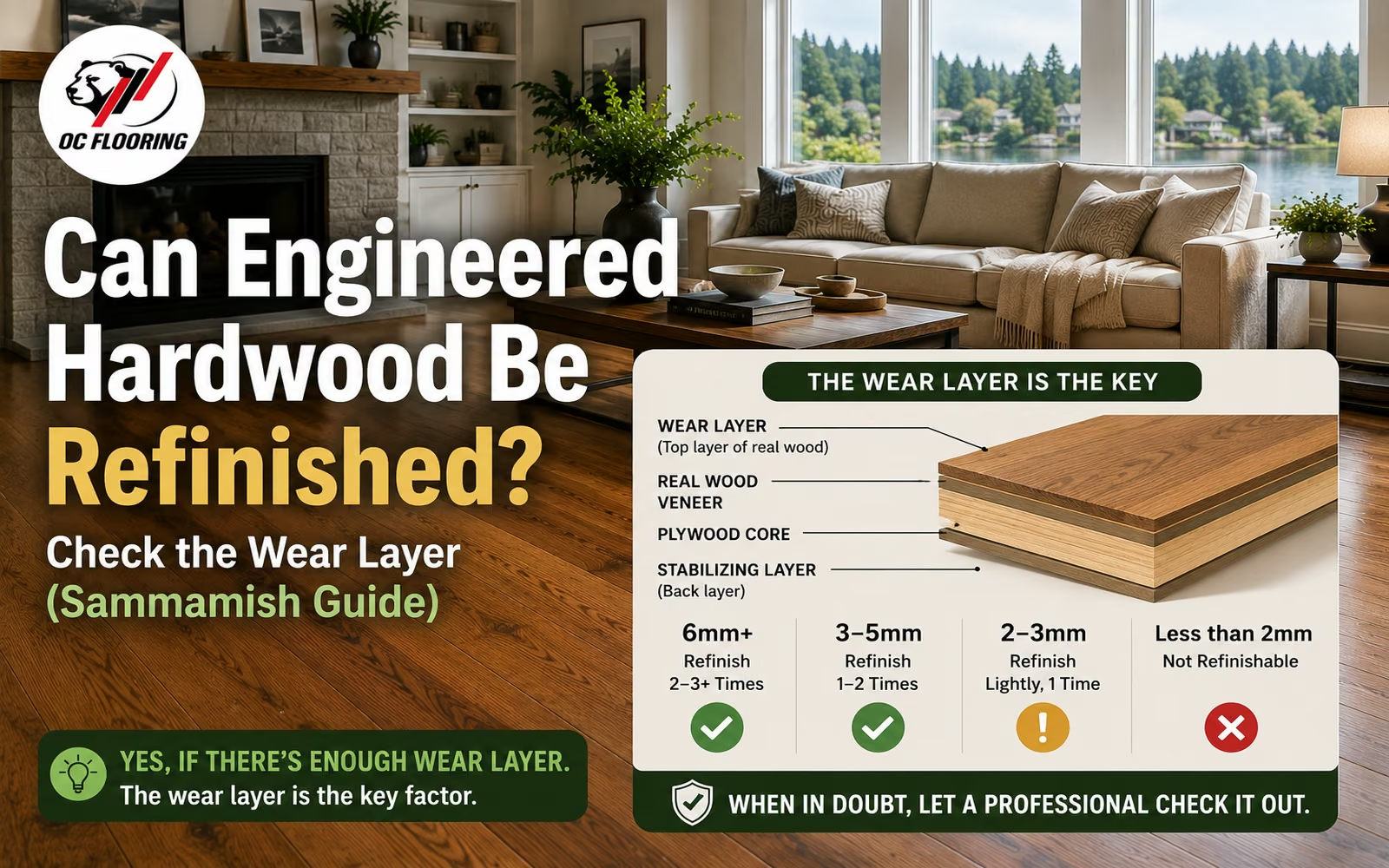
the practical minimum wear layer for sanding engineered hardwood. Thinner than that and the sander cuts through the real-wood veneer into the plywood core — instantly and irreversibly.
sandings left once nail or staple heads are showing across the field of the floor. That metal glinting at you is the floor announcing it has already given everything it had.
Symptom by Symptom: Refinishable or Not?
| What you see | Refinishable? | The better path |
|---|---|---|
| Dull, cloudy, lightly scratched finish | Yes — easily | Often just a screen & recoat, one day |
| Gray sun fade, surface wear, shallow stains | Yes | Full sand and refinish |
| Black pet stains soaked deep into boards | Mostly | Replace the worst boards, then refinish everything together |
| Cupped boards (edges raised, still attached) | Often | Fix the moisture source first, let the floor flatten, then sand |
| Boards buckled up off the subfloor | No | Replace affected sections; find the water |
| Soft, dark, spongy wood (rot or mold) | No | Replace boards and address moisture below |
| Nail/staple heads showing across the floor | No | The wood above the fasteners is gone — replacement |
| Engineered wood, veneer under 2mm | No | Replacement; a recoat may buy time if finish is intact |
| Laminate or vinyl “wood look” | Never | These have a printed photo layer — there’s no wood to sand |

Too Thin to Sand: How to Check Without Tearing Anything Up
Here's the trick we use, and you can too: pull up a floor vent register. The exposed plank edge in the duct opening shows you a cross-section of your floor — you can see whether it's solid wood or engineered, and if it's engineered, roughly how thick the real-wood layer above the plywood core is. On solid floors, look instead at the gap between boards or at a doorway transition: if the top of the groove is close to the surface, or you can see fastener heads, the floor is at or past its limit. Each professional sanding removes only about 1/32 of an inch, but decades of refinishes add up — plenty of 1920s Seattle floors are on their last legal sanding, which is exactly why we measure before we quote.

Moisture Problems a Sander Can't Solve
Three words get confused constantly, and the difference decides everything. Cupping — board edges raised, centers low — means moisture is entering from below; the boards are still attached, and once the source is fixed and the floor dries flat, it can usually be sanded. Crowning is the reverse and often the scar of someone sanding a cupped floor before it dried — a mistake you can't undo. Buckling — boards lifted clean off the subfloor — is past saving; those sections come out. Around here the usual culprit lives under the house: most older Everett, Snohomish, and north Seattle homes sit over vented crawlspaces, and a failed vapor barrier or standing water down there will re-wreck a floor no matter how beautifully it's refinished. Source first, sander second — always.

When It Isn't Wood at All
Laminate and luxury vinyl have gotten good enough to fool people at eye level — but both are a printed image under a clear wear coat, and there is no wood to sand. One pass of a floor sander destroys them. The register-vent check above settles it in seconds. One happier surprise in the same category: prefinished hardwood (the kind with tiny bevels between boards) usually can be refinished. Its factory aluminum-oxide finish chews through abrasives and the bevels sand out, but it's real wood with a real future — don't let anyone tell you it's replacement-only without measuring it.
Repair First, Then Refinish: The Middle Path
Most “unrefinishable” floors we see aren't — they're refinishable floors with a few genuinely dead boards. The fix is surgical: replace the damaged boards, weaving new wood into the existing pattern, and then sand and finish the entire floor as one surface. Done in that order, the repairs vanish — same height, same finish, same sheen. Whether it's worth doing comes down to how much of the floor is sound, which is a measuring-tape conversation, not a guess. That assessment is free, and “no, this one's done — here's what we'd do instead” is an answer we give when it's true.
One last local wrinkle worth knowing: matching replacement boards matters more than people expect. The 2¼-inch red oak strip in a 1990s Bothell home is easy to source; the tight-grained fir in a 1920s Everett bungalow is not — for those we hunt reclaimed stock, because new fir is visibly different wood. If your older floor needs board work, ask whoever quotes it where the matching wood will come from. It's a small question that separates crews who've done this from crews who'll learn on your floor.
Refinishing Limits: Honest Answers
How many times can hardwood floors be sanded?
Can engineered hardwood floors be refinished?
How do I know if my floor is too thin to sand again?
Can buckled or cupped wood floors be fixed by refinishing?
Can laminate floors be sanded and refinished?
Can water-damaged wood floors be saved?
What if nail heads are showing in my hardwood floor?
Can painted or glued-over wood floors be refinished?
Not Sure If Your Floors Can Be Saved? Ask Before You Replace
We'll measure your wear layer, meter the moisture, and give you a straight answer — refinish, repair-then-refinish, or replace — with a written quote either way. Free in-home assessments across King & Snohomish County.
Related reading: Is refinishing old floors worth it? · The refinishing timeline · Board repair & replacement · 2026 refinishing costs