



Inspect the carpet, pad and subfloor when wear, damaged backing, recurring odors or loose seams persist. Some loose but otherwise sound carpet can be restretched. Cleaning cannot rebuild worn fibers or a damaged backing, while age alone does not require replacement. OC Flooring offers carpet installation, stretching and repairs. Explore OC Flooring carpet services in King and Snohomish counties, compare samples at home and request a written estimate for the selected material, pad and preparation.
We're a hardwood, vinyl plank, and laminate company, which means we spend a lot of time kneeling on other people's old carpet — pulling it up and seeing exactly how it failed. Since 2013 we've done that in over a thousand King and Snohomish County homes, and the question at almost every estimate is the same: is this carpet actually done? Here are the six signs that separate a carpet that needs a good cleaning from one that's finished — and an honest look at what to put down instead.
Carpet Aging by the Numbers
the realistic life of residential carpet. Builder-grade polyester sits at the short end; dense nylon at the long end. The pad usually dies first and takes the carpet with it.
the age where repair stops making sense. Most pros won't restretch or patch carpet past about ten years — the backing is too brittle to hold new tension.
an illustrative budget for mid-grade carpet, pad and labor. Confirm the current price for your selected product, room measurements and preparation in a written estimate.
The 6 Signs Your Carpet Is Truly Done
Any one of these alone is survivable. Two or more together — on a carpet past its tenth birthday — and you're spending cleaning money on a floor that's already failing.
1. Matting that won't bounce back
Run your hand against the pile in the hallway, then in a closet nobody walks through. If the hallway fiber lies flat, feels slick, and doesn't spring up, the twist has been crushed out of the yarn. Cleaning and a pile rake can fluff it for a few weeks, but twist is a physical property, not dirt — once gone, nothing brings it back. Polyester mats years earlier than nylon; an eight-year-old builder-grade carpet can look worse than a fifteen-year-old quality one.
2. Wear paths you can see from the doorway
Traffic lanes that read as a different color, fraying at seams and stair nosings, or backing peeking through at pivot points — the top of the stairs, the couch turn. That's structural wear, and it can't be patched invisibly at that scale, because the surrounding carpet has faded and flattened around it. New material spliced in reads like a fresh patch on old jeans.
3. Odors that outlast every cleaning
Here's the test: if the smell fades after cleaning but returns on the first damp week, the odor isn't in the carpet — it's in the pad and often the subfloor, where no surface treatment reaches. Pet urine is the classic case: it wicks through the backing, spreads wide in the pad, and its salts crystallize in the subfloor where humidity reactivates them for years. If accidents have soaked through in several places, replacement plus subfloor sealing is the only lasting fix — and if there's hardwood under that carpet, see our guide to refinishing wood floors with urine stains.
4. Allergies that ease the moment you leave the house
Carpet is a reservoir: dander, dust-mite waste, and pollen settle into the pile and puff back up with every footstep. A newer carpet vacuumed with a HEPA machine manages it; an old carpet holds a decade of embedded load no vacuum reaches. If someone wheezes at home and breathes fine on vacation, the flooring is a suspect — we cover that side of the decision in the best flooring for kids and pets.
5. Ripples and buckling that keep coming back
A one-time ripple — after a humid summer, a steam cleaning, or a dragged couch — is a tension problem, and a professional restretch fixes it for a modest price. But if the carpet buckles again within a season or two, or you feel bubbles where the backing has separated from the fiber (delamination), the latex holding the carpet together is breaking down, and no stretch re-glues it. We break down that math in whether restretching is worth it.
6. Age past 10–15 years and a pad that's given up
Press a thumb into the carpet near a wall, then in the traffic lane. If the lane feels hard and thin — like carpet over bare plywood — the pad has collapsed, and a dead pad accelerates everything else: fiber crushes faster, seams stress, the floor feels cold and loud. Old pad also crumbles into yellow powder; we see it every time we pull fifteen-year-old carpet. At that age, money spent on cleaning or stretching is subtracted from the replacement coming soon anyway.
Repair, Clean, or Replace: What Each Symptom Really Needs
| Symptom | Worth trying first | Replace when… |
|---|---|---|
| Ripples, loose edges | Pro restretch ($80–$250/room, market rate) | Buckling returns, or backing is delaminating |
| Matted traffic lanes | Hot-water extraction + pile rake | Fiber stays flat; lanes shade a different color |
| One bad stain or burn | Bonded patch from a closet or remnant | Multiple spots, or no donor carpet |
| Pet odor | Enzyme treatment + new pad under the spot | Urine has reached the subfloor in several areas |
| Allergy load | HEPA vacuuming 2×/week + annual deep clean | Symptoms persist and the carpet is 10+ years old |
| 15+ years old | Nothing — stop spending on it | Now, on your schedule instead of an emergency |
Figures in this table are planning examples, not verified current prices or a binding OC Flooring quote. Material, pad, preparation, stairs, removal and furniture handling can change the total. Request an itemized estimate.
The pattern in that table: carpet problems are fixable when they're mechanical and recent, terminal when they're chemical or structural. Tension can be re-stretched; crushed twist, cooked latex, and urine salts in the subfloor cannot be un-happened. One repair question comes up so often we gave it its own post: whether you have to move furniture for carpet stretching (short version: mostly, yes).
Western Washington Is Hard on Carpet
National lifespan charts assume national weather. Puget Sound is wetter: roughly 150 rainy days a year, and from October to June a procession of wet shoes, wet dog paws, and fine grit through the front door. Grit is the quiet killer — it works into the pile and acts like sandpaper underfoot, which is why entries and stair bottoms fail years before bedrooms.
Moisture matters just as much. In many Western Washington homes — older ones with crawl spaces especially — indoor humidity sits above 60% much of the winter. Carpet and pad absorb it and hold it against everything they've collected; that's the musty smell in below-grade rec rooms, and carpet on a split-level's concrete slab has the hardest life of all. If a room smells like a thrift store every November, that's not a cleaning problem — that's the climate telling you carpet was the wrong material for the room.
What to Replace It With: New Carpet vs. a Hard Surface
You'd expect a flooring company to shout "hardwood!" here — but the honest answer is room-by-room. Carpet genuinely wins some rooms.
- It's a bedroom — warmth and quiet underfoot beat every other consideration
- It's stairs or an upstairs hall, where sound absorption and slip resistance are safety features
- The budget needs every room covered now — carpet is still the cheapest way to make a house whole
- It's a media room where acoustics matter more than durability
- Pets, kids, or allergies killed the old carpet — hard floors wipe clean instead of absorbing
- It's a main floor or entry that sees water and grit all winter
- You're thinking in decades — carpet gets replaced twice while one hard floor keeps working
- Resale is on the horizon — Seattle-market buyers expect hard surfaces on main floors
If carpet wins your room, buy it well: mid-grade nylon or PET, 35–50 oz face weight, over a dense 8 lb pad — roughly $3.50–$7 per square foot installed in this market. Our carpet brand rundown and fair-price guide for carpet in Seattle will keep a salesperson honest.
If a hard surface wins: vinyl plank or laminate for waterproof durability at the friendliest price — the default answer for rec rooms, rentals, and pet-heavy main floors — and new hardwood where you want the floor that outlives every carpet you'd ever buy and adds the most at resale. Both cost more than carpet on day one and less than carpet by year fifteen, because they don't reset to zero.
Before You Sign Anything: Look Under the Old Carpet
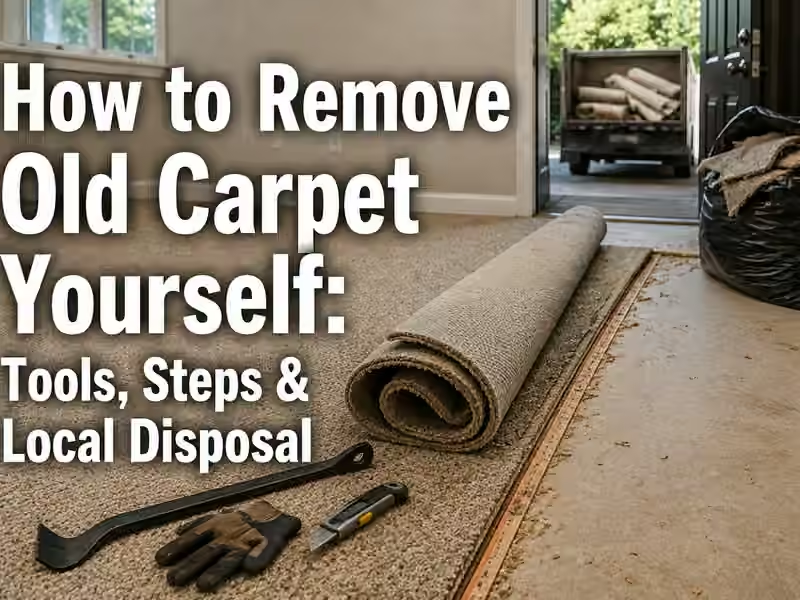
One two-minute check before you order anything: pull back a corner of carpet in a closet. In Seattle-area homes built before the mid-1970s, wall-to-wall carpet very often covers original oak or fir that's been protected for decades. Finding wood changes the whole decision — refinishing starts at $3.99 per square foot with us, in the same range as good carpet installed, and produces a floor that never needs replacing again. Whichever way you go, tearing out old carpet is one of the few genuinely easy DIY jobs in flooring — our carpet removal guide shows how, and it typically saves the $0.50–$1.25 per square foot installers charge for removal and disposal.
Carpet Replacement Questions, Answered
How long should carpet last before it needs replacing?
Can badly matted carpet be revived?
Do pet urine odors ever fully come out of carpet?
Is it worth restretching carpet that keeps rippling?
Should I replace old carpet with carpet again or a hard floor?
Does OC Flooring install carpet?
Can I remove the old carpet myself before new flooring goes in?
Ripping Out the Carpet? Find Out What Should Go Down Instead — Free
We'll check what's under your old carpet and price vinyl plank, laminate, or hardwood honestly. Free in-home estimates across King & Snohomish County.
Related reading: Is restretching your carpet worth it? · How to remove old carpet · Vinyl plank & laminate