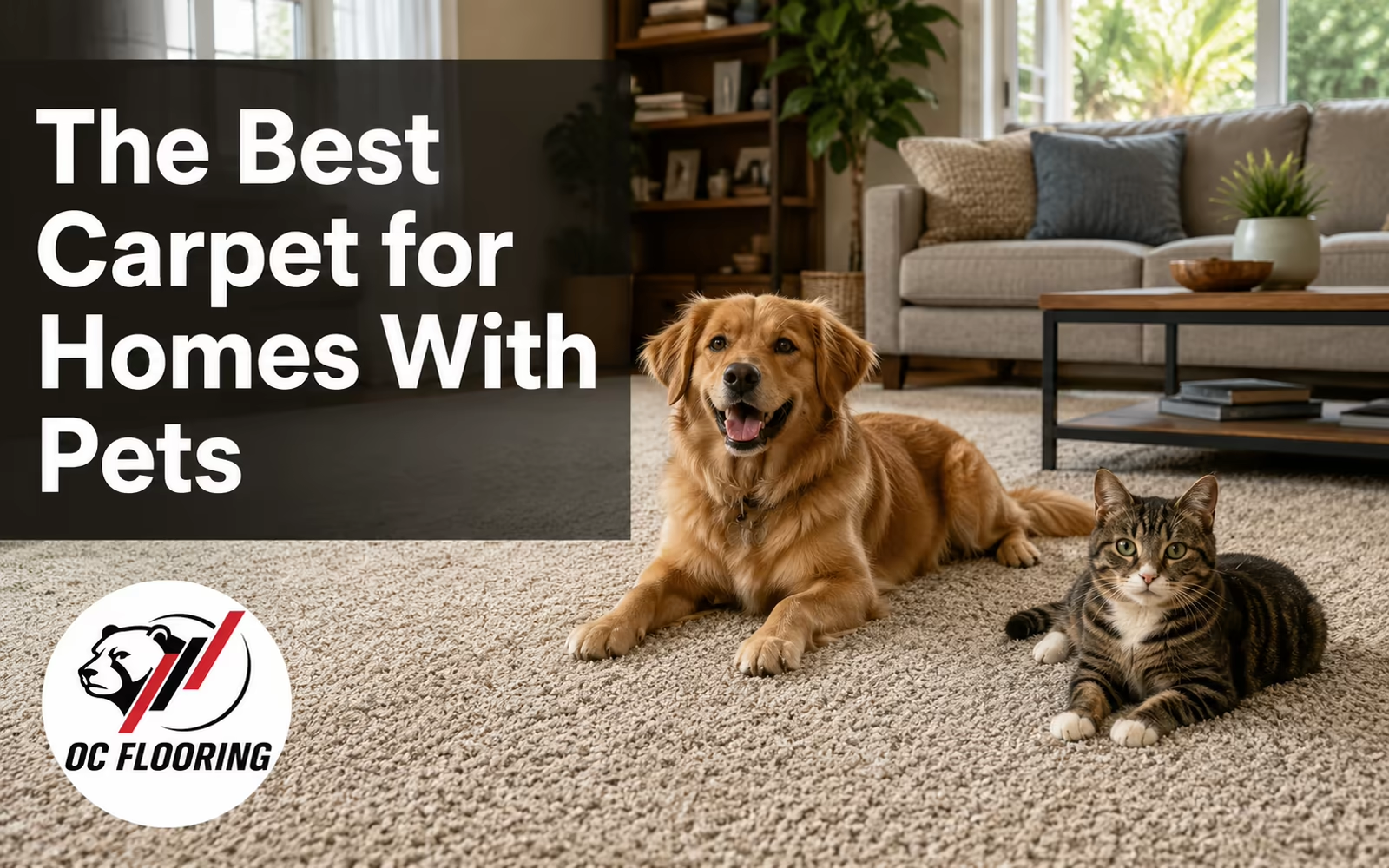


The best carpet for a home with pets is a solution-dyed fiber — triexta or solution-dyed nylon — over a moisture-barrier pad. Solution-dyed means the color runs through the fiber like a carrot, not around it like a radish, so enzyme cleaners and repeat scrubbing cannot fade it. The barrier pad matters even more: it is what stops an accident from reaching the subfloor, and the subfloor is where permanent odor actually lives. Everything else — loop versus cut pile, color, brand — is detail on top of those two decisions.
of “the carpet still smells” cases we see trace to urine that reached the pad or subfloor, not the carpet. A moisture-barrier pad is the cheapest odor insurance that exists.
installed carpet with us, pad and labor included. A pet-ready fiber and barrier pad move the number up modestly — far less than replacing carpet two years early costs.
we bring to your door, including the pet-focused lines — so the snag test and the color check happen on your floor, with your animal supervising.
The Two Decisions That Matter
Pet carpet marketing is loud, and most of it is decoration around two engineering choices. First, how the fiber was dyed. Conventional carpet is dyed after the fiber is made — color sits on the surface, and aggressive cleaning slowly takes it off. Solution-dyed fiber has pigment mixed into the polymer before it is extruded: cut it anywhere and it is the same color all the way through. That is what lets you attack an accident with an enzyme cleaner at full strength, repeatedly, for a decade, without leaving pale ghost spots in the traffic lanes.
Second, what is under the carpet. Liquid goes through carpet in seconds. An ordinary pad soaks it up like a sponge and holds it against the subfloor, which is why a cleaned carpet can smell fine for a week and then bloom again on a humid day — the smell was never in the carpet. A barrier pad has a moisture-proof top layer, so accidents stay on top, where a towel and a cleaner can actually reach them.
Carpet Fibers, Ranked for Pet Households
| Fiber | Pet verdict | The honest trade-off |
|---|---|---|
| Triexta | The pet benchmark | Inherently stain-resistant polymer, excellent durability; slightly springier feel some people love and some do not |
| Solution-dyed nylon | Co-favorite | Best resilience in traffic lanes and on stairs; costs more than triexta line for line |
| Conventional nylon | Good, with a caveat | Durable, but surface-dyed — repeat deep cleaning can fade the accident zones |
| Polyester (PET) | Fine for calm pets | Naturally stain-resistant and budget-friendly, but mats under heavy paws and traffic |
| Wool | Beautiful, wrong tool | Absorbs moisture, holds odor, and hates the aggressive cleaners pet homes need |
| Berber / looped styles | Avoid with claws | One caught claw can pull a loop and unravel a visible run — cut pile only for cats and diggers |
Pile, Pattern, and the Claw Problem
Choose a cut pile — the loops in berber and level-loop styles are claw magnets, and a single pulled loop can run like a stocking. Keep the pile short to medium: plush, deep pile holds hair, traps litter, and shows every paw path. A textured or twisted cut pile hides tracking best. On color, the practical move is matching your pet — not as a joke: a carpet within a shade or two of the animal that sheds on it buys you days between vacuuming, and light-but-not-white neutrals with some fleck hide the most sins. Our carpet brand guide covers which manufacturers build the serious pet lines.
The Pad Is Where Odor Wins or Loses
It is worth repeating as its own section, because it is the part every showroom skips: the pad decides whether an accident is an incident or a permanent feature. A barrier pad costs modestly more than the builder-grade sponge it replaces. Against the cost of replacing a room of carpet two years early — or sealing and repainting a subfloor to kill an odor that got into the wood — it is the best value line in the whole quote. When we bring samples, we bring the pads too, and we will show you the difference with a glass of water on each. It is persuasive.
Our pet-household spec
- Triexta or solution-dyed nylon, cut pile, short to medium height
- Moisture-barrier pad under every carpeted room
- Power-stretched installation — loose carpet wears faster under zoomies
- Textured finish to hide paw tracking between vacuums
- Color within two shades of the shedder-in-chief
- Stairs in the most resilient fiber in the budget — they take the worst of it
What we steer pet owners away from
- Berber and any looped style where claws live
- Deep plush that traps hair, litter and moisture
- Wool in rooms where accidents are plausible
- Bargain pad under premium carpet — backwards priorities
- White and near-white in the first pet decade
- Believing "stain-proof" covers oil, vomit and dye — read the warranty
What "Pet-Proof" Warranties Actually Cover
Most premium pet carpets carry impressive-sounding warranties, and they are genuinely useful — but read the boundaries. They typically cover staining from pet urine, sometimes feces and vomit; they usually exclude oil-based messes, dye transfer, and anything filed under wear rather than stain. Matting in the hallway after five years of a ninety-pound dog is wear, not a stain, and no warranty pays for it — fiber resilience is what protects you there, which is why nylon and triexta earn their premium in big-dog homes. Keep your receipt and your cleaning records; every claim process asks for both.
Living With It: the Maintenance Reality
Whatever you install, three habits do most of the work. Vacuum the traffic lanes twice a week — grit cuts fiber, and pet homes generate more grit. Treat accidents with an enzyme cleaner immediately — blot, saturate, wait, blot; never steam an untreated urine spot, heat sets the protein. And book a professional hot-water extraction every 12–18 months, which most warranties quietly require anyway. If the carpet is fine but rippled from years of dog launches off the couch, that is a stretching problem, not a carpet problem — restretching fixes it for a fraction of replacement. And when the damage is real — pad-deep odor, matted lanes that will not recover — our list of reasons to replace carpet will tell you honestly whether you are there.
One more honest note: for some households the right answer is not carpet at all. If allergies or repeated accidents rule the day, hard flooring with washable rugs wins, and we compare the options in the best flooring for kids and pets. For everyone else — and bedrooms full of dog-shaped sunbeams — the right carpet over the right pad is a genuinely good life. The full service details are on our Bellevue carpet installation page.
Pet-Friendly Carpet: What Owners Ask Us
What is the best carpet for dogs and cats?
Is triexta really better than nylon for pets?
Why does my carpet still smell after professional cleaning?
Should I avoid berber carpet with a cat?
What color carpet hides pet hair best?
Do pet-proof carpet warranties actually pay out?
Is carpet even a good idea with pets, or should we go hard-surface?
What does pet-ready carpet cost installed?
Bring the Samples to the Dog
The mobile showroom comes to you: twenty-plus samples including the serious pet lines, all three pad grades, and a written price the same visit. Snag-test them with the actual claws in question. Free in-home estimates across King & Snohomish County.
Related reading: The best flooring for kids and pets · The best carpet brands · What carpet installation costs in Seattle · Six reasons to replace carpet · Carpet installation in Bellevue · Book a free estimate