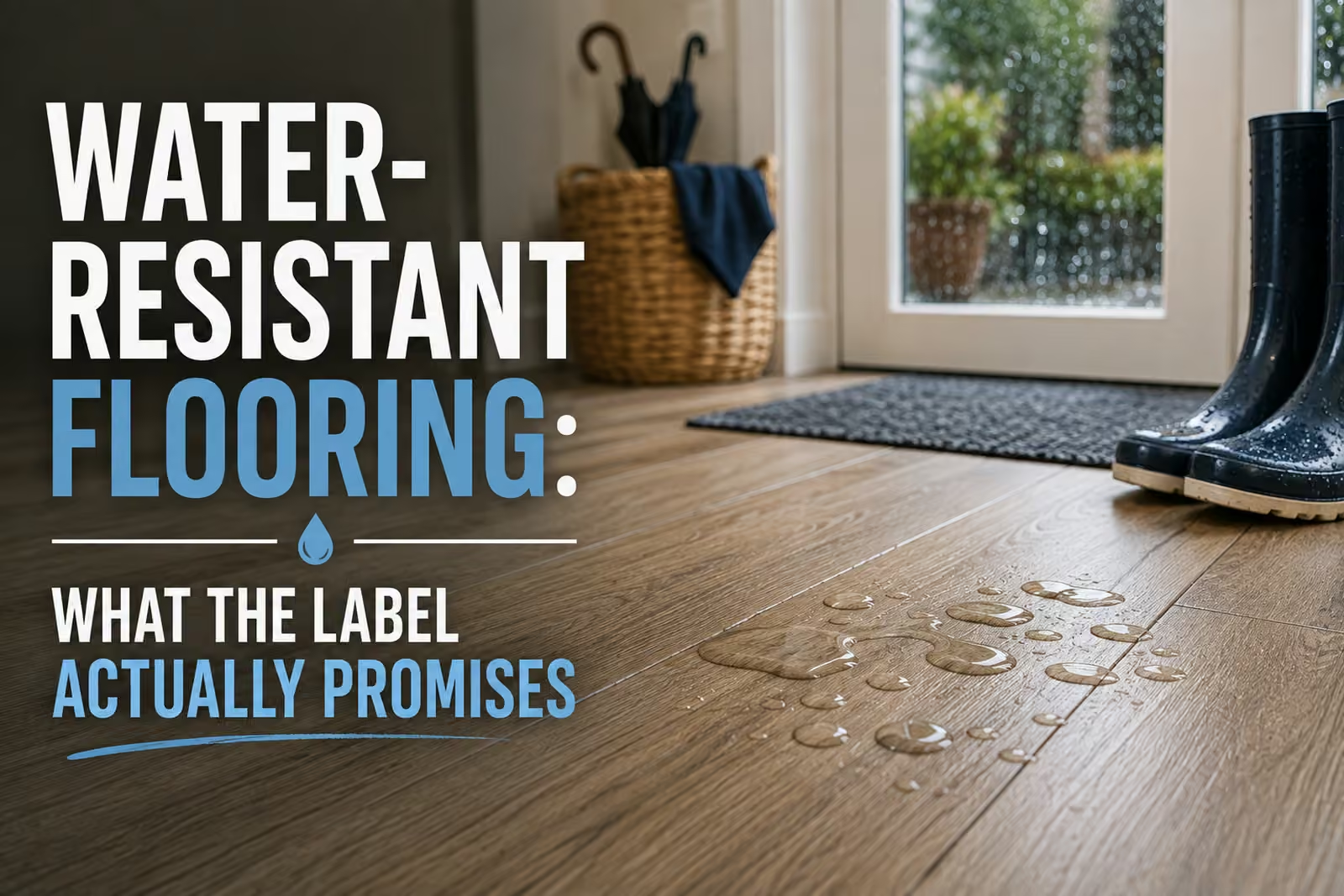



"Water-resistant" is a promise about spills, not soakings: the floor tolerates surface water that gets wiped up within a stated window, but liquid that reaches its core or seams can still do permanent damage. That's not a scam — it's a perfectly good spec for bedrooms, living rooms, halls, and offices, where it buys you nicer materials for the money. The trick is matching the label to the room's real water risk, and that's exactly what this guide does.
Flooring boxes have learned that Washington shoppers scan for one word, so some version of "water-resistant," "waterproof surface," or "spill shield" now appears on practically everything. Those phrases are not interchangeable, and the differences are exactly where disappointed homeowners get made. We're OC Flooring — since 2013 we've replaced a lot of floors that failed precisely because a label was read optimistically — so here's how to decode the claim, and just as importantly, where a merely water-resistant floor is the genuinely smart buy.
Decoder Ring: Three Facts About the Label
the spill window many water-resistant warranties quote: surface water wiped within it is covered. The promise is about noticed accidents — not the dishwasher line that seeped all weekend.
high-density fiberboard — the compressed wood-fiber core inside laminate. The surface sheds water; the core is still wood, and wood that gets wet swells and stays swollen.
where water actually enters a floor. Ratings describe the plank; real failures happen at joints, cut edges, and the perimeter — which is why installation quality is part of water resistance.
What the Manufacturer Is Really Promising
Read the warranty document (not the banner on the box) and water-resistant claims boil down to something like: topical household spills, wiped within a defined period, won't void the finish or swell the surface. Note everything that sentence excludes — standing water, flooding, appliance leaks, wet mopping with abandon, moisture from below, and anything that reaches an edge or seam. A genuinely waterproof product makes a different and stronger claim about the material itself; we ranked those in our guide to fully waterproof floors. Between the two labels sits most of the flooring aisle, and the price difference is real — which is why knowing when resistant is enough saves money.
Match the Label to the Room's Actual Risk
| Room | Realistic water event | Is water-resistant enough? |
|---|---|---|
| Bedrooms, upstairs halls | A spilled water glass, once a year | Easily — this is over-spec territory |
| Living / dining / office | Knocked-over coffee, plant overwatering | Yes — wipe it and move on |
| Kitchen | Dishwasher or fridge-line failure, sink overflows | Borderline — fine with vigilance, but hidden-leak zones argue for waterproof |
| Entry / mudroom | Dripping gear daily, eight months a year | No — chronic wetting beats any spill warranty |
| Laundry, bathrooms | Supply-line failure, tub splash, condensation | No — this is waterproof-or-tile country |
| Basement / below grade | Vapor from the slab, seasonal seepage | No — moisture arrives from below, where no surface rating helps |

Where Water-Resistant Is the Smart Money
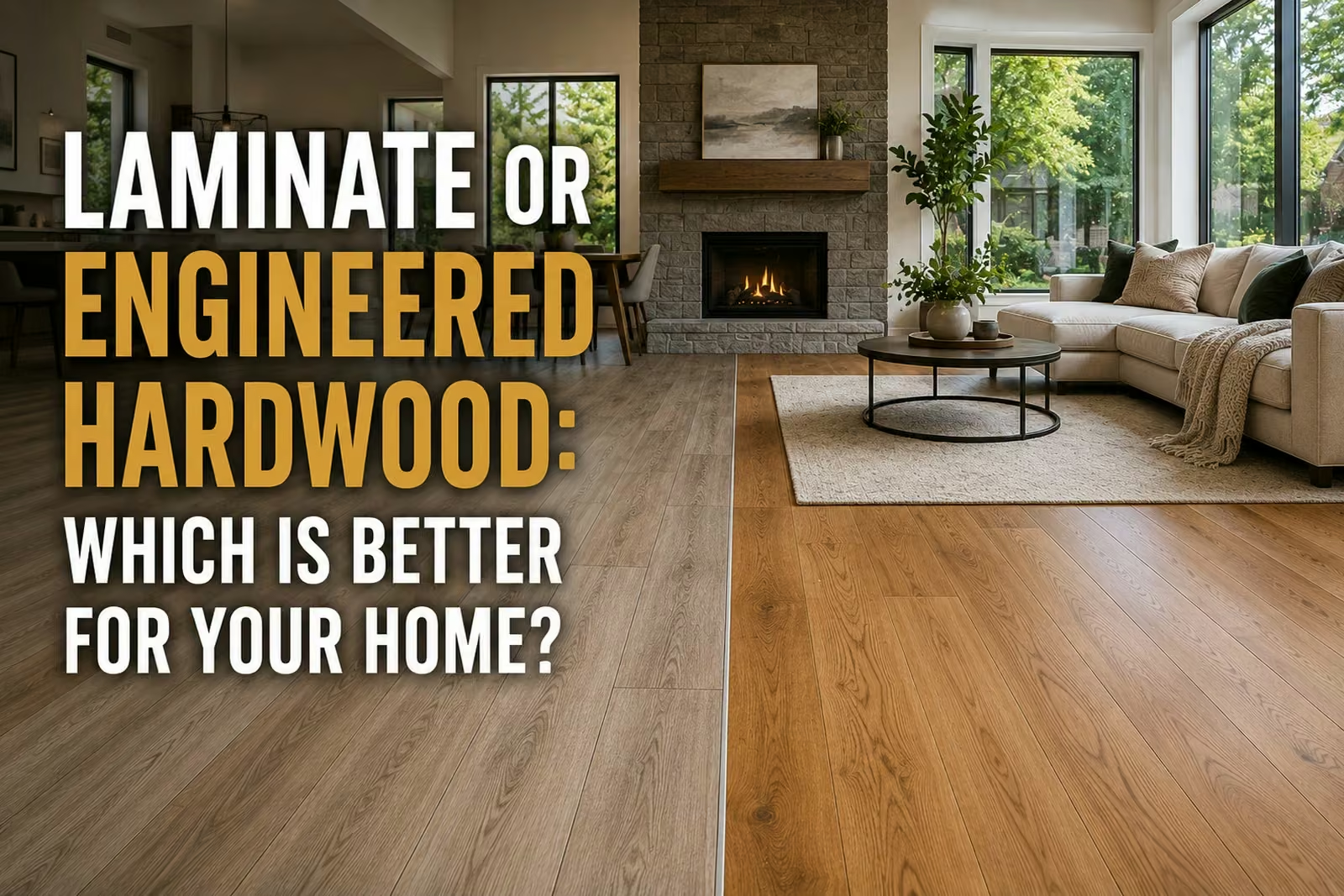
Here's the perspective that gets lost in waterproof marketing: most rooms in a house never see a water event worse than a dropped glass. Paying the waterproof premium in a second-floor bedroom buys protection against a threat that basically doesn't exist there. In dry rooms, choosing water-resistant laminate or engineered wood instead redirects that money toward what you'll actually notice for twenty years — a thicker wear surface, a more convincing texture, a better underlayment. That's the honest calculus behind our laminate vs. engineered hardwood comparison: in the rooms where those floors belong, water resistance is a convenience feature, not a survival trait.
A quick worked example of that trade: on a 400-square-foot bedroom level, the retail gap between a mid-tier water-resistant laminate and a comparable waterproof plank often covers the entire upgrade from a basic to a premium acoustic underlayment — the difference you'll hear every single day, versus a rating those rooms will almost certainly never call on.
What Actually Makes a Floor Water-Resistant
Four things, in descending order of what you can verify at the store: the surface seal (the melamine or urethane face that sheds liquid), edge treatment (better lines wax or coat the bevels and locking profiles — the vulnerable spots), the core recipe (denser cores with water-repellent resins swell slower; the core material is on every spec sheet), and the installation (tight seams, correct expansion gaps, and a bead of sealant where floors meet tubs, exterior doors, and dishwasher bays). That last one is free to get right and routinely skipped — it's part of every laminate installation we do.
The Wet-Side-of-Washington Reality Check
Our climate doesn't produce many dramatic floor-killers; it produces chronic dampness — the entry that never fully dries between October and May, the bathroom fan that can't keep up, the crawlspace that keeps the subfloor moist from below. Water-resistant products are engineered for events, not conditions. So our local rule of thumb: upstairs and formal rooms, buy water-resistant and spend the savings on quality; every room that touches the weather or the plumbing, skip the middle ground and go fully waterproof. If you're not sure which side of the line a room falls on, that's a two-minute conversation at a free in-home estimate.
Water-Resistant Flooring, Decoded
Does water-resistant mean I can wet-mop the floor?
How long can a spill sit on a water-resistant floor before it causes damage?
Is a water-resistant floor good enough for a kitchen?
What is the difference between an AC rating and a water rating on laminate?
Why do water-resistant floors fail at the seams first?
Is engineered hardwood considered water-resistant?
Which rooms honestly do not need waterproof flooring?
Can moisture from below ruin a water-resistant floor?
Not Sure Which Rooms Deserve the Waterproof Premium?
Bring us your floor plan — we'll tell you where water-resistant saves you money, where waterproof is non-negotiable, and check the subfloor moisture either way. Free in-home estimates, King and Snohomish County.
Related reading: Fully waterproof floors, ranked for Everett · Laminate vs. engineered hardwood · Laminate installation · Best flooring for the PNW climate