



The real benefit of waterproof flooring isn't surviving Seattle rain — it's turning your home's inevitable indoor water events into non-events. The smart play is a room-by-room strategy: waterproof floors (LVP or tile) in the five high-risk rooms — bathrooms, laundry, kitchen, mudroom/entry, and anything on a slab — and spend the savings on looks in rooms that stay dry. Below: the risk map, the room-by-room picks, and where “waterproof” is honestly optional.
Here's a secret about our rainy reputation: Seattle rain almost never ruins floors. Roofs work. What ruins floors here is the indoor water — the washer hose, the toilet wax ring, the dishwasher's slow drip, the aquarium, the 60-pound dog and the drip line from 150 rain-damp coats a winter. After repairing water-hit floors across King and Snohomish County since 2013, we've come to think about waterproof flooring less as a product and more as a strategy: put invincible floors where water is a when, and spend freely on beauty where it's an if.
Three Facts That Shape the Strategy
concrete continuously passes moisture vapor from the ground below — even decades after pouring. That’s why below-grade rooms punish wood-based floors year after year, and why waterproof flooring is the default on any slab.
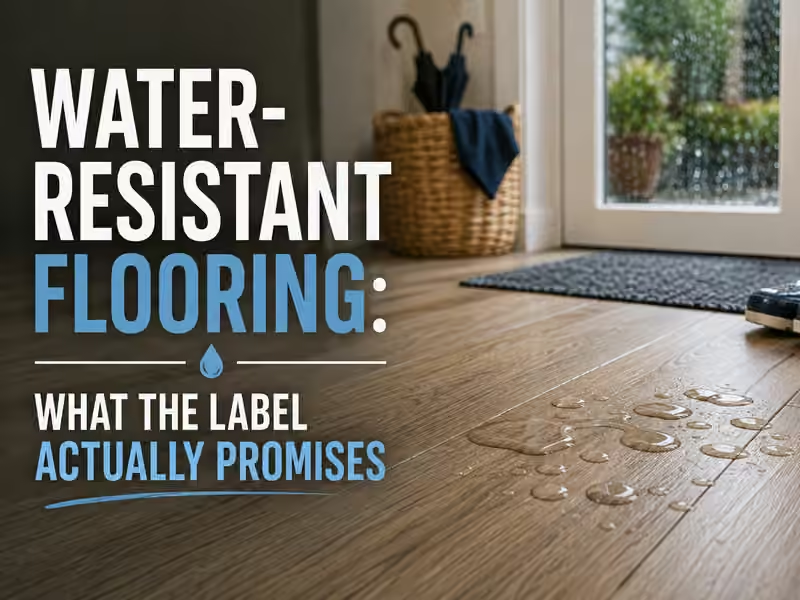
“waterproof” on a flooring box means the plank itself won’t be harmed — water can still travel through seams and wall edges to the subfloor below. Waterproof flooring buys you time and saves the finish; it doesn’t replace fixing leaks fast.
how often insurers and manufacturers recommend replacing rubber washing-machine supply hoses — burst washer hoses are one of the most common causes of home water damage, and the laundry room is usually floored ahead of that risk.
The Room-by-Room Risk Map
| Room | The water source (a when, not an if) | Our pick | Notes |
|---|---|---|---|
| Bathrooms | Tub splash, toilet seals, humidity | LVP or tile | Tile wins around showers; LVP is warmer and quieter |
| Laundry | Washer hoses, supply valves, detergent | LVP or tile | A pan under the washer buys response time |
| Kitchen | Dishwasher edges, fridge line, sink zone | LVP (or sealed tile) | The most-regretted laminate room we see |
| Mudroom / entry | Boots, umbrellas, wet dogs, 150 damp days | LVP or tile | Add a long walk-off mat — grit control |
| Basement / anything on slab | Vapor from concrete, window wells, grading | LVP | Solid hardwood is disqualified below grade, full stop |
| Living / dining / bedrooms | Spilled drinks — an if | Hardwood or quality laminate | Waterproof optional; buy looks and feel instead |
| Upstairs halls / offices | Rarely any | Hardwood or laminate | Spend here on what you love walking on |

What Waterproof Flooring Actually Buys You
Modern waterproof floors — rigid-core luxury vinyl plank above all — changed the math of home water events. On a wood or laminate floor, a burst washer hose is an insurance claim: swollen boards, tear-out, weeks of drying and matching. On a waterproof floor, the same event is often an afternoon: extract the water, dry the room, confirm the subfloor with a moisture meter, move on. The flooring stops being the casualty and becomes part of the containment.
But let's keep the claim honest, because the fine print matters. “Waterproof” certifies the plank — the material won't swell, warp, or delaminate. It does not mean the room is sealed; a real flood still finds seams, wall edges, and doorways on its way to the subfloor. So waterproof flooring converts emergencies into chores, and it protects you completely from the everyday category — drips, splashes, pet bowls, tracked-in rain — but a genuine soaking still deserves the full dry-out treatment we describe in our water-damage first-24-hours guide.
The Five Rooms Where Waterproof Isn't Optional
Look back at the table: bathrooms, laundry, kitchen, mudroom, and anything sitting on concrete. Each has a water source that operates on a schedule, not by accident. The basement deserves special emphasis for local homes — between classic below-grade basements and the daylight basements built into hillsides all over Seattle, Shoreline, and Everett, an enormous share of our region's finished square footage sits on slab. Concrete passes ground moisture as vapor indefinitely, which quietly attacks wood-based floors from below even when nothing ever spills. That's why LVP has become the default answer down there: waterproof from both directions, warmer-feeling than tile on a cool slab, and unbothered by the vapor that dooms laminate and hardwood. (Our Pacific Northwest flooring guide ranks every option by room if you want the full matrix.)
The Rooms Where You Can Skip It — and Should
Waterproof everything? You can now — whole-home LVP is a legitimate look. But bedrooms, formal living spaces, and upstairs halls face spill risk measured in ifs, and paying the waterproof premium there often means giving up things those rooms deserve: real hardwood's warmth and refinishable lifespan, or high-end laminate's deeper texture at a lower price. Our usual advice for the Seattle market: real wood where guests and future buyers look first, waterproof where the plumbing lives. Homes floored that way inspect better, photograph better, and cost less to love.
One Floor Everywhere: The Continuity Play
The counterargument we respect: running a single waterproof floor through the entire main level. Open-plan homes benefit enormously — no transition strips every doorway, no color-matching compromises, small spaces read larger, and the kitchen-to-living flow becomes seamless. Modern rigid-core LVP made this practical because one product genuinely handles every room in the chain. If you go this route, buy quality once: a 20-mil wear layer and a rigid core, since the whole-house floor also absorbs the whole house's traffic. We compare product tiers in our first-time LVP buyer's guide, and our installation team handles the slab prep, moisture checks, and transitions that make it look factory-planned.
Waterproof Flooring in Seattle: What Homeowners Ask
Is waterproof flooring worth it in every room of the house?
What's the real difference between waterproof and water-resistant flooring?
Does waterproof flooring protect the subfloor underneath it?
Can I run one waterproof floor through my whole main level?
Is waterproof laminate actually waterproof?
What goes under waterproof flooring on a concrete slab?
Should I choose tile or LVP for a Seattle bathroom?
Does waterproof vinyl flooring feel cold and hard like tile?
Map Your Home's Water Risk in One Free Visit
We'll walk your rooms, flag where waterproof flooring earns its keep, and price the plan honestly — free in-home consultations across King & Snohomish County, financing available.
Related reading: Vinyl plank & laminate installation · Water damage: the first 24 hours · Vinyl plank vs. laminate · Best flooring for the PNW climate