



SPC stands for stone-plastic composite — luxury vinyl plank built on a rigid core of ground limestone and PVC. Is it good? For the right rooms, genuinely: it's waterproof, dent-resistant, and dimensionally stable over slabs and imperfect subfloors, which is why it has taken over the rigid-vinyl market. The honest catches: it's firm underfoot, quality varies enormously between lines, and the wear layer — measured in mils — decides how long it lasts. Full anatomy below.
Flooring loves an acronym, and SPC is the one you'll hit within minutes of shopping vinyl plank anywhere around Puget Sound. We're OC Flooring — vinyl plank is one of the floors we install most across King and Snohomish County — and we spend a lot of estimate visits translating this exact term. So here's the plain-English version: what's physically inside an SPC plank, why the industry moved to it, and the spec-sheet numbers that separate the plank that lasts twenty years from the one that disappoints in five.
SPC by the Numbers
of a typical SPC core is ground limestone (calcium carbonate) bound in PVC. "Stone-plastic composite" isn't branding — the board really is mostly rock dust.
how wear layers are measured. Around 12 mil is the residential baseline; 20 mil and up is the heavy-use spec worth paying for in entries and busy kitchens.
layers in a typical SPC plank: UV topcoat, clear wear layer, printed design film, the rigid stone-polymer core, and usually an attached acoustic pad.
The Anatomy: What You're Actually Buying
Slice an SPC plank and you get a five-layer sandwich. On top, a UV-cured topcoat handles daily scuffs and makes the floor cleanable. Under it, the wear layer — a clear sheet whose thickness in mils is the single most important number on the spec sheet, because when it's gone, the floor is done. Next, the design film, a high-resolution print of oak, hickory, or stone. Then the namesake: the stone-plastic composite core, a dense, rigid board of limestone and PVC that neither swells with water nor flexes over small subfloor flaws. Underneath, most lines attach a foam or cork pad that softens footfall and sound.
SPC vs. WPC vs. Flexible Vinyl: The Family Tree
| SPC (stone core) | WPC (foamed core) | Flexible / glue-down LVP | |
|---|---|---|---|
| Core | Limestone + PVC, dense and thin | PVC foamed with air for cushion | Solid flexible vinyl, no rigid core |
| Feel underfoot | Firmest of the three | Softest and warmest | Follows whatever is beneath it |
| Hides subfloor flaws | Best — rigidity bridges small dips | Good | Worst — telegraphs every ridge |
| Dent resistance | Best — densest core | Weakest — foam compresses | Good, subfloor-dependent |
| Temperature swings | Most stable — sunrooms, big glass | Can expand more | Movement handled by full-glue bond |
| Typical use | Whole-home rigid plank | Comfort-first bedrooms, dens | Commercial, precise custom work |

So Is It Good? The Case For
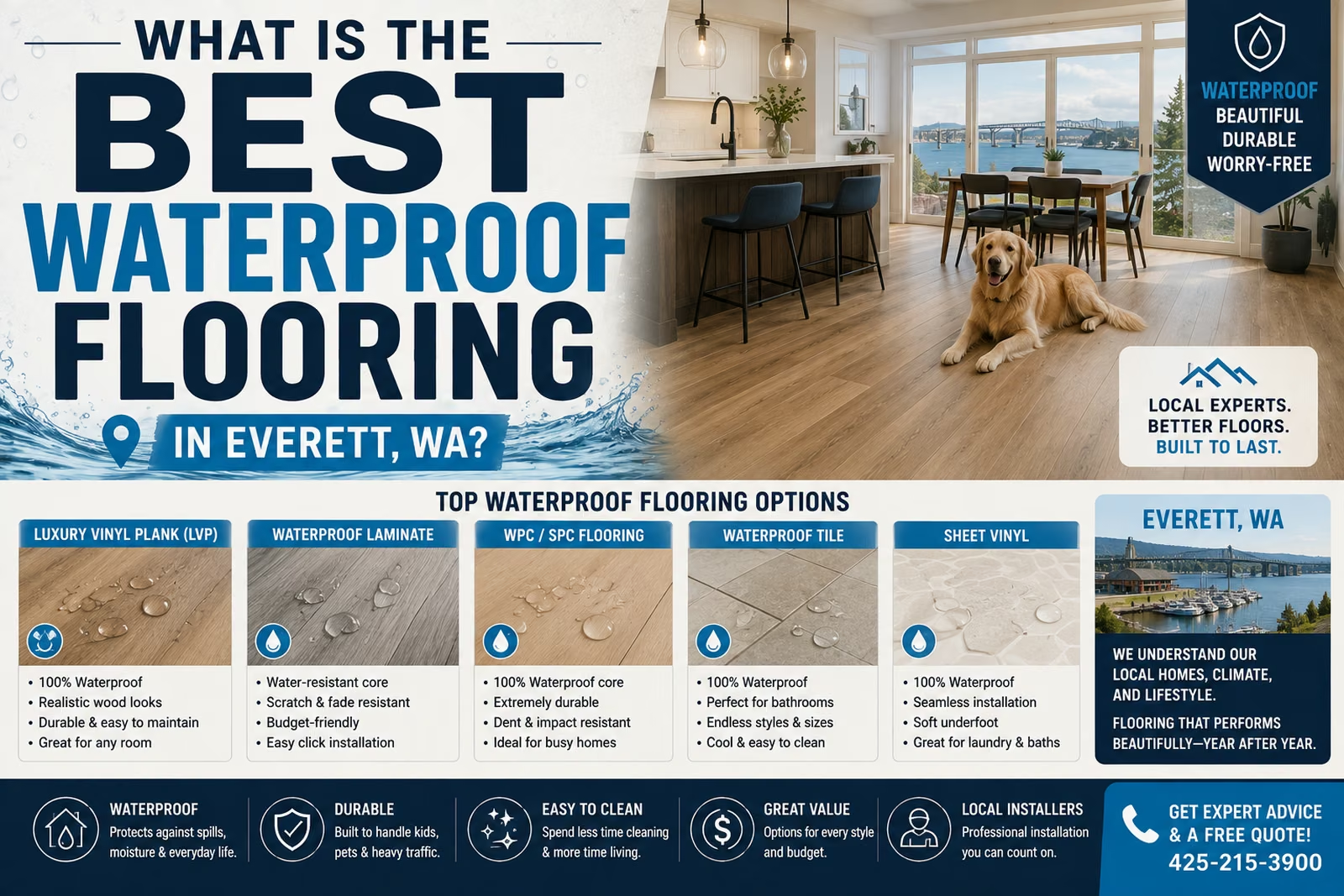
For most of the jobs Puget Sound homeowners hire vinyl to do, SPC is the strongest tool in the vinyl family. The stone core is completely indifferent to water — kitchens, baths, laundry, basements are all fair game. It's the most dimensionally stable vinyl through temperature swings, which matters in south-facing rooms with big glass, in three-season spaces, and in on-slab condos where afternoon sun cooks the floor. Its rigidity lets it float over slightly imperfect subfloors that would show through flexible vinyl — a real advantage in older Everett and Seattle housing stock. And its density gives it the best dent resistance in the category, which dog owners and appliance movers both appreciate.
The Case Against — Read Before Buying
Three honest drawbacks. It's firm. That dense core is closer to tile than to carpet underfoot; if barefoot comfort in a bedroom is the priority, WPC or a pad-and-carpet setup feels better. The quality spread is enormous. A bargain SPC plank and a premium one look identical in a photo; the differences hide in wear-layer mils, core density, pad quality, and how often the wood print repeats. And it's still vinyl: it cannot be refinished, ever — when the wear layer goes, the floor goes. We lay out that whole side of the ledger in our pros-and-cons of luxury vinyl guide.
How to Read an SPC Spec Sheet Like an Installer
- Wear layer first: 12 mil for light-traffic rooms, 20 mil or more for entries, kitchens, dogs, and rentals. This number outranks everything else on the label.
- Total thickness: 4–6.5 mm is typical; thicker planks span dips better and feel more solid, but thickness without wear layer is cosmetics.
- Attached pad: saves a step and quiets the floor — check it's included, not an add-on.
- Certifications: look for a FloorScore (or equivalent) indoor-air certification for low-VOC assurance.
- Pattern repeats and bevels: more unique plank faces and a micro-bevel edge are what make good SPC read as wood from standing height.
Where SPC Fits a Puget Sound Home
Our shortlist from a thousand-plus local installs: on-slab condos (rigid over concrete, works with sound-rating underlayment requirements), daylight basements from Everett to Renton, kitchens and mudrooms that catch eight months of drip, and whole-main-floor installs in busy family homes — it's the configuration we recommend most often when clients ask for one floor that runs everywhere downstairs; see our Everett waterproof rankings for how it stacks against tile and sheet vinyl room by room. Installation with our crew runs $3–$4.25 per square foot labor, and a free in-home estimate includes the subfloor flatness check that floating floors quietly depend on.
SPC Flooring Questions, Answered
What does SPC actually stand for in flooring?
Is SPC the same thing as luxury vinyl plank?
Which is better, SPC or WPC?
What wear layer thickness should I look for on SPC?
Is SPC flooring safe for indoor air quality?
Can SPC flooring be used over radiant floor heating?
Will heavy appliances dent SPC planks?
Does SPC need a perfectly flat subfloor?
Want SPC Specced and Installed Right, Down to the Subfloor?
We'll help you pick a wear layer that matches your household, check your slab or subfloor flatness, and install rigid-core plank that performs for decades — free in-home estimates across King and Snohomish County.
Related reading: Best waterproof floors, ranked · Luxury vinyl pros and cons · Vinyl plank & laminate installation