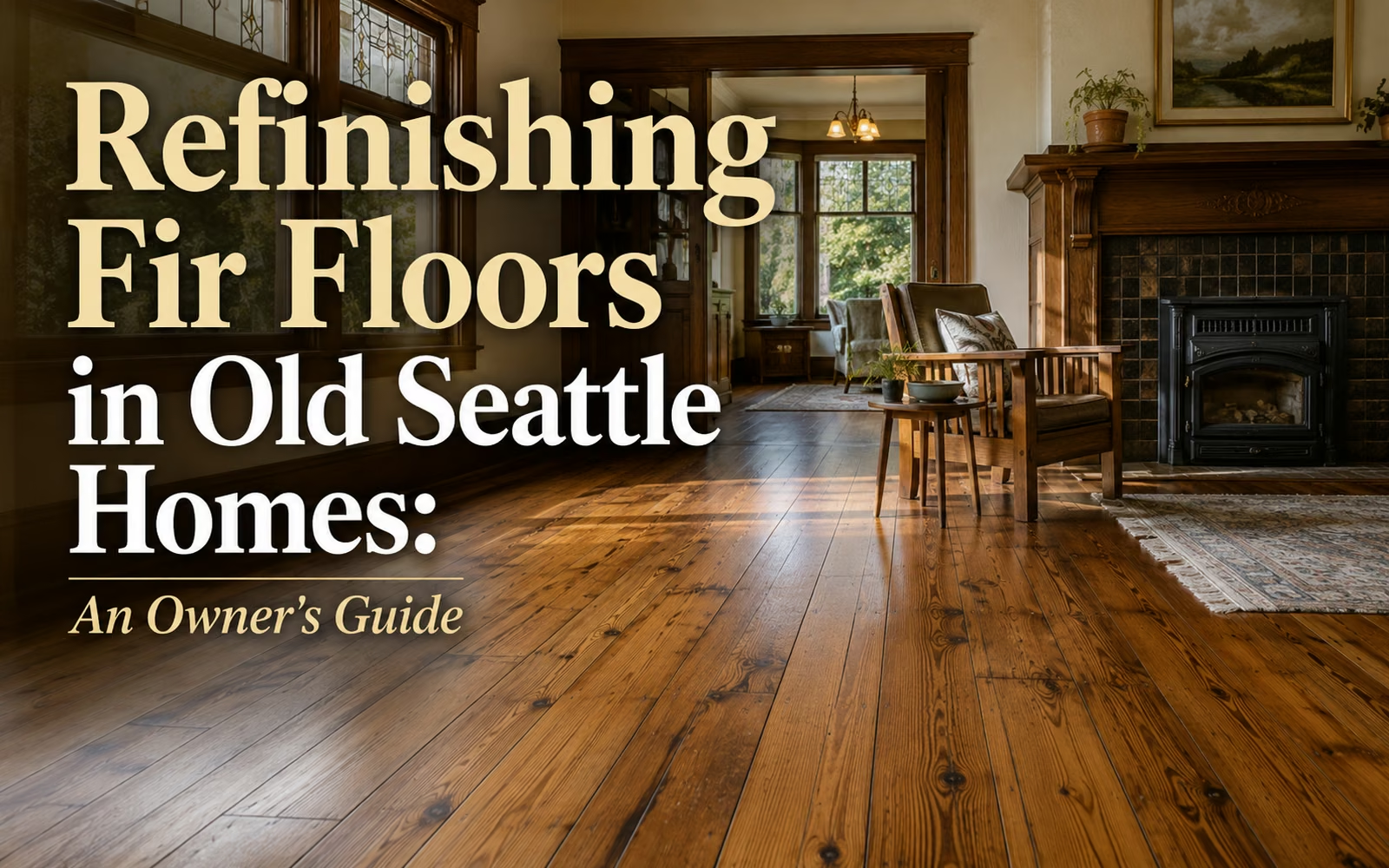




If your older Seattle Craftsman still has original floors, you likely have both woods — oak in the front rooms, Douglas fir in the back — and they are not the same floor wearing different colors. Oak (Janka 1290–1360) is twice as hard, sands predictably, and takes stain well. Old-growth fir (Janka 660) is soft, dents honestly, blotches under stain, and looks its best under a clear waterborne finish. Both refinish beautifully at the same price; the mistake is treating them identically.
Walk from the dining room to the back hallway in an older Seattle Craftsman and you may cross a border between two different trees — often without noticing, because both floors have spent decades under the same ambered finish. Builders of that era used oak where guests would look and Douglas fir everywhere else: fir was the Northwest’s own lumber, cut nearby and cheap, while oak arrived by rail and cost accordingly. A hundred years later, the budget wood and the show wood have both become irreplaceable — and they still need different handling when refinishing time comes.
This is the head-to-head: how to tell which wood you’re standing on, what the hardness gap means for daily life, why they sand and finish differently, and how to handle the house that has both. (For the whole-house restoration story — thickness checks, repairs, what a century leaves behind — see our 1920s Seattle bungalow guide; this post is about the wood itself.)
Janka hardness, Douglas fir vs red oak — oak resists dents roughly twice as well. Neither number stops a determined dog; one just shows it sooner.
woods in most original Craftsman homes: oak in the living and dining rooms, fir in bedrooms, halls, and kitchens. Same house, two different refinishing conversations.
per sq ft to sand and finish either species natural — the woods differ in everything except our price.
Ten-Second Identification: Which Wood Is This?
You don’t need a lab. Look at the grain. Oak has open pores you can see (sometimes feel), flecks and rays in the surface, and often a flame-shaped “cathedral” pattern down the board. Douglas fir is the opposite: smooth, pore-less surface with straight, tightly spaced parallel grain lines — old vertical-grain fir looks like the edge of a closed book. Color helps too, once finish is off: red oak leans pink-tan, white oak grayish-brown, fir a warm honey that deepens to rose-orange with sun and years. And location is the strongest hint of all in a Craftsman: formal rooms up front are usually oak, everything behind the swinging door is usually fir.
If your oak-vs-oak question is red versus white, that’s a separate comparison we’ve already written — red oak vs white oak. In Craftsman-era Seattle homes, the front-room oak is most often red oak, sometimes quarter-sawn white oak in the grander houses.
What the Hardness Gap Actually Means
The Janka scale puts numbers on what your floor already knows: red oak sits at 1290, white oak around 1360, and Douglas fir at 660 — half as resistant to denting. In practice, oak shrugs off most of daily life and records only the greatest hits: dropped cast iron, stiletto heels, the piano move. Fir records more of the everyday — chair legs, dog nails, gravel in a boot tread — and a century-old fir floor wears those marks by the thousand.
Here’s the reframe we offer at estimates, honestly: on a hundred-year-old floor, that softness reads as patina, not damage. Old-growth fir has growth rings far tighter than anything milled today, which makes it tougher than its Janka number suggests and gives the wear an even, burnished character — closer to a farmhouse table than a scratched countertop. If you want a floor that hides evidence, oak is genuinely the better tool. If you want the house’s history visible underfoot, fir was never a downgrade.
Fir vs Oak, Line by Line
| Douglas fir | Oak (red / white) | |
|---|---|---|
| Janka hardness | 660 | 1290 / ~1360 |
| Grain | Straight, tight, vertical lines | Open pores, flecks, cathedral figure |
| Color, natural | Honey to rose, deepens with sun | Pink-tan (red) / sandy-gray (white) |
| Takes stain? | Poorly — blotches; go natural | Well — from natural to espresso |
| Sanding behavior | Fast-cutting, easy to gouge — gentle grits, careful machines | Predictable, forgiving |
| Dents & dog nails | Shows them; wears them as patina | Resists them far longer |
| Replacement boards | Salvage yards — new stock won’t match | Readily milled today |
| Our refinish price | $3.99/sq ft natural | $3.99 natural / $6.50 stained |
Under the Sander: Two Different Animals
Oak is the wood sanding equipment was effectively designed around: dense enough to cut evenly, forgiving of grit choices, hard to ruin. Fir is the opposite temperament — so soft that an aggressive cut or a moment’s hesitation with a drum sander digs a trench, and its dramatic earlywood/latewood bands can wash out into ripples under careless abrasion. Sanding fir well means lighter passes, finer grit progressions, and machines that flatten rather than gouge — our Lägler TRIO’s three-disc final pass earns its keep on fir more than anywhere else. This, bluntly, is why rental-sander weekends end badly on fir floors more than any other wood in Seattle.
The payoff for care is outsized: freshly sanded vertical-grain fir, with its tight stripes running room to room, is one of the best-looking floors in the Pacific Northwest, full stop. We wrote a whole field guide on it — refinishing fir floors in old Seattle homes — because the wood deserves the specialization.
Color and Finish: Where the Two Woods Part Ways Completely
Oak accepts stain the way it accepts everything else — evenly and on command. Natural, honey, mid-brown, espresso: the front rooms of a Craftsman can be any of them, and our stain color guide walks that decision. Fir mostly refuses. Its density flips between growth bands, so pigment grabs unevenly and the result blotches — the classic failed experiment is a fir hallway someone tried to stain to match the oak dining room. Our standing advice: stain the oak if you like, keep the fir natural, and let each wood be excellent at what it is.
Finish chemistry matters double on fir. Oil-modified poly ambering on red oak reads traditional; the same amber stacked on fir’s already-warm tone lands at pumpkin, and it keeps going for years. A clear waterborne — the Bona and Pallmann systems we run, 2–3 coats — holds fir at its true honey and keeps oak’s stain the color you chose. The full argument is in water-based vs oil-based, but for fir it isn’t close.
The Seattle House With Both — and How We Handle It
This split floor plan is everywhere in Seattle’s Craftsman neighborhoods — Wallingford, Ballard, Queen Anne, West Seattle — and it raises the question every owner asks: “can you make them match?” The honest answer is no, and you shouldn’t want us to. Fir cannot convincingly impersonate oak, and staining it toward oak produces the blotchy hallway from the previous section. What a good refinish does instead is make them agree: both woods sanded fresh in the same job, one clear finish system across the whole floor, one sheen — and the doorway between them reads as intentional, the way the builder meant it. The oak looks like oak, the fir looks like fir, and the house looks like a Craftsman instead of a compromise.
Both woods carry the same pricing — $3.99/sq ft natural, $6.50 where the oak takes stain — and a whole-main-floor project runs the usual 3–5 days. These mixed-wood houses are core territory for our hardwood floor refinishing in Seattle, and after a decade of them, the doorway seam between fir and oak is a detail we’ve stopped being surprised by and started planning around.
Which Wood Wins? Depends on the Question
Fir rewards you when…
- You love visible grain and a floor with a century of character
- The finish plan is natural + clear waterborne — no stain
- Patina reads as charm to your household, not damage
- You want the authentic Northwest Craftsman material
- The boards are original old-growth — tighter than anything sold today
Oak is the easier floor when…
- Big dogs, kids, and heavy traffic run the household
- You want a stain color — light, gray, or dark
- You’d rather not baby the sanding or the furniture pads
- Future repairs matter: new oak boards match, new fir doesn’t
- You prefer wear invisible for as long as possible
Fir vs Oak: What Seattle Craftsman Owners Ask
How do I tell if my floors are Douglas fir or oak?
Is Douglas fir too soft to be a good floor?
Can you stain fir to match our oak floors?
Do fir and oak cost the same to refinish?
Which handles dogs better?
Can damaged boards be replaced in each wood?
Do the two woods need different finishes?
We're refinishing the whole main floor — one job or two?
Two Woods, One House? We’ve Met It Before
We’ll identify what’s under the finish, tell you what each wood needs, and quote it in one written plan — free in-home estimates across Seattle, King & Snohomish County.
Related reading: Refinishing fir floors in old Seattle homes · Red oak vs white oak · Refinishing a 1920s Seattle bungalow · Hardwood floor refinishing in Seattle · Book a free estimate