



Yes — new hardwood can be tied into an existing floor so cleanly that the seam disappears. The method is called lacing in (or weaving): we remove the last boards of the old floor in a staggered pattern, interlock new boards of the same species, width, and grade, then sand and finish old and new as one continuous surface. It's how walls come out and additions get floored without a transition strip in sight.
Knock out a wall, convert a dining room, push the kitchen into a new addition — and suddenly there's a bare rectangle of subfloor butted against hardwood you love. The question we hear at those estimates is always the same: does the whole floor have to go? It doesn't. Extending an existing hardwood floor is routine work for a crew that does it often, and when it's done right, you will not be able to point to where the old floor ends. Here's how the job actually works, what has to match, and when weaving is — honestly — not the right call.
Three Things Worth Knowing Before You Start
the strip width in most local homes built from the '50s through the 2000s. Width is the first thing we measure at an estimate, because the new boards must match it exactly — not nominally.
wood from two different trees, milled thirty years apart, will not match out of the box. It only becomes one floor when everything is sanded to raw wood and finished together.
after lacing, the entire connected area is sanded as a single surface — so old scratches, sun fade, and the new boards all disappear into one uniform finish at the same time.
How Lacing-In Actually Works
A butt seam — new boards simply started in a straight line against the old ones — always shows. Lacing avoids it by making the joint jagged on purpose:
- Cut back the old floor in a staggered pattern. We remove the last board of some rows, the last two of others, so the edge of the old floor looks like interlocking fingers rather than a straight line.
- Weave in the new boards. Each new board engages the old tongue-and-groove, staggered so end joints never stack up. Done well, the layout pattern is indistinguishable from the original installation.
- Sand everything to raw wood. This is the step that makes the magic work. Old finish, oxidation, and the color difference between decades all come off together.
- Finish as one floor. Stain (if any) and finish coats go over old and new at once, so sheen and color are continuous wall to wall.

The Four Things That Must Match
| Spec | Why it matters | How we verify it |
|---|---|---|
| Species | Red oak, white oak, and fir each take stain and light differently — forever | Species ID from grain, pores, and undertone; see our red oak vs white oak guide |
| Board width | A 2¼″ floor with 3″ boards woven in reads as a patch from across the room | Measured face width, not the label |
| Grade | Clear-grade boards woven into a knotty #1-common floor stand out even under stain | Match knot and mineral-streak character, not just species |
| Thickness & profile | The tongue must land at the same height or boards won't engage flush | Sample board test-fitted against the existing floor |
Species is the one that trips people up. Most Eastside, Lynnwood, and Marysville homes built between the '80s and 2000s have red oak strip flooring, which is still milled everywhere — easy. Pre-1950 Seattle and Everett homes often have old-growth Douglas fir, which is a different conversation: matching fir means sourcing reclaimed or vertical-grain stock, and we set expectations honestly about how close the grain will get.
Old Wood, New Wood: Why the Color Evens Out
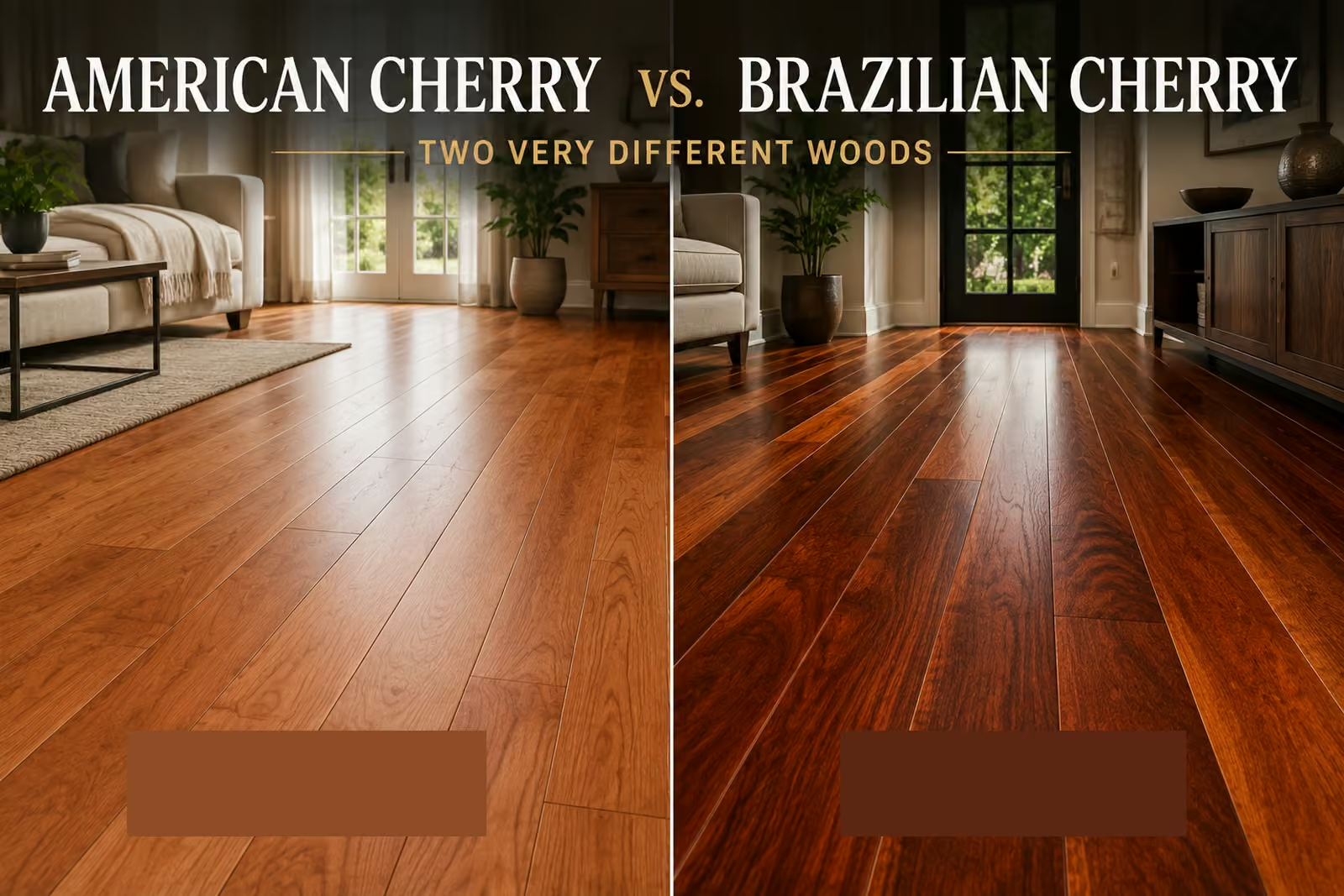
Freshly milled oak looks startlingly pale next to a floor that has oxidized under finish for thirty years — homeowners see the raw new boards on day one and panic. Don't. The color difference lives almost entirely in the top surface, and the full sanding removes it from the old boards while the finish coats bring both to the same tone. The one caveat: photosensitive species like cherry and Brazilian cherry keep darkening for months after refinishing, so a laced repair in those woods starts uniform and stays uniform — but expect the whole floor to deepen together over its first year.
When Weaving Is — and Isn't — the Right Call
Weaving makes sense when
- The new area connects to the old floor in the same sightline — a removed wall, a widened doorway, an open-plan addition
- Your species and width are still millable or sourceable (red oak and white oak almost always are)
- The existing floor has enough wear layer left for one more full sanding
- You want zero transition strips and one continuous plane underfoot
Consider another route when
- The new space is a separate room where a doorway transition would look natural anyway — finishing to a border is simpler and cheaper
- The existing floor is too thin to sand again — weaving without refinishing always shows
- Your floor is a discontinued engineered profile that nothing modern will engage with
- The old floor has widespread damage — at some point full replacement wins the math
There's also a middle path worth knowing: a deliberate border or header board between old and new. Instead of hiding the joint, a perpendicular band of flooring frames it — common where a hallway meets a room, and far better looking than a metal transition strip. We suggest it when a client's budget doesn't stretch to refinishing the entire connected area.
What the Project Costs
Two line items to expect. Installation labor for the new area runs $3–$4.25/sq ft (materials separate), with the lacing work at the seam priced into the install. Then the refinish across the entire connected surface: $3.99/sq ft for a natural finish or $6.50/sq ft with stain, with a 500 sq ft project minimum. It's more than flooring a single room in isolation — and it's the difference between a floor that looks extended and a floor that looks original. Every estimate is free and in-home, because none of this can be quoted honestly without seeing the existing floor.
Adding Hardwood to Existing Floors — Your Questions
What does it mean to lace in or weave hardwood flooring?
Will you be able to find boards that match my old floor?
Do we have to sand and refinish the whole floor after new boards go in?
Can new hardwood be laid on top of an existing wood floor?
How do you deal with a height difference between the old room and the addition?
What happens if my flooring profile is discontinued?
Is a transition strip between rooms really that bad?
How much does it cost to extend hardwood into another room?
Can you weave new boards into old Douglas fir floors?
Thinking About Extending Your Hardwood? Let's Look Together
We'll measure your boards, identify the species, check how much wear layer is left, and give you a firm price for weaving, borders, or replacement — free, anywhere in King & Snohomish County.
Related reading: Red oak vs white oak flooring · Pre-finished vs site-finished hardwood · Hardwood installation · Flooring repair