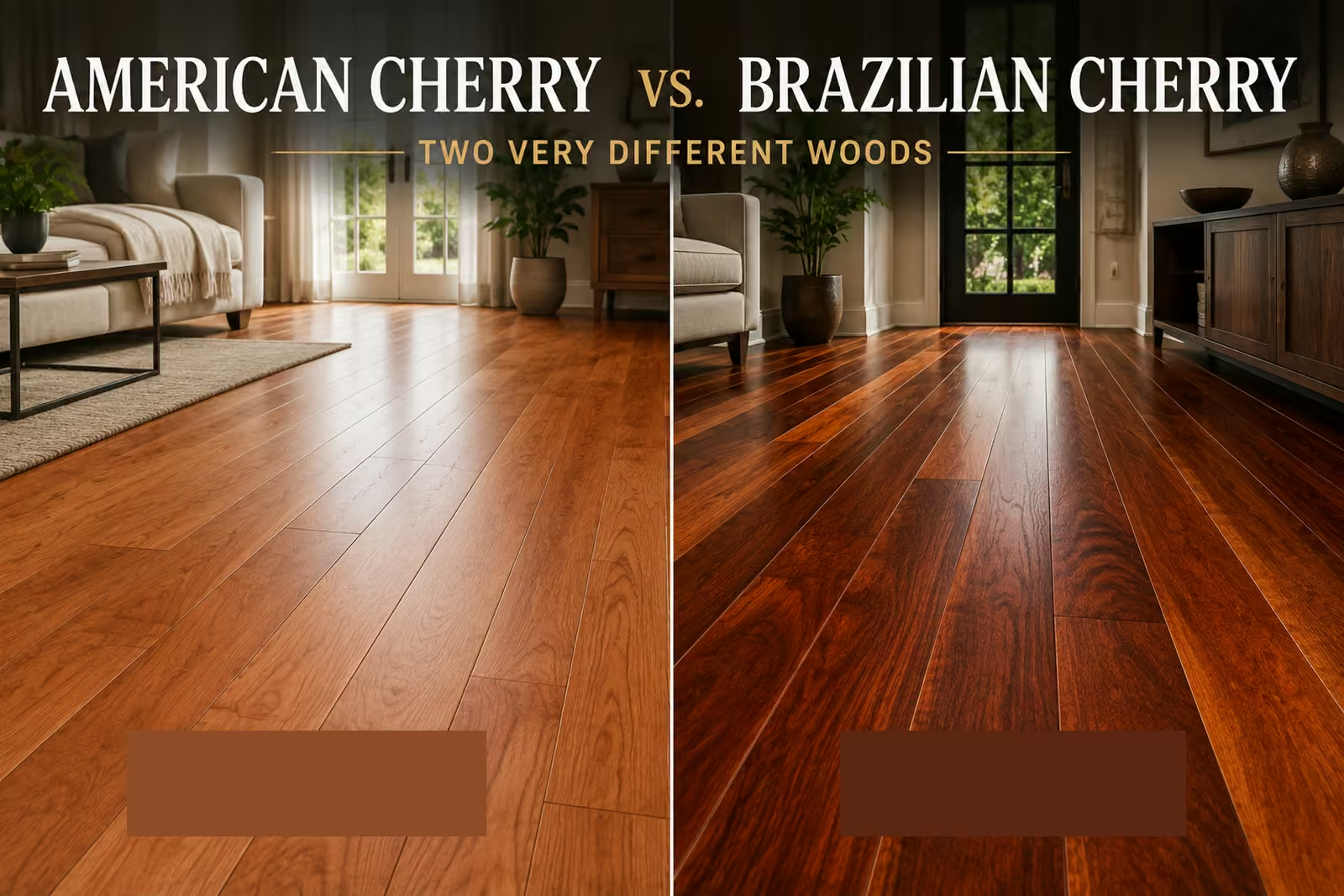





Your jatoba floor darkens with light, and the pale rectangles under your rugs are reversible — months of even exposure blends them back. It refinishes beautifully despite its 2350 Janka hardness (the work is just slower and harder on abrasives), but it cannot be stained lighter — finish choice only steers its tone. And before you rip it out for white oak: a refinish at $3.99/sq ft usually wins that math. Here's the owner's manual nobody handed you.
Thousands of Eastside homes built or remodeled in the late '90s and 2000s got Brazilian cherry floors — jatoba was the premium upgrade of its era, and much of it is still underfoot in Bellevue, Kirkland, and Redmond today, often in better structural shape than floors half its age. If you've inherited one with a home purchase, or lived on yours for two decades, this is the guide to what it's doing, what it can and can't become, and what it's worth. (Deciding between species instead? That's our American vs Brazilian cherry comparison.)
The Owner's Cheat Sheet
the pale rectangles under rugs and furniture are literally the floor's tan lines — unexposed wood that hasn't darkened yet. Move the rug and the spot catches up over months of light exposure.
jatoba does the majority of its darkening early in its exposure to light — which is why a freshly refinished floor visibly deepens again over its first several months.
on a dark, red, high-traffic floor, sheen is your best cosmetic decision: satin scatters light and hides the fine scuffs that a gloss finish spotlights.
1. Your Floor Is Still Changing Color — That's Normal
Jatoba is photosensitive: ultraviolet and even strong visible light drive its color from salmon-orange toward deep brick red, the opposite of the fading most woods do. This never fully stops, though it slows dramatically after the early years. If your floor looks darker than the day you moved in, nothing is wrong — that's the species keeping its one promise. Big south- and west-facing Bellevue windows accelerate it; UV-blocking window film or decent blinds slow it down and protect furniture while they're at it.
2. The Light Rectangles Under Your Rugs Are Reversible
Lift a rug that's sat for two years and the floor beneath looks like a different product. Don't panic and don't reach for stain — that pale zone is simply wood that hasn't gotten its light yet. Exposed, it darkens toward the surrounding color over a few months. The management strategy is boring and effective: rotate or shift rugs a couple of times a year, especially in the floor's early years, and rearrange furniture occasionally. For severe, sharp-edged contrast — say, staging a house for sale next month — the fast fix is a refinish, which resets the whole floor to uniform and lets it re-darken evenly.

3. Yes, It Refinishes — In the Right Hands
A persistent myth says exotic floors can't be sanded. Jatoba refinishes beautifully; it just fights back. At 2350 Janka it dulls abrasives quickly, and its dense interlocked grain punishes lazy technique with visible sanding marks that a forgiving oak would hide. Expect the job to run slower than an oak refinish of the same size, and hire a crew that can tell you about the last exotic floor they sanded. Our process is the same one we bring to every refinishing project — dustless sanding, Bona waterborne finishes — priced at $3.99/sq ft for natural finish, which is exactly how jatoba should usually be finished anyway. And if the floor is merely dull rather than worn through, a screen and recoat at $1.99/sq ft restores the sheen without touching the wood.
4. You Can't Stain It Lighter — Here Are Your Real Options
The renovation question we hear most in Bellevue: “can we stain it blonde like white oak?” No — and it's worth understanding why. Stain adds pigment; it cannot subtract color from wood this dark, and jatoba's density barely accepts pigment in the first place. Even if a dark stain took, the wood beneath keeps photodarkening on its own schedule. What you can steer is tone, through finish chemistry: a waterborne finish keeps the wood closest to its true current color, while oil-based finishes amber it toward a deeper, warmer red. That's the honest menu. If only a pale Scandinavian floor will make you happy, the answer isn't chemistry — it's a different floor, and we'll tell you that straight.
5. What It Means at Resale — and Why Refinishing Usually Wins
Is Brazilian cherry dated? Its deep red isn't what stagers pick in 2026 — but a scratched, sun-blotched jatoba floor and a freshly refinished one read completely differently to buyers. Refinishing resets the surface, evens the color, and a satin natural finish modernizes the look about as far as this species goes; replacing the same footage with new white oak costs several times as much once tear-out, materials, and installation stack up. Buyers still recognize jatoba as expensive, durable wood when it's presented well. Our usual advice: refinish, stage with lighter rugs and walls to cool the palette, and spend the difference elsewhere in the listing.
Living With a Jatoba Floor — Owner Questions
How long until the light spots under my rugs blend back in?
Can I make my Brazilian cherry floor less red?
Is refinishing jatoba more difficult than refinishing oak?
Should I choose an oil-based or waterborne finish on Brazilian cherry?
What sheen hides wear best on a dark exotic floor?
Will UV-blocking window film actually protect my jatoba floor?
Is it worth replacing Brazilian cherry with a lighter wood before selling?
How do I keep a dark jatoba floor looking clean day to day?
Can a screen and recoat fix sun fade on Brazilian cherry?
Own a Jatoba Floor? Get a Straight Answer on Its Next Step
Recoat, refinish, or leave it alone — we'll assess the finish, the fade, and the wear layer, and quote you honestly. Free in-home visits across Bellevue, the Eastside, and all of King & Snohomish County.
Related reading: American vs Brazilian cherry · Floor refinishing · Screen & recoat · Refinishing cost guide