



For most Western Washington homes, the right species is red oak or white oak — durable, refinishable for a century, and easy to match to what local homes already have. Go maple or hickory for maximum hardness, walnut or cherry for furniture-grade beauty in gentler rooms. The Janka scale runs from Douglas fir at 660 to jatoba at 2350, but finish quality protects your floor more than another hundred Janka points ever will.
Species is the one flooring decision you can't undo with a refinish. Color, sheen, even plank texture can all change the next time the sanders come through — but the wood itself is the wood, for the life of the floor. We've installed and refinished more than 1,000 floors across King and Snohomish County since 2013, and this is the species conversation we have at kitchen tables every week, minus the showroom pressure.
First, Understand the One Number Everyone Quotes
of an inch — the diameter of the steel ball in the Janka test. The rating is the force in pounds needed to press that ball halfway into the wood. It measures denting, not scratching.
the Janka span across floors we work on, from old Douglas fir (660) to Brazilian cherry (2350). A four-fold hardness range — yet finish condition predicts a floor's look better than species does.
in many projects, the species question answers itself: if you're extending or matching an existing floor, the house picked the species years ago — and matching it beats fighting it.
Keep the Janka scale in perspective: it predicts how a wood resists dents — dog claws, dropped cast iron, stiletto heels. Everyday scratching happens in the finish layer, which is why a well-finished cherry floor can outlook a neglected hickory one. Use hardness to rank candidates, not to disqualify a wood you love.
The Species Lineup, Honestly Ranked
| Species | Janka | Undertone & grain | The honest one-liner |
|---|---|---|---|
| Red oak | 1290 | Warm, pinkish; bold open grain | The default American floor — affordable, forgiving, refinishes forever |
| White oak | 1360 | Cool beige-brown; tighter grain | Today's designer favorite; takes light finishes beautifully |
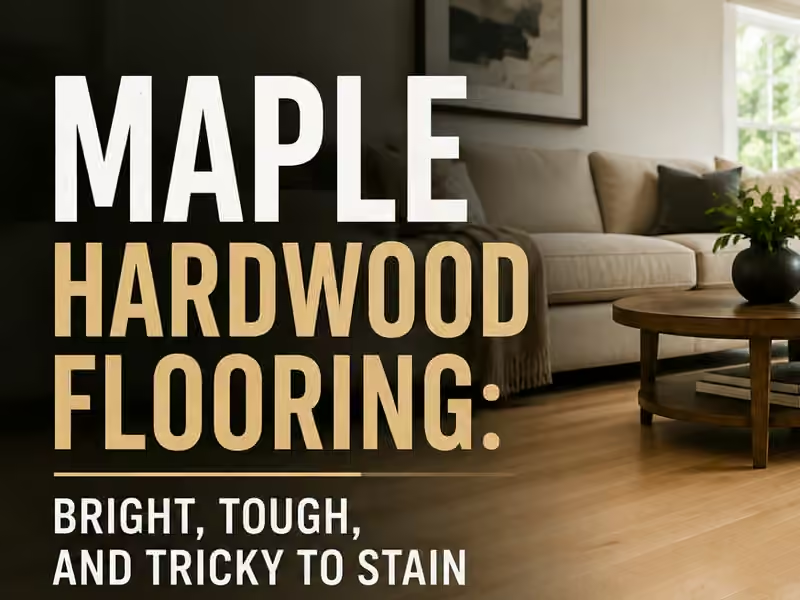
| Hard maple | 1450 | Pale cream; subtle quiet grain | Very hard, very light — but tricky to stain (maple guide) |
| Hickory | 1820 | Dramatic light/dark contrast | Hardest common domestic; the busy grain hides wear |
| Walnut | 1010 | Deep chocolate brown, straight grain | The luxury look — softer than oak, so save it for calmer rooms |
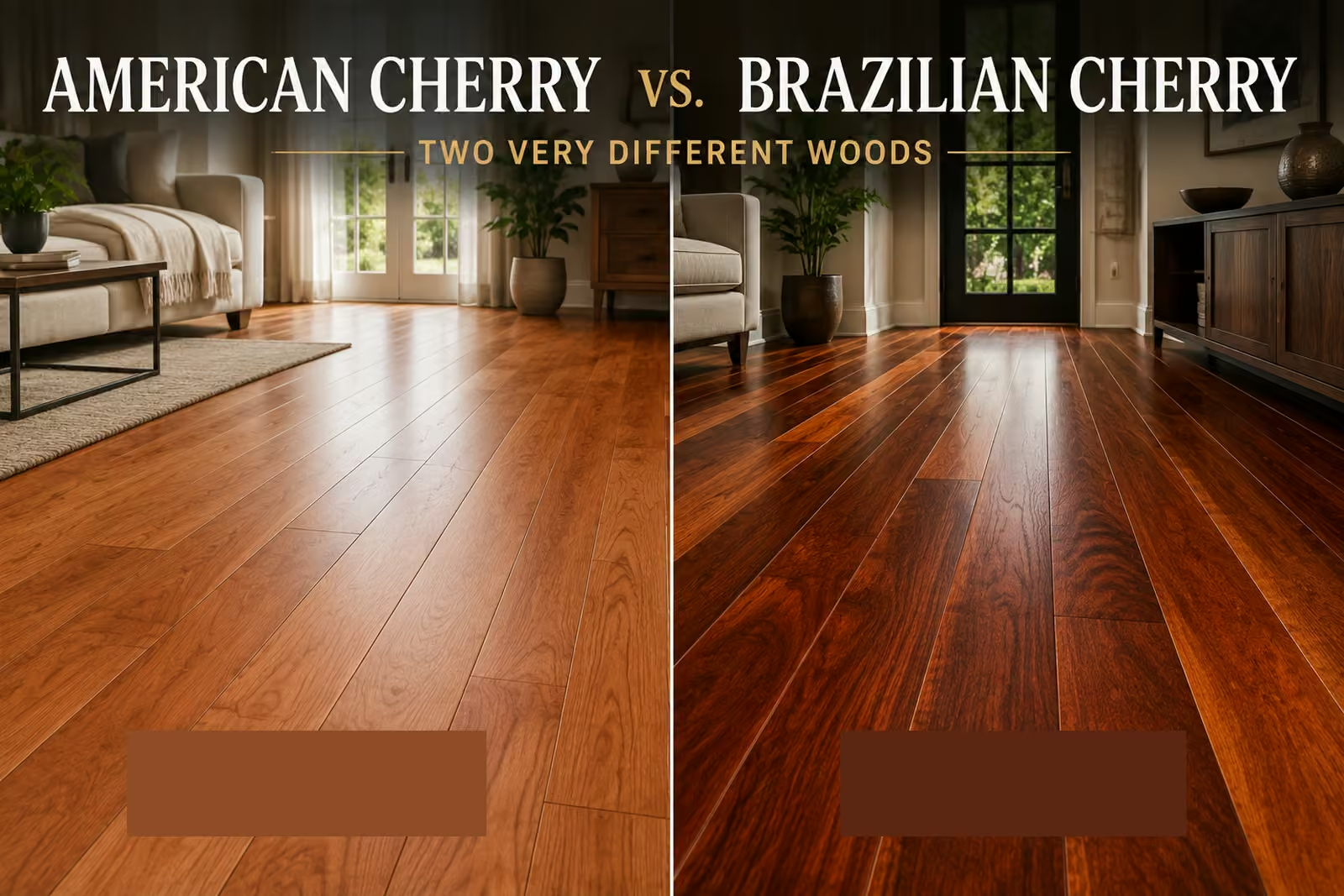
| American cherry | 950 | Warm russet that deepens with age | Furniture-grade beauty; dents are part of the bargain |
| Douglas fir | 660 | Amber-orange; fine vertical grain | Soft but irreplaceable — the old-growth heart of pre-1950 local homes |

The Domestics: Where Most Homes Should Start
The oaks earn their dominance. Open grain hides small scratches, hardness sits in the sweet spot, and both species sand and refinish four to six times over a century. Choose between them on undertone — warm red oak versus neutral white oak — a decision we've broken down fully in our red oak vs white oak comparison.
Maple is the pale, modern one: harder than oak, with a calm grain that reads almost seamless. Its catch is staining — maple's tight grain absorbs pigment unevenly and blotches without careful prep, so it's happiest finished natural.
Hickory is the workhorse for chaos: kids, big dogs, gear dropped in the mudroom hallway. At 1820 Janka it shrugs off dents, and its high-contrast grain camouflages everything. The same busy character is why minimalists usually pass on it.
Walnut and cherry flip the trade: less hardness, more presence. Both look like furniture underfoot and both prefer rooms where heels and claws are occasional — studies, bedrooms, formal living rooms.
The Softwood Question: Douglas Fir
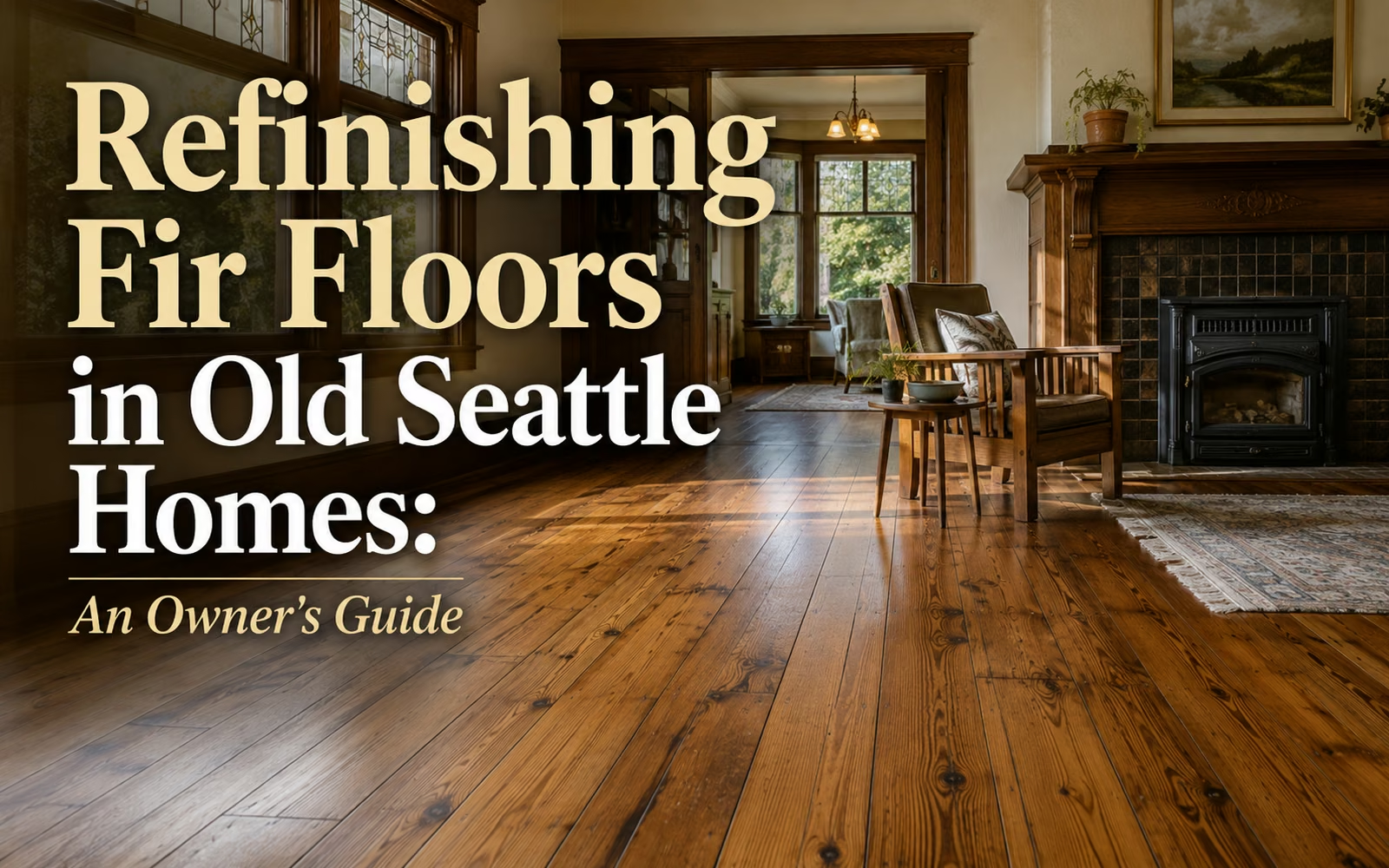
If your home predates 1950 — Seattle Craftsman, Everett four-square, Snohomish farmhouse — there's a good chance old-growth Douglas fir is already under your carpet. At 660 Janka it dents easily, and that's simply part of its character: a hundred years of life marks recorded in amber wood you cannot buy new at any price. Our advice is nearly always to refinish it rather than replace it, and to put harder species only in the rooms you add.
Exotics: Beautiful, With Homework
Jatoba (Brazilian cherry), cumaru, and their cousins offer hardness and saturated color domestic species can't reach. The homework: dense exotics need disciplined acclimation in our wet-winter climate, most can't be stained lighter later, and several darken dramatically in sunlight. Buy the color the wood will become, not the color in the box.
Four Questions That Settle It
- What will the floor endure? Big dogs and busy kids point to hickory, maple, or oak. Adults and area rugs open the door to walnut and cherry.
- What color do you want in ten years? Oak takes nearly any stain, so it keeps your options open. Maple, cherry, and exotics largely are what they are — see our stain color guide before assuming a species can be recolored.
- What does the house already have? Matching an existing floor beats introducing a rival wood in the same sightline, almost every time.
- What's the real budget? Red oak is usually the least expensive domestic hardwood; walnut, wide-plank white oak, and exotics carry premiums. Installation labor runs $3–$4.25/sq ft regardless of species, so the material choice is where the budget flexes.
Choosing a Wood Species — What Homeowners Ask
What is the Janka rating and how is it measured?
Which wood species holds up best in high-traffic homes?
Is hickory a good flooring choice for the Seattle area?
Is walnut too soft to use on floors?
Which species is the most budget-friendly real hardwood?
Does a harder species mean the floor won't scratch?
What species should I choose for a light, Scandinavian-style floor?
Which wood species do Northwest homes usually already have?
Do exotic species like jatoba make sense in our climate?
Torn Between Species? See Them in Your Own Light
Showroom lighting lies. We bring samples to your home, check what your floors are now, and give you a straight recommendation with a firm price — free across King & Snohomish County.
Related reading: Red oak vs white oak · Maple flooring guide · American vs Brazilian cherry · Stain color guide