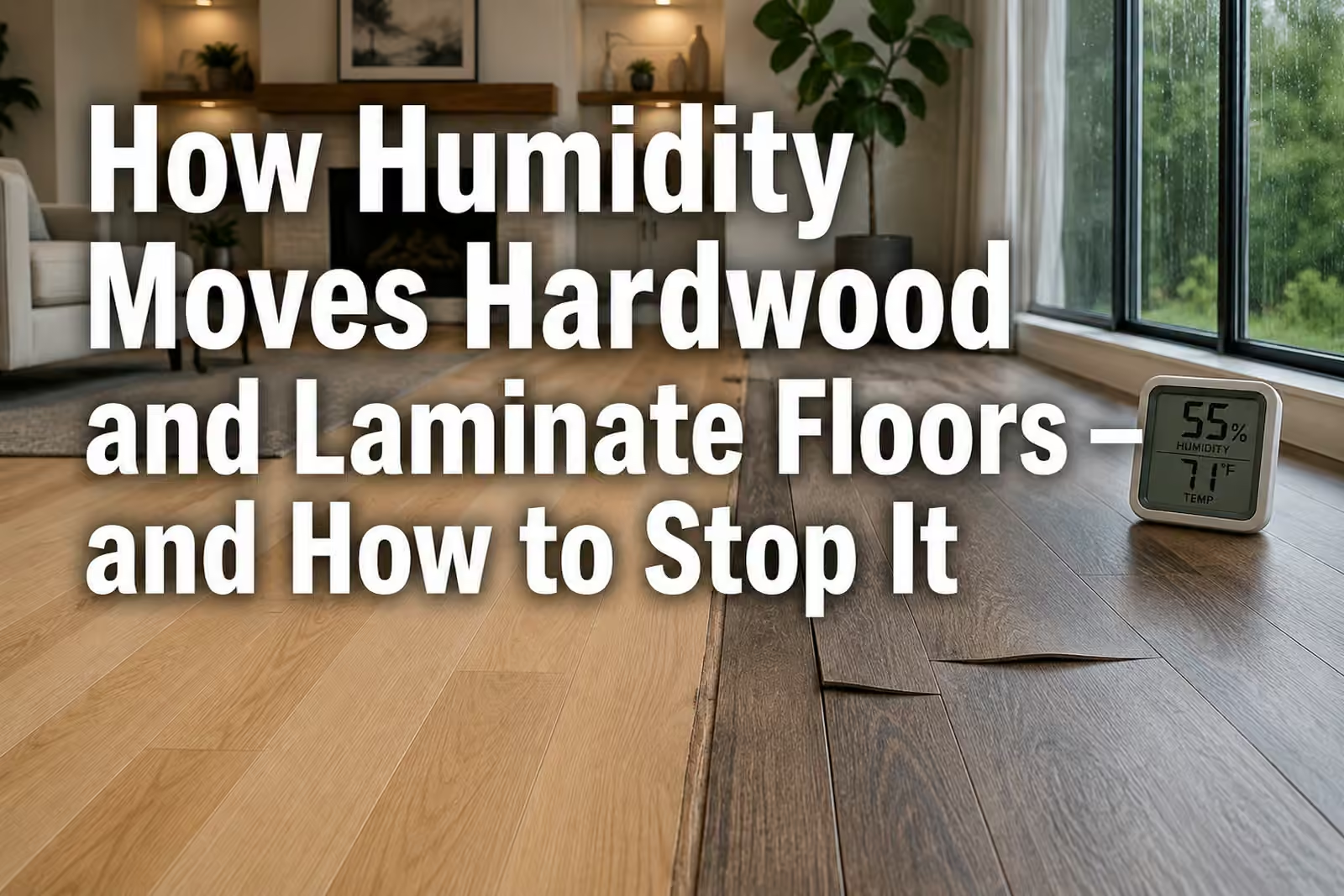




Wood exchanges moisture with indoor air, so changes in humidity can produce seasonal gaps or expansion. Heated interiors may become drier in winter; actual conditions vary by home. Measure humidity and follow the flooring manufacturer’s range. Swollen laminate edges, leaks and persistent movement require diagnosis rather than assuming the weather is the only cause.
Gaps, squeaks and raised edges can have several causes, including moisture changes, damaged joints, fastening problems or inadequate expansion space. At OC Flooring, we assess the floor and substrate before recommending a repair. Recording indoor humidity can help separate seasonal movement from a localized problem.
The Science in Three Facts
the moisture content interior wood flooring settles at in most Puget Sound homes. Wood delivered wetter than that will shrink after installation — the only question is whether it does its shrinking before or after it’s nailed down.
wood moves across the grain, so planks change width but barely change length. That’s why seasonal gaps open in neat lines between boards rather than at their ends — and why plank width matters: a 5-inch board moves roughly twice as much as a 2¼-inch strip.
hardwood shrinks back when it re-dries; laminate doesn’t. Its high-density fiberboard core takes on water, expands, and stays expanded — which is why a swollen laminate edge is a replacement, never a wait-and-see.
How Indoor Conditions Change Through the Year
In most of the country, floors swell in muggy summers and shrink in winter. Here it's reversed. Our summers are mild and dry-aired but gentle; the violent change is furnace season. From roughly Thanksgiving to March, heating systems drive indoor relative humidity down into the 30s while outdoor air stays saturated. Floors dry out, boards shrink across their width, and hairline gaps open in neat rows. Then the heat goes off in spring, the damp Northwest air moves back in, boards re-absorb moisture, and the gaps quietly close by May. If your floor keeps that calendar, it isn't failing — it's breathing. We wrote a whole diagnostic on this in why hardwood floors gap, including the signs that separate normal seasonal movement from trouble.
Reading What Your Floor Is Telling You
| Symptom | What's happening | Typical local season |
|---|---|---|
| Thin gaps between boards | Boards shrinking as they dry | Furnace season (Nov–Mar) |
| Cupping — edges up, center low | Board bottoms wetter than tops; moisture from below (crawlspace, slab) | Damp fall, or year-round with a wet crawlspace |
| Crowning — center humped | Tops wetter than bottoms, or a cupped floor sanded too soon | After leaks or premature sanding |
| Peaking laminate — seams tenting upward | Expansion with nowhere to go; floor pinched at walls or transitions | Damp fall, tight installs |
| Swollen, rounded laminate edges | Fiberboard core has absorbed liquid water — permanent | Any season; spills and leaks |

Why Laminate Plays by Different Rules
Laminate looks like the stable, man-made option, but its core is high-density fiberboard — wood fiber, pressed hard. Against humidity swings it actually behaves better than solid wood: the fibers are randomized, so it expands modestly and evenly instead of cupping board by board. But it has two vulnerabilities hardwood doesn't. First, a laminate floor floats as one connected raft, so all that modest expansion adds up across the room — which is why installers leave a hidden expansion gap of roughly ¼ to ½ inch at every wall, under the baseboards. Pin the raft down — heavy cabinets on top of it, trim nailed through it, no gap at a doorway — and a damp October will tent the seams upward. Second, against liquid water the fiberboard core is defenseless: it swells and never comes back. Humidity bends laminate; puddles kill it.
Acclimation: The Cheapest Insurance in Flooring
Acclimation brings flooring toward the conditions expected in use. Follow the manufacturer’s instructions for storage, carton handling and site conditions. For wood, use moisture measurements of the flooring and substrate to assess readiness. Do not treat three, five or seven days as a universal requirement or guarantee.
Keeping the Peace: 35–50%, Year-Round
You can't stop wood from responding to moisture, but you can shrink the swing it responds to. The target for indoor relative humidity is 35–50%, held as steadily as possible through the year. In practice for our climate: a $20 hygrometer so you actually know your number, normal furnace ventilation in winter (add a humidifier only if you're consistently below the mid-30s), and air circulation or a dehumidifier during the sodden weeks of fall if you're reading above 55–60%. Homes over crawlspaces should make sure the vapor barrier down there is intact — a damp crawlspace feeds moisture up into the floor from below all year, and no amount of thermostat discipline fixes that from upstairs. For the bigger picture of which floors tolerate our swings best, see our Pacific Northwest flooring guide.
When Movement Means Something's Wrong
Seasonal, evenly distributed, self-reversing movement is life with wood floors. Call a professional when the pattern breaks: gaps that stay open through a wet summer, cupping that worsens instead of cycling, boards that lift or buckle, laminate seams that have gone from flat to peaked, or any swelling near dishwashers, fridges, and exterior doors. Those are moisture-source problems, not weather, and catching them early is the difference between a targeted repair and a room-sized replacement.
Humidity and Your Floors: Straight Answers
Why is my laminate floor lifting at the seams?
What indoor humidity should I maintain for wood and laminate floors?
What's the difference between cupping and crowning?
How long should flooring acclimate before installation in Western Washington?
Will a humidifier stop my wood floors from gapping in winter?
Why did my laminate swell at the dishwasher but nowhere else?
Do engineered wood floors react to humidity too?
Can a buckled or peaked floor be fixed without replacing it?
Floor Moving More Than It Should? Get a Straight Diagnosis
We'll meter your floor and subfloor, find the moisture source, and tell you whether it's weather, a fixable install issue, or a repair — free in-home visits across King & Snohomish County.
Related reading: Why hardwood floors gap in winter · Best flooring for the PNW climate · Flooring repair · Vinyl plank vs. laminate
Further guidance: NWFA technical guidelines. Follow the instructions for the flooring product selected for your home.