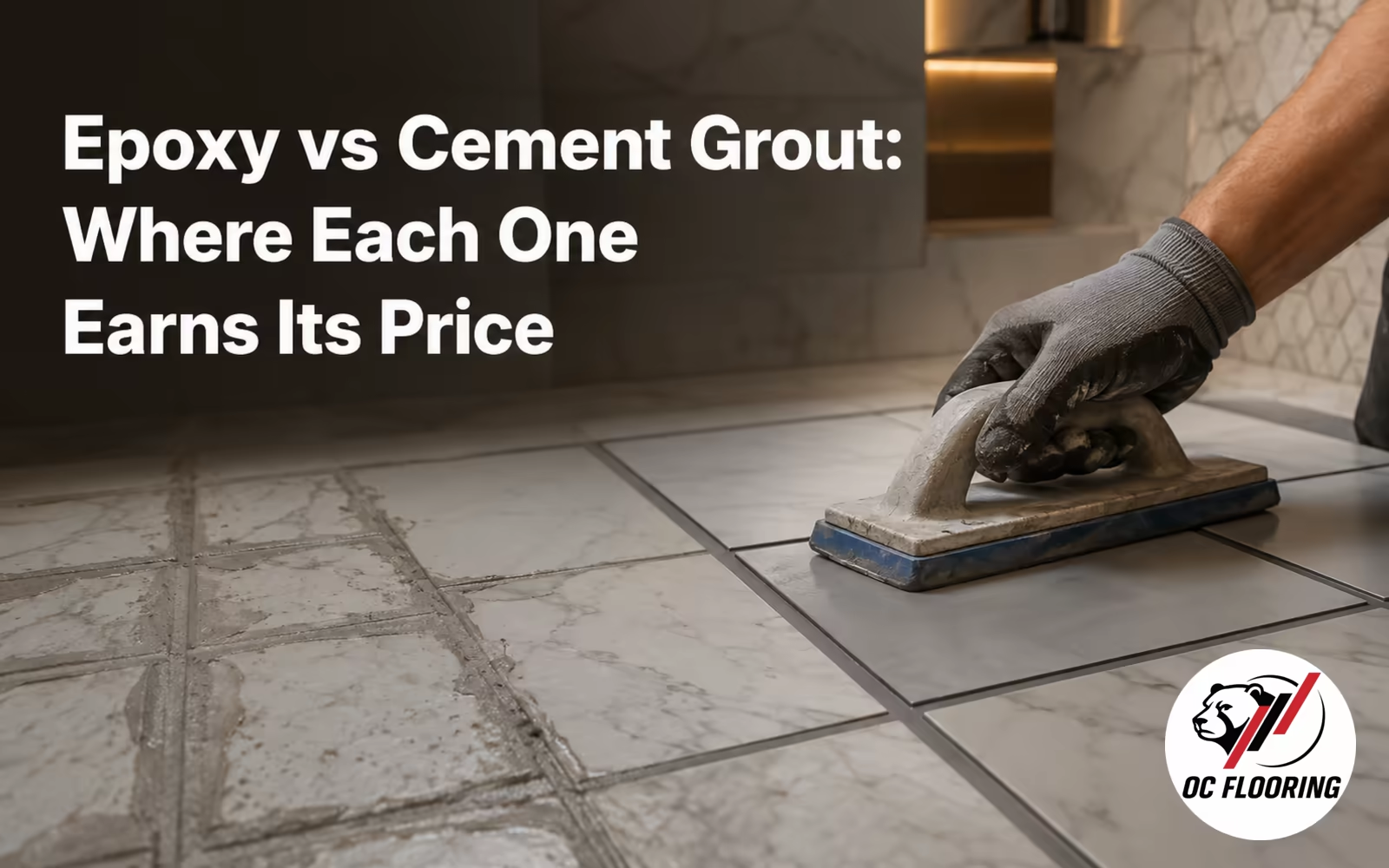


Cement grout with a quality sealer is the right answer for most tile in most rooms. Epoxy grout earns its considerable premium in a short list of places: showers and steam showers, stain-prone kitchen surfaces, light-colored grout in wet rooms, and rentals that need to survive tenants without maintenance. The two are not a good and a better version of the same product — they are different materials with different chemistry, different installation demands, and different failure modes. Pay for epoxy where its strengths matter; everywhere else, put the difference into prep and waterproofing, which decide far more about how the job ages.
installed tile cost with us, labor from $11/sq ft. Grout choice moves that number modestly — epoxy adds material cost and installation time, mostly in wet areas.
our flood test on every shower pan, photographed before tile. Worth repeating here: no grout is your waterproofing — the membrane behind the tile is.
our warranty on tile work, with either grout. The spec we put on your quote is the one we are willing to stand behind for the room it is going into.
Two Different Materials, Not Two Grades
The names invite the wrong comparison. Cement grout is a mineral product — Portland cement, fine aggregate, pigment — that cures by hydration and stays slightly porous forever. That porosity is why it can absorb a splash of red wine, why it darkens in traffic lanes, and why it wants a sealer. Epoxy grout is not cement improved; it is a two-part resin, mixed with a hardener and colored quartz, that sets by chemical reaction into a surface closer to plastic than to stone. It absorbs almost nothing, stains almost never, and does not need sealing — on day one or in year ten.
Understanding that they are different materials explains everything downstream: why epoxy costs several times more per unit, why it demands more of the installer, and why there are rooms where it is clearly worth it and rooms where it is money spent on a problem you do not have.
What Epoxy Actually Buys You
Four things, concretely. Stain immunity — coffee, wine, pet accidents and cooking grease wipe off instead of soaking in, which is why light grout stays light. Zero sealing, forever — no annual maintenance item, no wondering whether the last owner kept up with it. Chemical indifference — shower products, harsh cleaners and steam do not slowly eat it the way they etch cement. And consistency — the color you approved is the color you get, across the whole job, without the blotching cement can show when cure conditions vary. In a steam shower, where heat and moisture attack cement grout on a schedule, epoxy is less an upgrade than a requirement we insist on.
Epoxy vs Cement Grout, Line by Line
| Question | Cement grout | Epoxy grout |
|---|---|---|
| Material cost | Inexpensive | Several times cement’s price per unit |
| Installation | Forgiving, standard labor | Short working time, exacting cleanup — adds labor to the job |
| Stains | Absorbs them; sealer slows this | Shrugs them off — wine, grease, dye, pet accidents |
| Sealing | Needed, and periodically renewed | Never |
| Water absorption | Porous — slowly drinks shower water | Near zero — ideal in wet rooms and steam |
| Cleaners & chemicals | Etches under acidic and harsh products | Indifferent to nearly everything under a sink |
| Color over time | Darkens in traffic lanes, can blotch | Stays the color you picked |
| Repairs later | Easy to rake out and regrout | Difficult to remove — a commitment, in both directions |
Where Cement Plus Sealer Is Honestly Fine
Most of the tile in most homes: floors, tub surrounds that see normal use, walls, and backsplashes outside the splash line of the range. On a bathroom floor with a mid-tone grout — the choice we push for anyway, for reasons that have nothing to do with chemistry and everything to do with how rooms age, as we argue in bathroom floor tile that still looks right in ten years — a sealed cement joint performs for decades. Modern polymer-modified cement grouts have also genuinely closed part of the gap: better stain resistance, better color consistency, less shrinkage than what was on the shelf fifteen years ago.
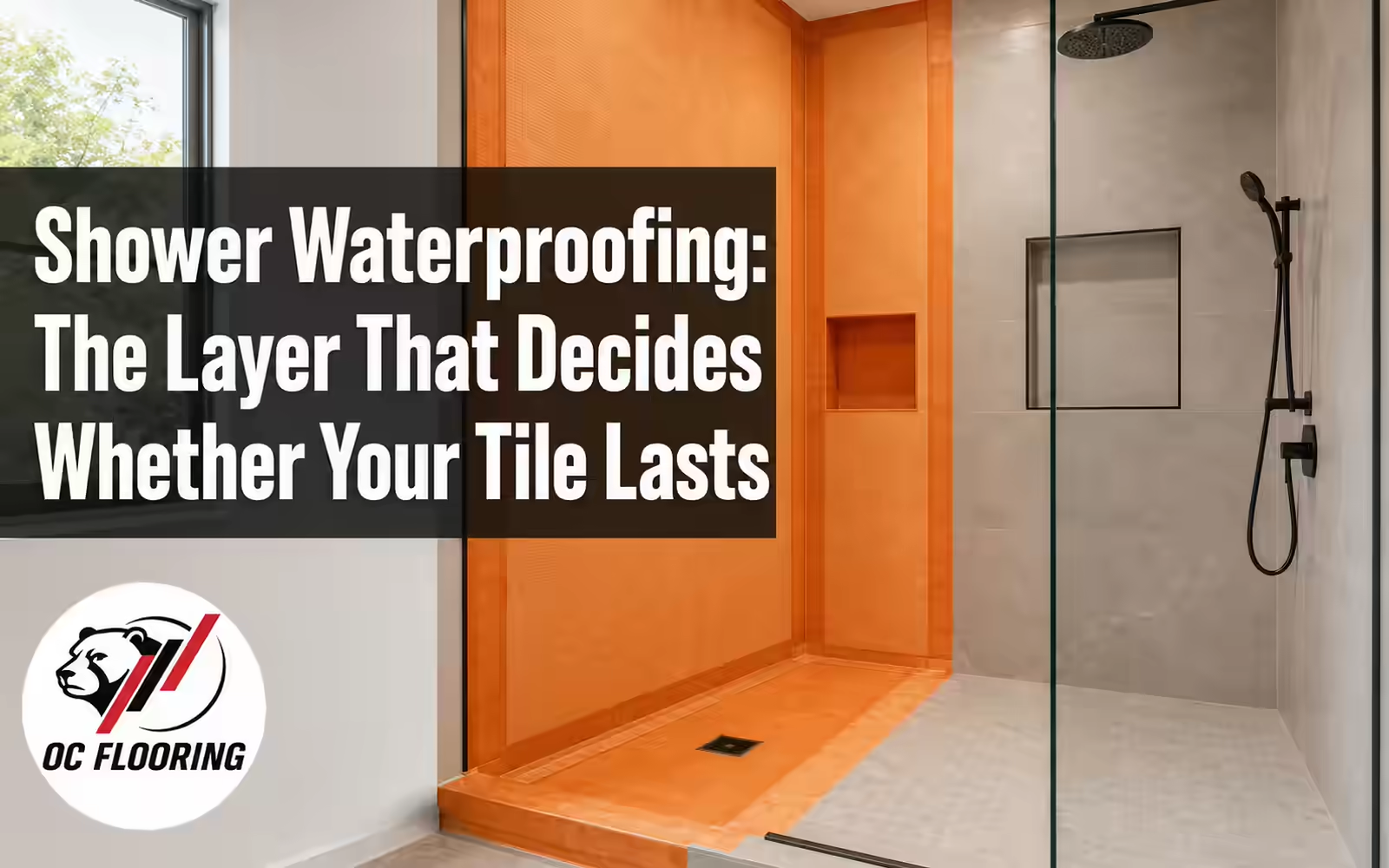
And one correction that saves people from buying epoxy for the wrong reason: no grout waterproofs a shower. Epoxy absorbs less water, but the thing keeping water out of your framing is the membrane assembly behind the tile — pre-slope, bonded membrane, sealed corners, flood test — which we walk through in our shower waterproofing guide. If a bid offers epoxy grout as the moisture strategy, it is solving the visible inch of a three-layer problem.
Where we spec epoxy
- Showers, and every steam shower without exception
- Light or white grout anywhere water and products live
- Kitchen backsplash behind the range — the grease zone
- Rental units — no sealing schedule to depend on tenants
- Countertops and laundry surfaces that meet dyes and chemicals
- Commercial-grade durability requests — entries, mudrooms
Where cement + sealer wins
- Bathroom and hallway floors with mid-tone grout
- Walls and tub surrounds in normal family use
- Backsplash zones away from the cooktop
- Budget better spent on substrate prep or waterproofing
- Historic looks where a mineral joint reads correctly
- Any job where a future regrout should stay easy
The Install Difference, and Why Quotes Vary
Epoxy’s premium is not only the bucket price. Once the two parts meet, the clock runs: the installer works in small sections, cleans as they go, and gets exactly one chance to do it right, because cured epoxy haze on a textured porcelain face is somewhere between miserable and impossible to remove. That is added labor, and it is why the same bathroom quotes differently with each grout. It is also why who installs it matters more than the brand on the pail — a botched epoxy job can compromise the tile it touches, which turns a grout upgrade into a retile.
In the scale of a full project, though, the difference is a line item, not a budget category. The numbers that actually move a tile quote are the ones we itemize in the bathroom tile cost guide: demolition, substrate, waterproofing, tile size and layout. Grout choice rides on top. If someone prices epoxy as if it doubled the job, or throws it in free, both numbers deserve questions.
How to Decide in One Minute
Ask two questions of each tiled surface. Will it meet water, steam, grease or dye on a regular schedule? And will anyone maintain a sealer here, honestly? Two yeses or a hard no on maintenance — a rental, a steam shower, a white-grout shower — and epoxy earns its price. Otherwise, a quality cement grout in a sensible color, sealed once and refreshed occasionally, is the professional answer, not the cheap one. The material under the grout matters more than the grout — porcelain vs ceramic covers that decision — and both grouts are covered by the same two-year warranty on our work. Our full tile scope, either spec, is on the Seattle tile installation page.
Epoxy Grout vs Cement Grout: What Homeowners Ask Us
Is epoxy grout worth the extra cost?
Does epoxy grout need to be sealed?
Is epoxy grout waterproof?
How much more expensive is epoxy grout?
Can you put epoxy grout over existing cement grout?
What are the downsides of epoxy grout?
Which grout should I use on a kitchen backsplash?
Is epoxy grout better for rental properties?
Get the Right Grout on the Quote, Not the Expensive One
We spec grout room by room — epoxy where it earns its price, quality cement where it does not — and put both the products and the reasoning in writing. Free in-home estimates across King & Snohomish County.
Related reading: Shower waterproofing, layer by layer · Porcelain vs ceramic tile · Floor tile that ages well · Bathroom tile cost, itemized · Tile installation in Seattle · Book a free estimate