



Refinishing sands a hardwood floor to bare wood, then rebuilds its color and protective finish — making a worn floor new again for a fraction of replacement cost. Expect $3.99/sq ft for a natural refinish, $6.50 with stain, or $1.99 for a screen & recoat when only the finish is tired. Most projects take 3–5 days, and a solid wood floor can repeat the cycle for generations. This guide covers when, why, and every decision in between.
Refinishing is the closest thing home improvement has to time travel: the same boards your house has always had, returned to the day they were installed — or transformed into something the original builder never imagined. It's also a project surrounded by half-information, because most people do it once a decade at most. This is our master guide: what refinishing actually is, how to know when your floor needs it, what it costs, and the choices you'll make along the way — with links to our deeper guides on each branch of the subject. We've refinished floors across King and Snohomish County since 2013; this page is the map.
Why This Trade Exists at All
how floors were renewed before electric drum sanders spread: by hand, with pull-scrapers, a room a day on your knees. The machine age is the only reason refinishing became something ordinary families can afford.
refinishing is the only flooring category where you can completely change the color of the floor you already own. Carpet, vinyl, laminate, tile — every other floor is replace-to-change.
once finish wears through, exposed oak oxidizes gray within months. Caught early, a normal sanding fixes it; ignored, the gray soaks deeper and costs extra passes of your floor's limited wood.
What Refinishing Actually Is
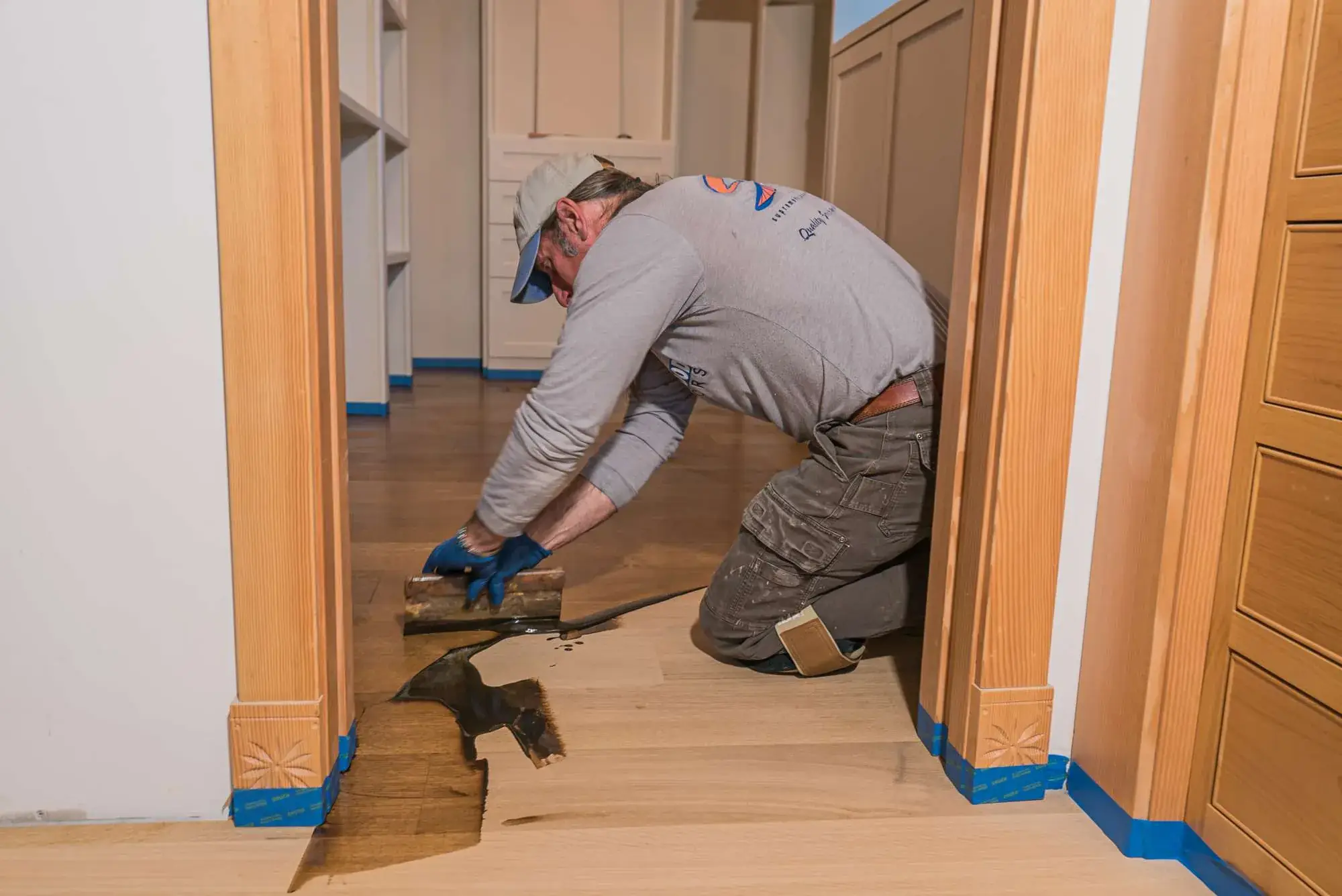
A full refinish has three acts. First, sanding: machines remove the old finish and a thin slice of wood, stepping through progressively finer grits until the floor is flat, bare, and uniform. Second, color: either nothing but the wood's natural tone under clear finish, or a stain in essentially any shade — the step where a 1990s orange floor becomes a modern neutral one. Third, protection: coats of finish (we apply Bona waterborne systems) rebuild the wear layer that will absorb the next decade of daily life. The full anatomy, day by day, is in our refinishing timeline guide.
The lighter sibling is the screen & recoat: when the finish is dull but not worn through, we abrade the film and add a fresh topcoat — one day, $1.99/sq ft, no bare wood. Knowing which of the two your floor needs is the most valuable fifteen minutes of the whole subject; our recoat-vs-refinish decision guide walks the tests in detail.
When a Floor Is Telling You It's Time
| What you're seeing | What it means | The right response |
|---|---|---|
| Dull, hazy, “tired” finish | Wear layer aging, still intact | Screen & recoat — $1.99/sq ft |
| White/silver surface scratches | Damage in the finish only | Screen & recoat |
| Dark scratches, graying traffic lanes | Wear has reached bare wood | Full sand & refinish — $3.99/sq ft |
| Water soaks in instead of beading | Finish film gone in that area | Full sand & refinish |
| You hate the color | Style problem, not wear problem | Refinish with stain — $6.50/sq ft |
| Rug shadows and sun fade | Surface-deep color change in the wood | Refinish (a recoat can't fix color) |
| Cupping, deep pet stains, flooding history | Beyond finish-level damage | Assessment — repair, then refinish |
Two entries deserve footnotes. Sun fade gets its own treatment in our sun-damaged floors guide — mild cases sometimes fix themselves. And for stains, damage, or floors that have been sanded many times before, the honest question is whether refinishing is possible at all; we wrote when wood floors can't be refinished for exactly those edge cases.
What It Costs — the Short Version
Our pricing is flat and public: $3.99/sq ft for sand and natural finish, $6.50/sq ft with stain, $1.99/sq ft for a screen & recoat, with a 500 sq ft project minimum. Stairs run $55–$75 per tread, and the add-ons are equally boring and predictable: $250 for full dust containment, $160 to handle a washer/dryer pair, $80 per other appliance. A 1,000 sq ft main floor at natural finish is $3,990 — typically a fifth to a third of what tearing out and installing comparable new hardwood would run. The complete math, with room-by-room examples and what makes quotes vary, lives in the 2026 cost guide.
The Decisions You'll Actually Make
Color: natural is the durability-of-taste choice — wood tones never date. Stain unlocks everything from Scandinavian pale to near-black, with the caveat that dark floors show dust and every dent; our stain color guide and on-your-floor samples make this decision concrete rather than theoretical.
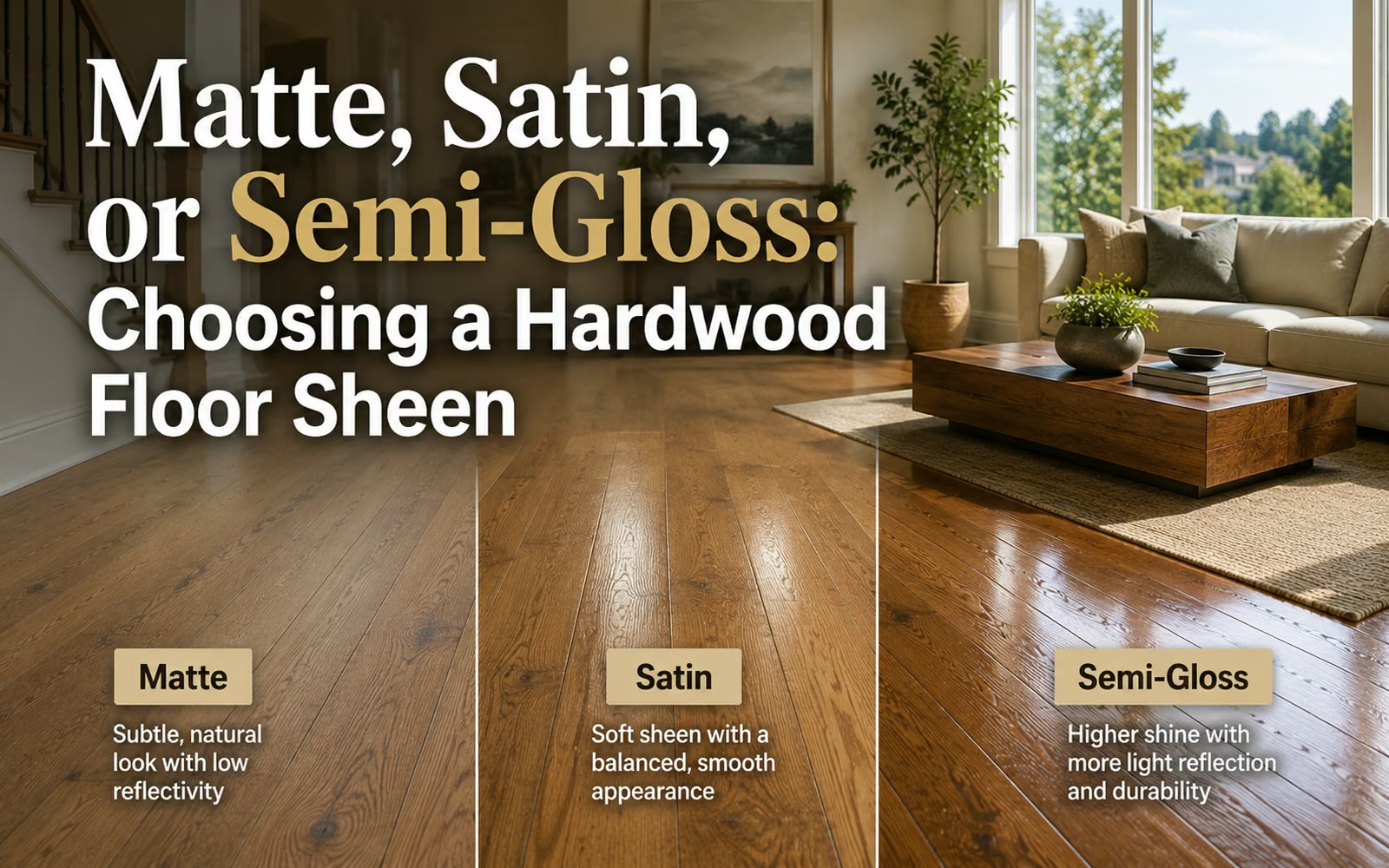
Sheen: satin is the modern default — enough life to read as cared-for, matte enough to hide micro-scratches. Gloss is beautiful for about a week per dusting.
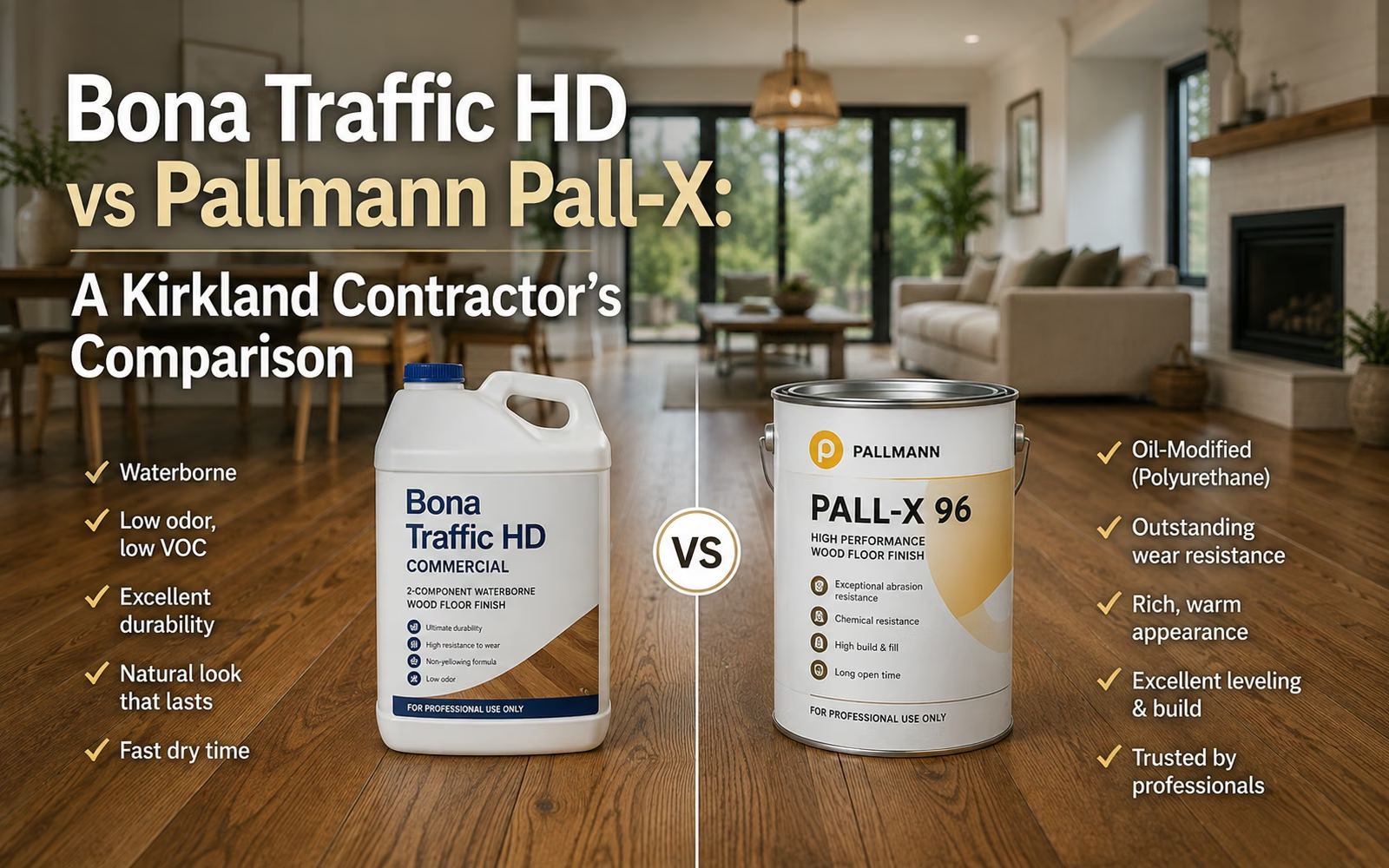
Finish system: we apply Bona waterborne finishes — non-yellowing, low-odor, walkable next morning. What that means and when commercial grades earn their cost is covered in our Bona HD explainer.
Logistics: furniture has to leave the floor being sanded, and there's a right way to plan it — see storing furniture during refinishing.
Why This Isn't a Rental-Sander Weekend
We'll keep this short because we've written the long version: a refinish requires three different machines, a grit discipline that erases each pass's scratches with the next, and a running drum sander can dish a floor permanently in about a second of hesitation. The wood it wastes is wood your floor never gets back. Our case — and the few scenarios where DIY makes sense — is in why refinishing isn't a DIY project, and what modern vacuum-contained sanding looks like is in the dust-free refinishing explainer.
Which Floors Qualify — and How Many Times
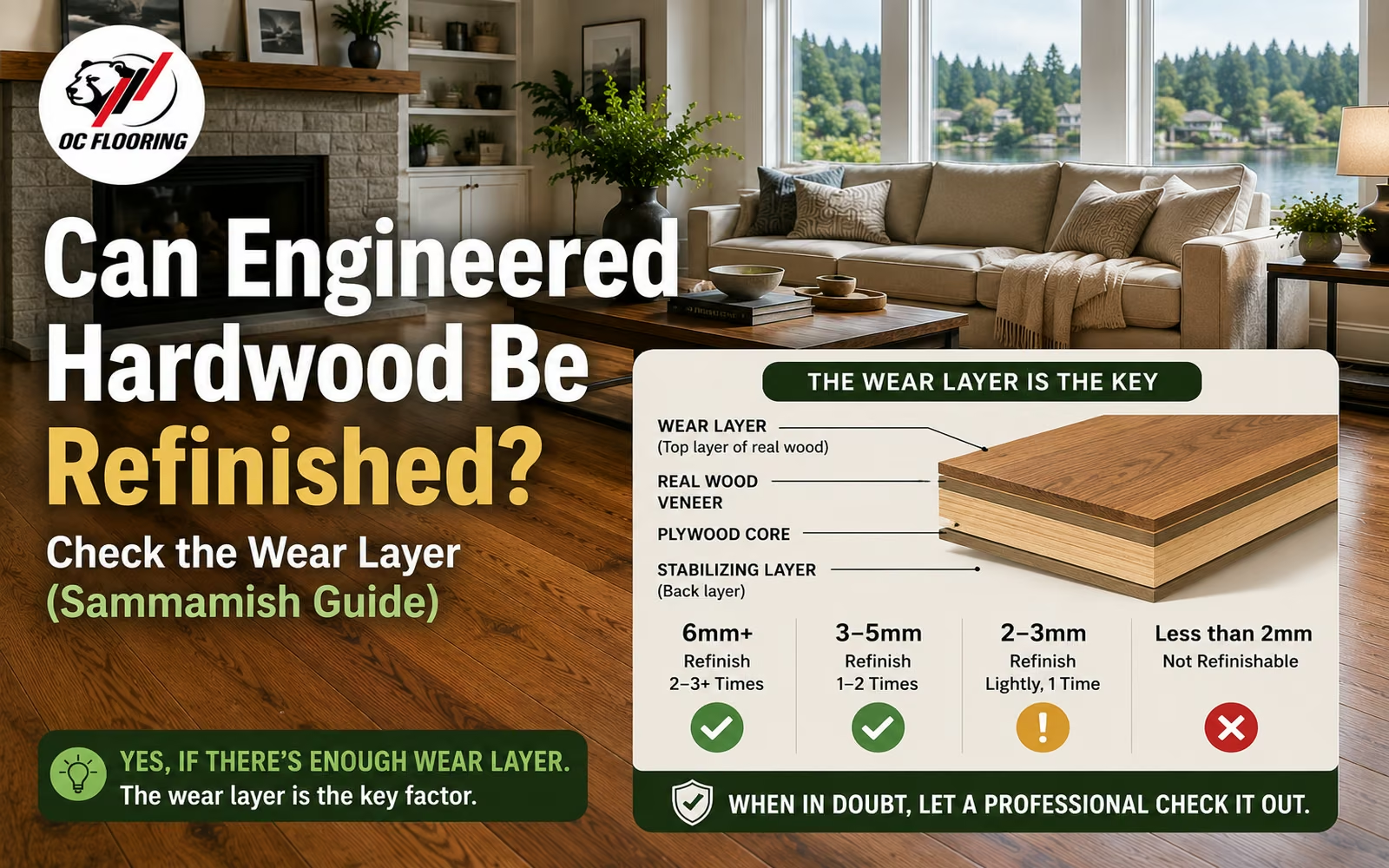
Solid hardwood is the ideal candidate: roughly a quarter inch of sandable wood above the tongue means a lifetime of renewals — the details are in how many times can a floor be sanded. Engineered floors depend entirely on veneer thickness, and factory-finished floors bring their own quirks (aluminum-oxide finishes, beveled edges) — we cover those in refinishing prefinished floors. Around here, the happiest surprises are local: old-growth Douglas fir under the carpet of pre-1950 Seattle and Everett homes, and 80s–90s Eastside red oak with nearly all its sanding life left. Both refinish beautifully — and both are worth far more restored than replaced.
Hardwood Refinishing Basics, Answered
What does hardwood floor refinishing actually involve?
How do I know it's time to refinish instead of just deep-cleaning?
What decisions do I need to make before sanding starts?
Can refinishing remove scratches, dents, and wear paths?
What's the difference between refinishing and restoring a floor?
Should connecting rooms be refinished at the same time?
What finish goes on after sanding?
What does the free in-home estimate cover?
What surprises can show up once sanding begins?
Ready to See What's Under Twenty Years of Wear?
Flat, public pricing — $3.99/sq ft natural, $6.50 with stain, $1.99 recoat — and a free in-home assessment that tells you exactly which one your floor needs. King & Snohomish County, since 2013.
Related reading: 2026 refinishing cost guide · The day-by-day timeline · Recoat vs refinish · Floor refinishing service