



To choose a floor refinishing contractor near you, verify three things before price ever comes up: Washington L&I registration, an active bond, and insurance — all checkable online in about two minutes. Then confirm they use dustless equipment, name their finish system, and put an itemized quote in writing after seeing your actual floor. Walk away from sight-unseen phone quotes and cash-only deals. The full checklist, red flags, and questions to ask are below.
Search “floor refinishing near me” in Seattle or Bellevue and you'll get pages of results that all say roughly the same thing. This post is our attempt to be more useful than that: a hiring checklist you can use on any contractor — including us. We're OC Flooring, refinishing floors across King and Snohomish County since 2013, and we'd rather compete on a level field where every bidder has to show their license, their equipment, and their line items.
Three Things to Check Before You Compare a Single Price
how long it takes to verify any contractor's registration, bond, and insurance on Washington L&I's public “Verify a Contractor” tool. Free, instant, and most homeowners never do it.
registered, bonded, and insured are three separate protections in Washington — not one. A contractor needs all three before a sander touches your floor.
what a proper refinishing estimate should cost you. It should also happen in your home — nobody can quote a floor honestly without seeing its wear, repairs, and board thickness.
The 7-Point Hiring Checklist
- Verify, don't ask. Look the company up on the L&I “Verify a Contractor” site yourself. Confirm the registration is active and check for infractions. Two minutes.
- Proof of insurance. A pro will send a certificate without flinching. Floor sanders and finish products in your home are exactly the scenario insurance exists for.
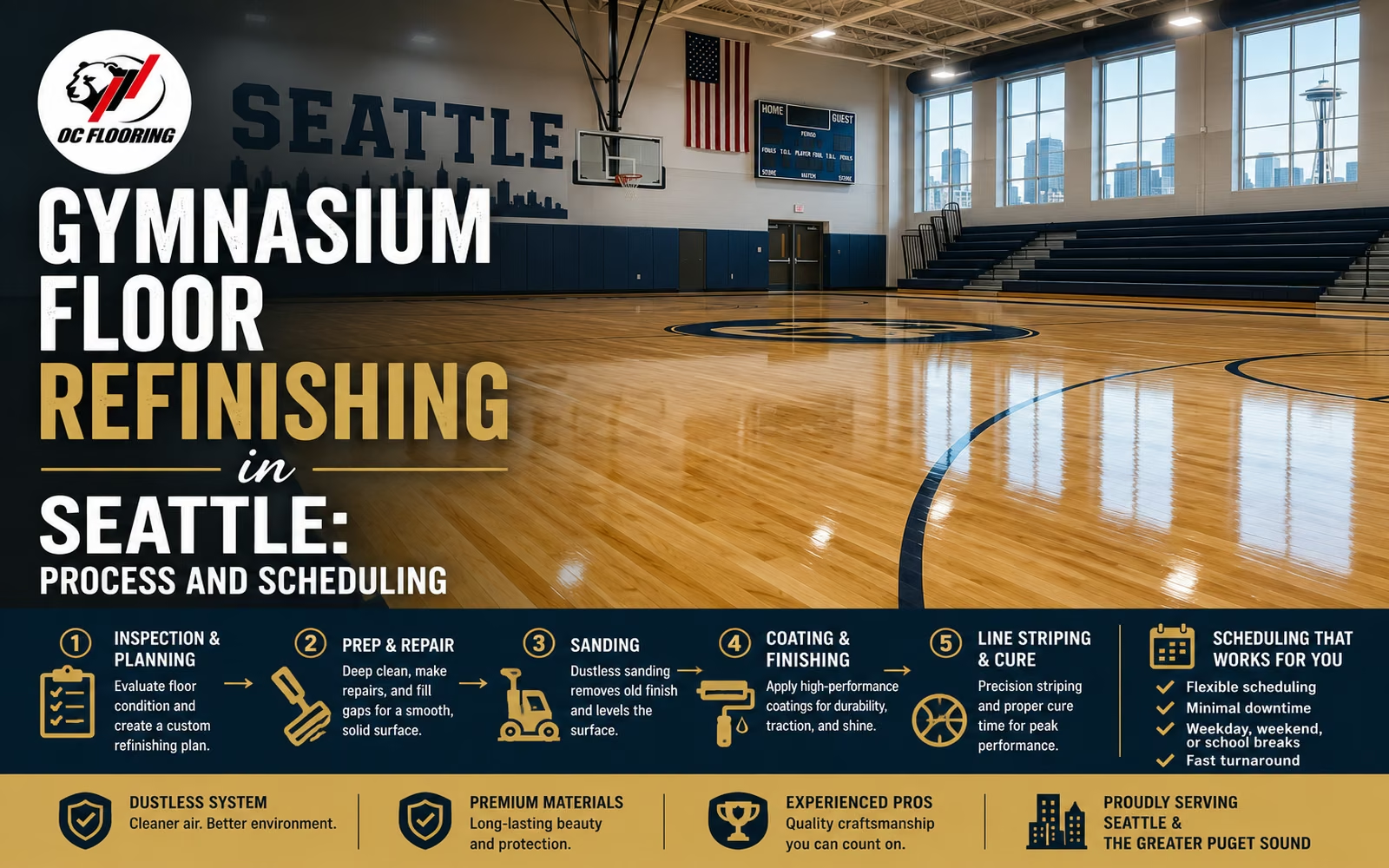
- Dustless equipment, by description. Ask them to describe their dust containment. “The sander has a bag” is a 1995 answer. You want vacuum capture at the machine — here's what dustless actually means.
- A named finish system. “Three coats of poly” is not a spec. You want a brand and line (we use Bona waterborne finishes) so you can look up durability and VOC data yourself.
- An in-home visit before a number. Board thickness, previous sandings, pet stains, and squeaks change the scope. Sight-unseen quotes get revised — upward — later.
- A written, itemized quote. Square footage, rate, stain, repairs, stairs, add-ons, each on its own line. Vague “per room” totals hide the surprises.
- A workmanship warranty in writing. Ours is one year. What matters most is that it's on paper, not a handshake.
Green Flags vs. Red Flags
Green flags
- Active L&I registration they invite you to check
- Detailed in-home walkthrough, moisture meter in hand
- Named finish brand and a sample board or two
- Line-item quote with the sq ft rate printed on it
- A deep local review history you can read yourself
- Straight answers about what refinishing won’t fix
Red flags
- A firm price over the phone, sight unseen
- Cash-only, big deposit up front, “today-only” discount
- No physical presence or review trail in this area
- “We capture 100% of the dust” — nobody does
- Dodges the insurance certificate request
- Quote is one number with no breakdown at all
Questions to Ask — and What Good Answers Sound Like
| Ask this | A good answer sounds like |
|---|---|
| Who actually does the work? | A named crew employed or run by the company — not “we’ll send someone.” |
| How do you handle dust? | Vacuum containment at each machine, plus taping off nearby HVAC returns. |
| What finish, exactly? | A brand and product line, with a reason — durability, VOCs, sheen, dry time. |
| What if you find damage mid-job? | “We stop, show you, and price the repair in writing before continuing.” |
| Have you sanded old Douglas fir? | A story about a specific old house. Fir is soft and unforgiving of heavy drums. |
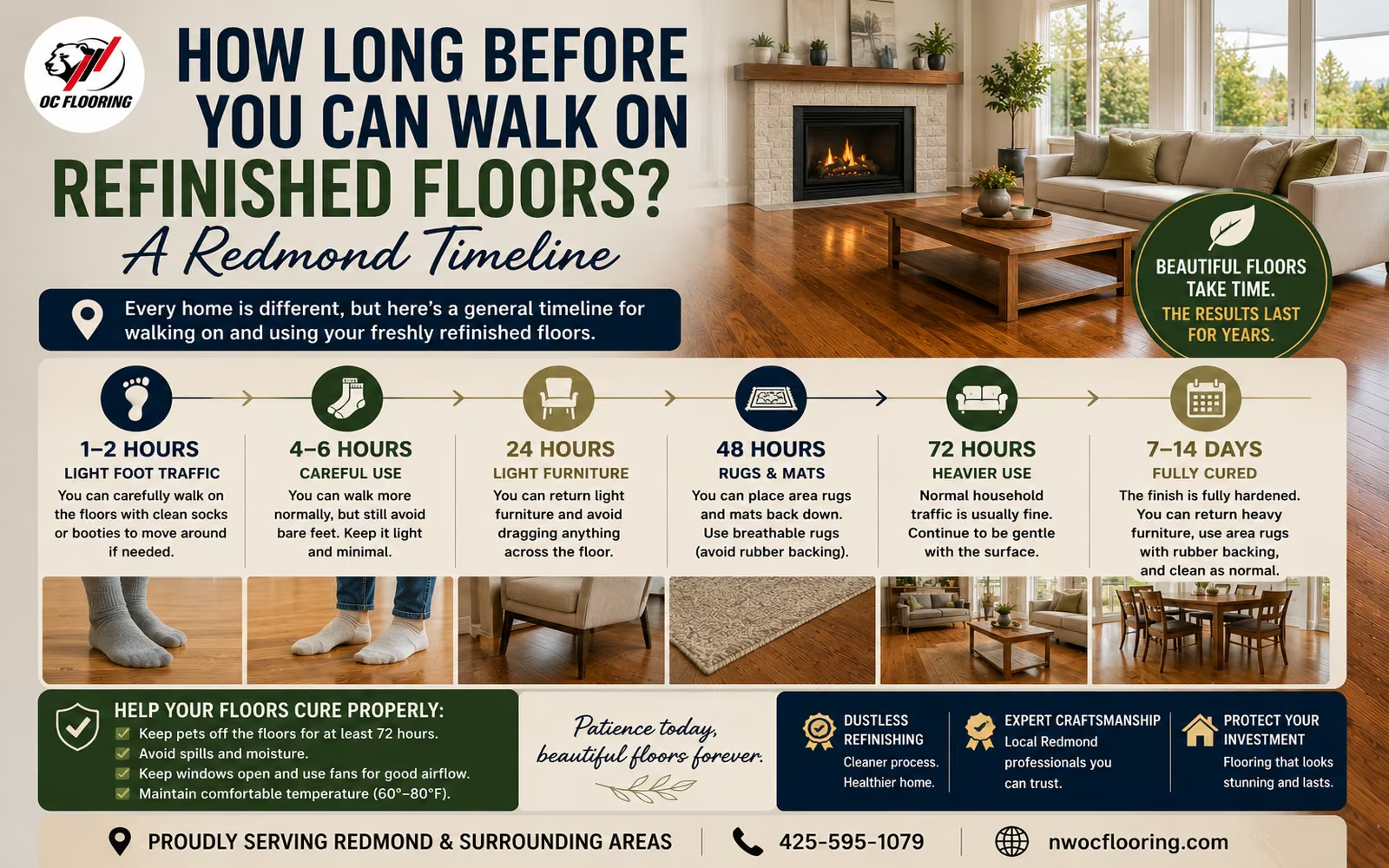
| When can we walk on it? | A staged answer — socks next morning, furniture in days, rugs in two weeks — not “right away!” |
Why Quotes for the Same Floor Vary So Much
Three bids on one floor can land far apart, and it's usually scope, not greed: one includes board repairs and stairs, another excludes them; one prices stain, another assumes natural; one moves your appliances, another leaves that to you. Compare line items, not totals. As a benchmark, our published rates are $3.99/sq ft for natural finish, $6.50/sq ft with stain, and $1.99/sq ft for a screen & recoat, with a 500 sq ft minimum and stair treads at $55–$75 each — full details in our 2026 cost guide. Any bid dramatically below numbers like these is cutting something: coats, grits, insurance, or corners.
A Local Note: The Fir Question
Here's a Seattle-specific filter most national checklists miss. Pre-1950 homes in Seattle, Everett, and Snohomish usually have old-growth Douglas fir floors — softer than oak, prone to gouging under an aggressive drum, and impossible to replace with anything of equal quality. If you own an older home, ask every bidder about their fir experience specifically. Their reaction to that one question tells you a lot. If your home is a 1980s–2000s Eastside build, you almost certainly have red oak, which is far more forgiving — but the checklist above still applies in full.
The 60-Second Reference Call
If you do just one piece of diligence beyond the L&I check, make it this: ask the contractor for one past client in your area and actually call. You need exactly three questions. “Did the final invoice match the quote?” — the single best predictor of your own experience. “How did they leave the house each day?” — tidiness under deadline is a character test. “Would you hire them for your next floor?” — hesitation is an answer. Sixty seconds, and it filters out more bad hires than an hour of website reading. Contractors who do good work hand over references happily; the ones who stall have told you what you needed to know. Reading a company's full public Google review history — not the excerpts on their own site — closes the loop.
Hiring a Refinishing Contractor: Your Questions
Where can I check that a Seattle-area floor refinisher is licensed and bonded?
What questions should I ask a floor refinishing contractor before hiring?
What are red flags when hiring a floor refinishing company?
Should I get multiple quotes for floor refinishing?
Why do floor refinishing quotes vary so much?
Should a refinishing estimate be free?
Does a flooring contractor need insurance as well as a license?
Is the cheapest floor refinishing quote a bad sign?
Run Us Through the Checklist — We'll Pass
Licensed, bonded, insured, dustless on every job, Bona finishes, itemized written quotes, and a 1-year workmanship warranty. Free in-home estimates across King & Snohomish County.
Related reading: What to expect once you’ve hired refinishers · What refinishing costs in 2026 · Our refinishing service · Book a free estimate