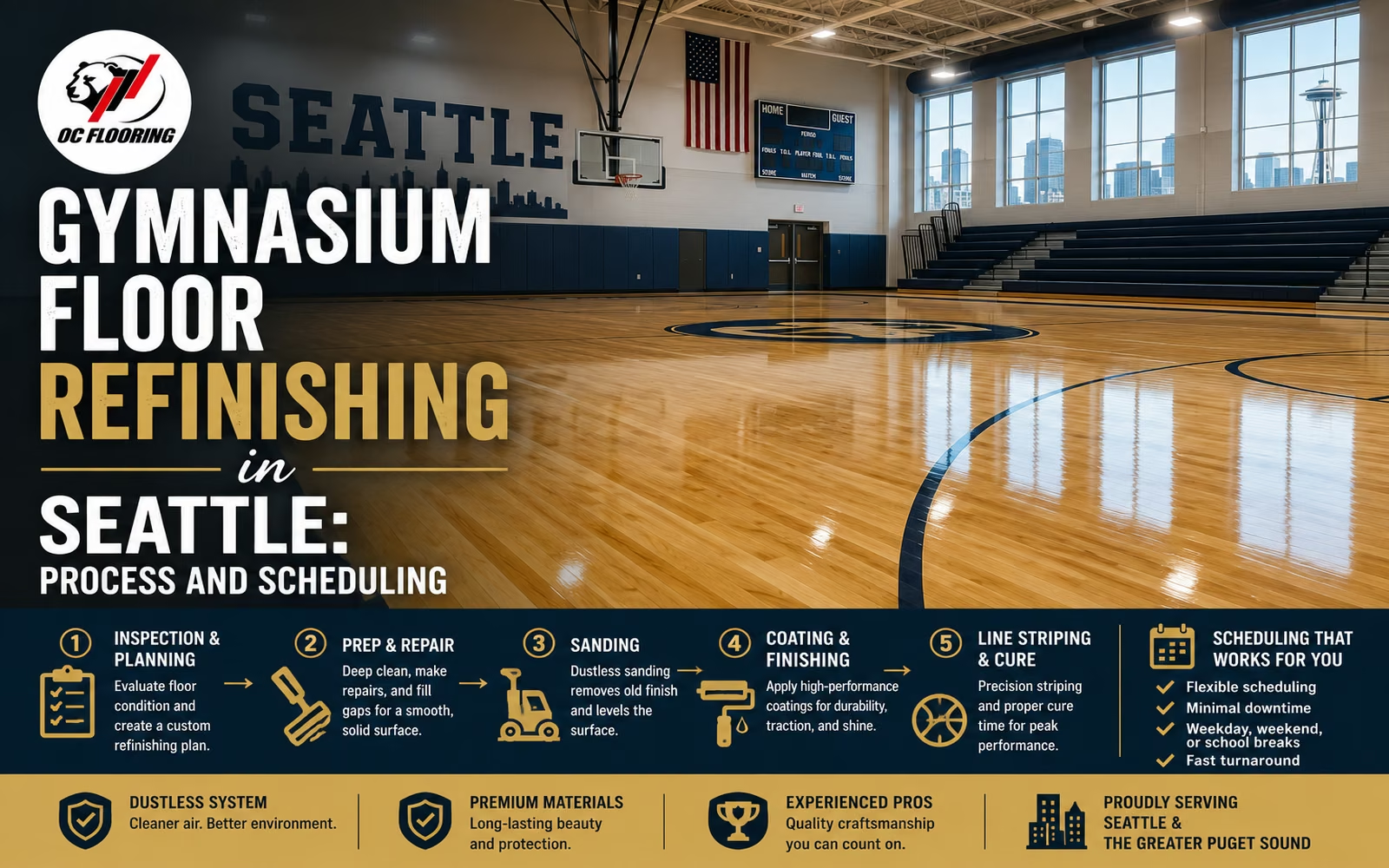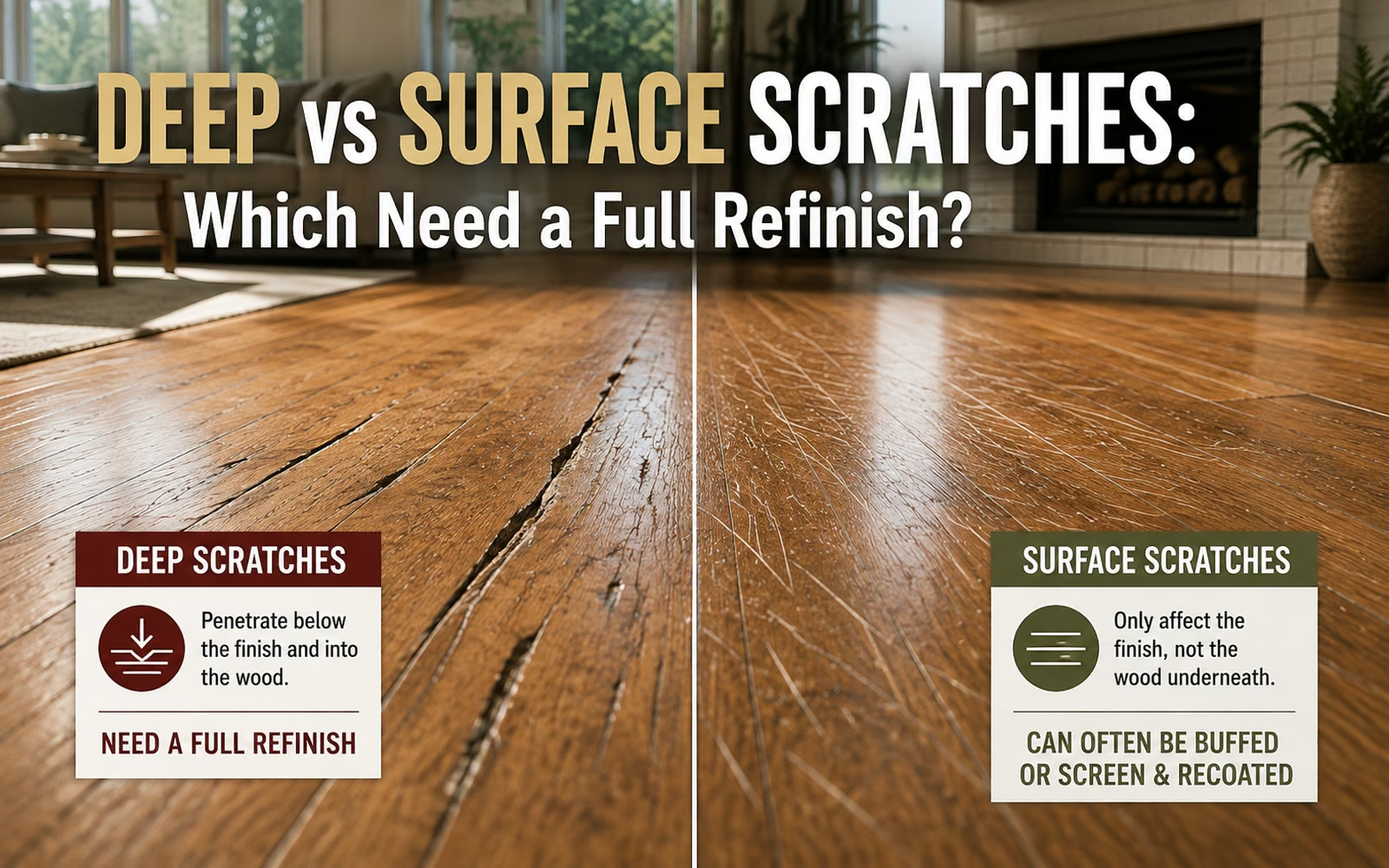





Book 3–6 weeks ahead for a spring or summer start in Seattle; from December through February you can often get on the calendar in 1–2 weeks. Block out 3–5 days on site — one loud sanding day, then quiet finish days — and plan around re-entry times, not just the start date. Most families stay home. Rates run $1.99–$6.50/sq ft.
Refinishing is the easy part to picture: the sanders run, the finish goes down, the floor looks new. What trips homeowners up is the calendar — how far ahead to call, which week of your life to give up, where the dresser goes for six days, and whether your building needs paperwork before a crew can wheel a machine into the elevator.
We're OC Flooring, refinishing floors across King and Snohomish County since 2013, and this page skips two things on purpose. It doesn't teach you how to vet a company — that's our 7-point contractor hiring checklist. And it doesn't cover what happens hour by hour once the crew is inside, which is the day-by-day refinishing timeline. This is everything around those two.
How Far Ahead You Need to Call
typical lead time from approved quote to start date, March through September — the Seattle refinishing rush.
the same calendar in December through February, when interior work never gets rained out and almost nobody books.
how long the crew is in your house — but plan around re-entry, which runs days past the last coat.
The Seattle Booking Calendar, Season by Season
Demand here tracks daylight and listing season almost perfectly. Everyone decides in April that the floors should be done before the graduation party or the listing photos — exactly when every good crew in King County is already booked.
| When you call | Lead time | What to know |
|---|---|---|
| March – June | 4–6 weeks | Peak season — listings, graduations and summer plans all land here |
| July – September | 3–5 weeks | Best drying weather of the year; fastest turnaround between coats |
| October – November | 2–3 weeks | The smart shoulder window; approve by early November to cure before Thanksgiving |
| December – February | 1–2 weeks | Easiest dates to get, with one heating-season caveat below |
| Condo or HOA building | Add 1–2 weeks | Insurance certificate, elevator reservation and building approval each take their own lead time |
The clock starts when a quote is approved, not when you first call. And if you need the work finished by a hard date, count backwards: 3–5 days on site, two to three days before heavy furniture returns, two weeks before area rugs go down. That's why booking in early spring beats late spring by more than the four weeks it looks like.
Why Heating Season Changes the Job (Not Whether to Do It)
Winter refinishing here is good value, and the old objection — wait until you can open the windows — is a holdover from oil-based finish. Rain outside is irrelevant to a waterborne system; what matters is what the furnace does to indoor air.
Forced-air heat routinely pulls a Seattle house to 20–25% relative humidity, which speeds stain and finish flash-off and leaves board gaps at their widest, so anyone offering to fill winter gaps is setting you up for filler squeezing out in July. Run the heat normally, hold the house at 35–50%, and don't crank the thermostat to speed drying.

Planning the Week: Living in Place vs. Staying Out
The honest default is that you stay. Nearly all of the thousand-plus floors we've refinished were in occupied homes, and with waterborne finish the smell is closer to fresh paint than to a chemical event.
Staying elsewhere is right in four cases: the work blocks the only route to your bathroom or bedroom, you chose oil-based finish, someone is pregnant or respiratory-sensitive, or you work from home on calls. More in whether you have to move out for floor work.
Re-entry Times: The Number That Governs Your Week
People plan around the start date, then get surprised by the back end. What you're really scheduling is when each part of your life comes back into the room.
| After the final coat | Waterborne (our standard) | Oil-based poly |
|---|---|---|
| Walk on it in socks | Next morning, ~24 hrs | 24–48 hrs |
| Furniture back, on felt pads | 48–72 hrs | 3–4 days |
| Pets back on the floor | 72 hrs | 4–5 days |
| Area rugs down | 14 days | 30 days |
Stain adds a day to the front of that schedule, not the back — color goes down, dries overnight, then finish coats start. Whichever system you choose, get the re-entry schedule written on the quote rather than quoted from memory on day four.
Pets, Kids and the Kitchen
- Pets go out for sanding day and every finish day, and kids stay off until 72 hours past the last coat. Socks-only is easy for adults and impossible for a toddler, so plan the room as closed rather than as careful.
- If the kitchen floor is in scope, you lose the kitchen. Set up a kettle, coffee maker and cooler in an untouched room first. We move the fridge and range as quoted line items, but the room is closed regardless.
- Sort access the night before. Lockbox, alarm and gate codes, plus one working exterior outlet. A crew locked out at 7:45 a.m. costs half of a day you waited five weeks for.
Seattle Logistics Nobody Warns You About
Everything above is true anywhere. This part is specific to this city, and it's where schedules break — not on the sanding, but on a parking sign, a building rule, or a 1927 electrical panel.
Parking and Loading in Dense Neighborhoods
The dust-containment hose has to reach the truck, and that one fact governs where we park. On a Wallingford, Ballard, Fremont, Capitol Hill or Queen Anne block — restricted parking zones, two-hour limits, narrow streets, alley-only access — a crew can't circle for twenty minutes each morning and still deliver a full day.
Best fixes, in order: give up your driveway for the week, borrow a neighbor's curb space, or on an impossible block look into a temporary street-use permit. Tell us at the estimate that your street is tight; it changes how we stage equipment, not whether we take the job. Our Seattle hardwood floor refinishing page covers where we work in the city.
Condos, Co-ops and HOA Buildings
If your building has a manager, the building is a second client whose schedule you also have to satisfy. Start this the same week you approve the quote.
- A certificate of insurance naming the association, and often the management company, as additional insured. We issue these routinely, but the insurer needs a couple of business days — forward the building's exact wording early.
- A freight elevator reservation with pads hung. Many buildings allow only one window per day across all units.
- The posted work-hour window, commonly 8 or 9 a.m. to 5 p.m. weekdays only. A building that starts at 9 and stops at 4 turns a three-day job into four.
- Any work-authorization form or deposit, plus whether notice must be posted to neighboring units.
Older Homes: Power, Plaster and Pre-1940 Quirks
Seattle's Craftsman and box-house stock is a pleasure to refinish — quarter-sawn fir, tight old-growth grain, floors that come back better than anything you can buy new. It also comes with predictable logistics. Big sanders draw serious amperage, and a house still on knob-and-tube era circuits can't always feed them from a bedroom outlet; we check the panel at the estimate, and the usual answers are the dryer circuit or our own power.
Vibration can disturb loose material in an older home, so remove pictures and fragile shelf items before sanding. Our dustless sanding captures dust at the source, but it does not eliminate every source of dust in the building. If wood flooring is hiding under wall-to-wall carpet, include carpet, pad and tack-strip removal in the refinishing estimate and inspect the exposed wood before committing to restoration. OC Flooring also offers carpet installation in Seattle if replacement carpet better fits the room.
Furniture: Where It All Goes for a Week
Rooms in scope have to be completely empty — not "pushed to the middle," empty — closets included if the closet floor is in the quote. Four strategies work: consolidate into rooms you're skipping this round (free, and what most clients do); phase the house so you shuffle furniture between halves instead of renting storage; put a container in the driveway, checking street rules and HOA policy first; or let us handle the heavy items, since washer/dryer pairs and appliances are quoted as line items and moved by the crew. Packing detail is in our guide to storing furniture during refinishing.
When it comes back, three rules matter more than the timing: felt pads go on before the leg touches the floor, everything gets lifted rather than dragged, and nothing heavy parks in one spot on a curing floor.
Sequencing Floors With Painting and Other Trades
If refinishing is one item on a longer list, order matters more than any individual date. The sequence with the fewest regrets: structural work and window or door replacement first; then cabinets, tile and anything that drills into the floor; then baseboards if you're replacing them; then wall and ceiling paint; then floor refinishing; and finally baseboard paint and touch-ups with the floor protected.
Floors go late for one reason: a new finish should never be a work surface for someone else's ladder. Sanders work close to the base, so a light touch-up afterward is normal — repainting a room over a fresh floor is not. If you're refinishing to sell, work backwards from the photography date rather than the listing date and add the two-week rug window, because stagers want rugs down the moment they walk in.
Book the Estimate First — It's What Holds Your Date
Nothing on the calendar is real until there's an approved written scope, so the estimate visit is the first real step of scheduling. It takes 20 to 30 minutes, it's free, and slots are usually open within days even when production is five weeks out.
We measure the real rooms and look at what a phone quote can't see: how much wood is left above the tongue, which stains will sand out, and whether boards need replacing first. You'll see stain samples on your wood and get a written, itemized quote before we leave.
For budgeting: a natural refinish runs $3.99/sq ft, a refinish with stain $6.50/sq ft, and a screen and recoat $1.99/sq ft, with a 500 sq ft minimum and financing available.
The full local breakdown is in our Seattle refinishing cost guide, and the work itself is on our floor refinishing page. An approved quote and a deposit is what reserves a specific week — a verbal "sometime in May" holds nothing, at our company or anyone's.
The First Month After the Crew Leaves
The finish is walkable the next morning but keeps hardening for about two weeks, so the first month has house rules. Felt pads under every leg before it comes back. No area rugs for two weeks — early rugs trap solvents and can haze the finish underneath.
A dry microfiber dust mop is your daily tool and a pH-neutral hardwood cleaner your weekly one; skip vinegar, and never use a steam mop on wood, because steam forces moisture into seams no finish can block. Then hold indoor humidity at 35–50% through furnace season, as you did during the work. That's the trick to making a $3.99/sq ft refinish last decades.
Booking & Logistics: What Seattle Homeowners Ask
How far ahead should I book hardwood floor refinishing in Seattle?
Can hardwood floors be refinished in winter?
Do I have to move out while my floors are refinished?
How long before furniture can go back on refinished floors?
What do Seattle condo and HOA buildings require before refinishing starts?
Where will the crew park in a dense Seattle neighborhood?
Should I paint before or after refinishing my floors?
Let's Get Your Floors on the Calendar
Tell us the week you have in mind and we'll tell you honestly what's open. Free 20–30 minute in-home estimate, written itemized quote, and your date held the day you approve it. Serving Seattle, Bellevue and all of King & Snohomish County.
Related reading: Contractor hiring checklist · Day-by-day refinishing timeline · Seattle cost guide · Storing furniture