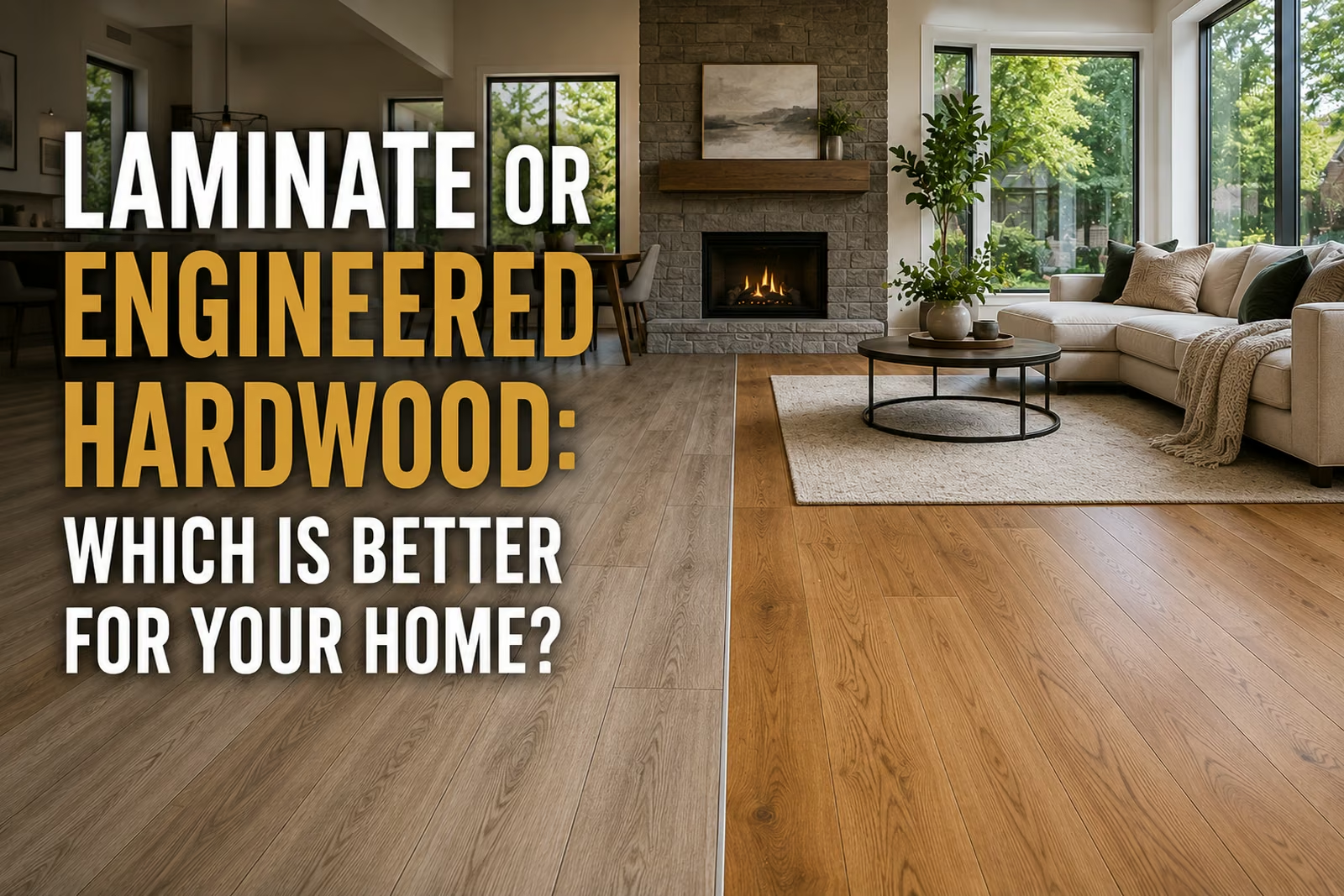




For most Western Washington homes, yes — vinyl plank beats laminate, because vinyl is genuinely waterproof and laminate is only water-resistant. In a region of wet shoes and damp entries, that single difference settles most rooms. But laminate wins categories people don't expect: its harder surface resists scratches better, its embossing often looks and feels more like real wood, and it's frequently cheaper per square foot. The full ten-round scorecard is below.
This is the question we answer most at in-home estimates: vinyl plank or laminate? We install both across King and Snohomish County — we have no horse in this race — and the honest answer is that each one wins real categories. What follows is the scorecard we walk homeowners through, round by round, with the local factors that national comparisons skip.

Three Facts That Frame the Fight
the year laminate flooring was invented in Sweden by Perstorp, later sold worldwide as Pergo. Laminate is the elder statesman here — rigid-core vinyl plank as we know it took off decades later.
a laminate plank’s core is high-density fiberboard — wood fiber — so it behaves like wood around moisture. A rigid SPC vinyl core is largely limestone bound in PVC, which is why water simply doesn’t register.
both are floating click-lock floors that go in over existing subfloors without nails or glue — which is why the choice comes down to the material, not the installation method.
The 10-Round Scorecard
| Round | Vinyl plank (LVP) | Laminate | Winner |
|---|---|---|---|
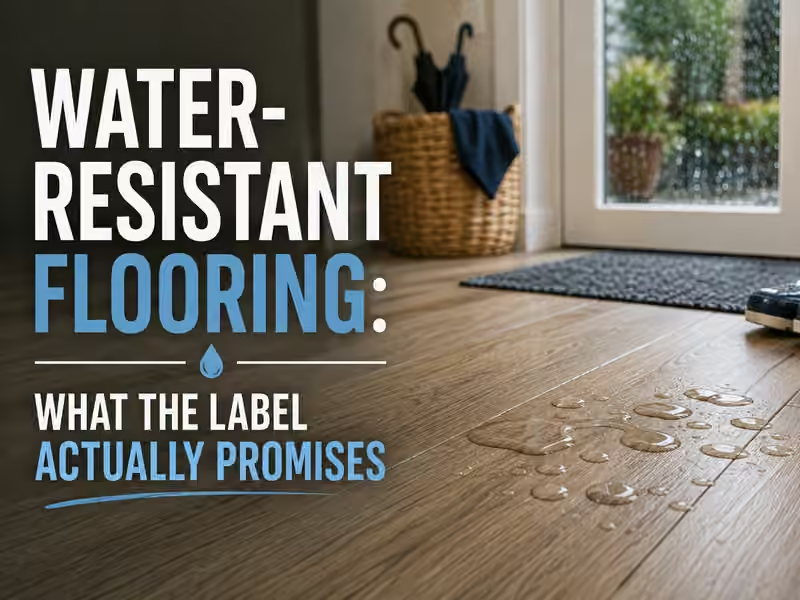
| Water | Waterproof through the plank | Water-resistant at best; core swells if water sits | LVP, decisively |
| Scratch resistance | Good (wear-layer dependent) | Excellent — aluminum-oxide surface is harder | Laminate |
| Wood-look realism | Very good and improving | Often better — deeper embossing, crisper texture | Laminate, narrowly |
| Feel & sound underfoot | Can feel thin without a good pad | More solid, wood-like footfall with proper underlayment | Laminate |
| Comfort & warmth | Slightly softer, less clacky | Harder surface | Tie, leaning LVP |
| Kitchens, baths, laundry, basements | Yes to all | We don't recommend it in any of them | LVP |
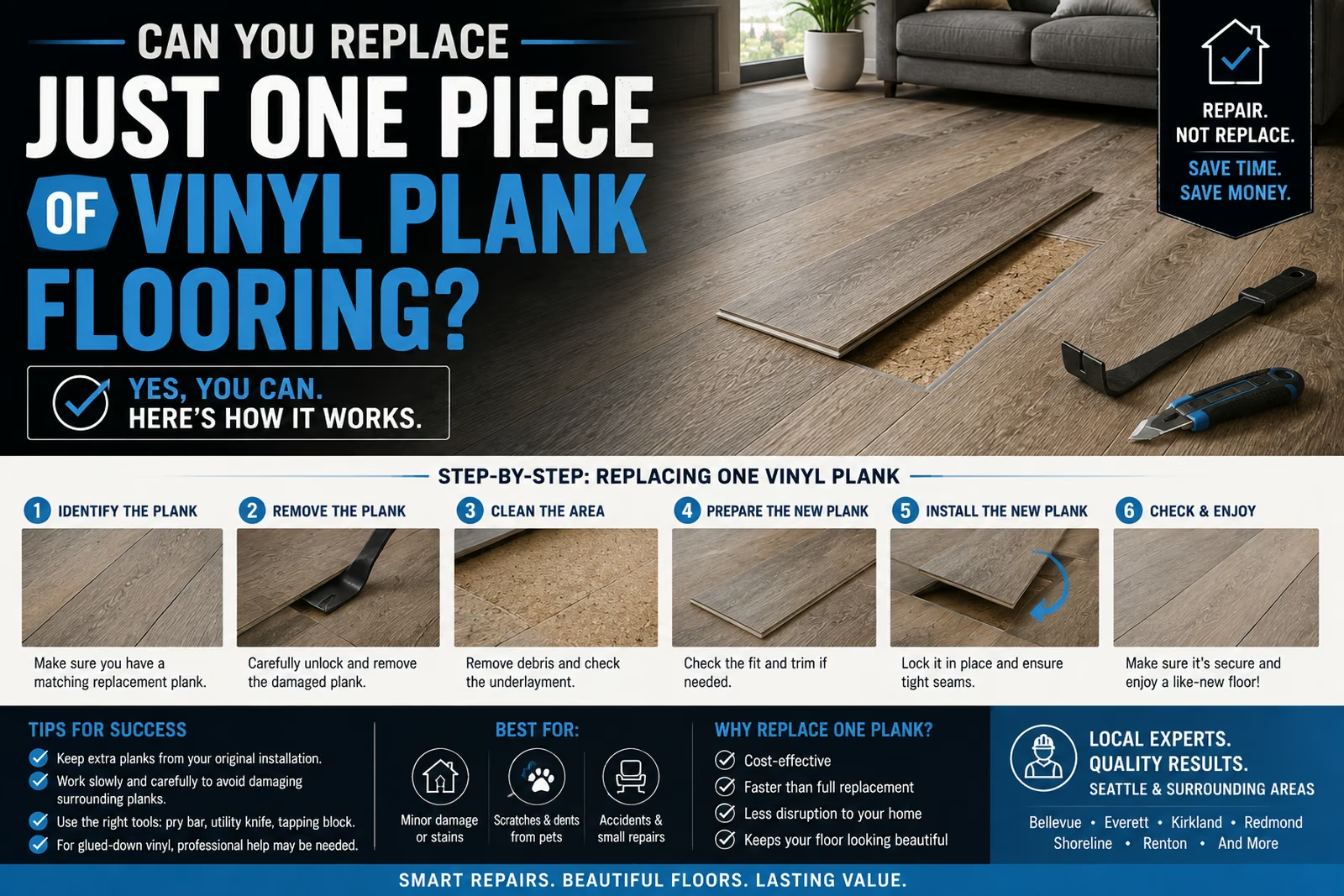
| Repair | Single planks replaceable; click LVP can be lifted & relaid | Swollen boards mean replacing sections | LVP |
| Longevity | Wear layer determines it; can't be refinished | Can't be refinished; surface very durable in dry rooms | Tie |
| Price | Wide range; quality costs | Often less for comparable looks | Laminate |
| Resale story | “Waterproof floors” is a selling line here | Reads as budget unless high-end | LVP |
The Round That Decides It Here: Water
Score it honestly and the match is closer than the marketing suggests — laminate takes scratch resistance, realism, and price. So why does vinyl win most of our local installs? Because the categories aren't weighted equally in Western Washington. A floor that loses the water round loses the kitchen, both bathrooms, the laundry room, the mudroom, and the entire basement level. Laminate's fiberboard core is wood fiber: let water stand at a seam — a dishwasher drip, a pet bowl, a forgotten window left open to October — and edges swell. And swollen laminate does not recover; that damage is one-way.
Our practical rule from years of service calls: laminate is a fine floor for rooms where water is an accident; it's the wrong floor for rooms where water is a schedule. In this climate, more rooms fall into the second group than people expect — we count wet entries and mudrooms among them, not just kitchens and baths.
Where Laminate Genuinely Wins
Laminate deserves a better reputation than “the cheap one.” Its aluminum-oxide-infused wear surface is harder than vinyl's urethane wear layer, which means better resistance to scratches, chair scrapes, and fading. Its thicker, denser board gives a more solid, wood-like sound and feel underfoot — step on good laminate and good LVP back to back and most people pick the laminate blind. And its printed layer with deep registered embossing frequently out-realisms vinyl at the same price. For dry bedrooms, upstairs hallways, offices, and family rooms — especially on a budget — laminate is often the smarter buy.
What They Cost Installed
Material pricing overlaps heavily — entry laminate runs cheaper than entry LVP, and premium versions of both climb well past each other. Installation is where the numbers firm up: both float in with click-lock joints, and our installation labor runs $3–$4.25 per square foot (materials separate) for either product. Since labor is essentially the same, the real budget question is the material itself — and whether a water event down the road turns the cheaper floor into the more expensive one. Financing and free in-home estimates are available if you want real numbers for your rooms.
The Local Notes
Two Western Washington specifics tip this comparison further than national guides admit. First, our homes over vented crawlspaces see real seasonal humidity swings, and laminate's wood-fiber core responds — it expands in damp autumns and can peak or gap at seams if installed tight; we cover the mechanics in how humidity moves hardwood and laminate. Rigid SPC vinyl barely reacts. Second, the daylight basements common across Seattle, Shoreline, and Everett hillsides sit on slabs where we simply won't install laminate — LVP owns that level of the house, as our PNW climate guide explains. If you're weighing these two, the honest shortcut: count your wet rooms. Zero wet rooms in the plan? Laminate competes hard. One or more? The comparison is already over.
The Decision, Distilled
- Any kitchen, bath, laundry, entry, or basement is involved
- Pets' water bowls and accidents are daily reality
- You want one floor running through wet and dry rooms alike
- You want single-plank repairability after mishaps
- “Waterproof” needs to be true, not a marketing word
- The rooms are reliably dry — bedrooms, offices, upstairs halls
- Scratch resistance is your top worry (big dogs, rolling chairs)
- You want the most convincing wood look and feel per dollar
- The budget is tight and the look matters
- You're fine keeping water-prone rooms in a different material
Vinyl Plank vs. Laminate: The Questions We Hear
Is vinyl plank better than laminate flooring overall?
Which lasts longer, laminate or vinyl plank?
Is laminate cheaper than vinyl plank installed?
Which looks more like real hardwood, laminate or LVP?
Can I put laminate in a kitchen if I'm careful?
Do laminate and vinyl plank install the same way?
Which is quieter to walk on, vinyl or laminate?
Can I use laminate upstairs and vinyl plank downstairs?
Which is better for resale in the Seattle area?
Still Torn? Compare Both in Your Own Rooms — Free
We install vinyl plank and laminate every week and have zero stake in which you pick. Free in-home estimates with straight answers, all over King & Snohomish County.
Related reading: Vinyl plank & laminate installation · How humidity moves laminate & hardwood · Waterproof flooring, room by room · Best flooring for the PNW climate