




Sunlight changes hardwood's color at the surface — some species bleach lighter, others darken — and the fix depends on depth. Recent, mild fading often evens out on its own within weeks to months once rugs move and light reaches the whole floor. Established damage needs sanding and refinishing ($3.99/sq ft natural), which removes the discolored layer completely because sun damage is only paper-deep. Films and window coverings slow future fading; nothing stops it entirely.
Pull up an area rug that's lived in a sunny room for five years and there it is: a crisp rectangle in a different color, like a photograph of the rug burned into the floor. Sun damage is the slowest-moving problem a hardwood floor has — and one of the most misunderstood, because it isn't dirt, isn't finish failure, and behaves completely differently depending on the wood species. Here's what's actually happening, what fixes itself, and what needs the sander.

The Science in Three Cards
the natural polymer that glues wood fibers together — and the part of your floor that ultraviolet light slowly breaks apart. Fading isn't dirt or a failing finish; it's photochemistry happening in the top whisper of the wood.
modern double-pane windows block a large share of ultraviolet light, but visible light and solar heat fade floors too. Even a new Bellevue home develops rug shadows — just on a slower clock.
sunlight bleaches walnut lighter while it turns cherry darker. Same window, opposite reactions — which is why one neighbor's “sun damage” means washed-out boards and another's means a dark picture-frame around the rug.
Why Wood Changes Color in the Sun
Three ingredients of daylight attack wood color: ultraviolet light does the heavy lifting by breaking down lignin and the wood's natural pigments; visible light continues the job more slowly; and solar heat accelerates every reaction while also drying the boards. The finish participates too — traditional oil-based polyurethane ambers with age, and sunlight speeds that yellowing dramatically. So a “faded” floor is often two changes stacked: the wood shifting one direction and an old amber finish shifting another. This is one reason the waterborne finishes we use matter — they're non-yellowing, so at least the finish layer stops playing.
Every Species Reacts Differently
| Species | What sunlight does | Speed |
|---|---|---|
| Red & white oak | Mellow slightly warmer; subtle overall | Slow — years |
| Maple | Yellows gently over time | Slow to moderate |
| American cherry | Darkens into deeper red-brown | Fast — noticeable in months |
| Brazilian cherry & exotics | Darken dramatically | Very fast — weeks can show |
| Walnut | Fades lighter, losing its dark chocolate depth | Moderate |
| Douglas fir (old Seattle homes) | Deepens toward amber-orange | Moderate — decades of patina |
This table explains most sun-damage surprises. Owners of oak floors barely notice a decade of light exposure. Owners of Brazilian cherry — popular in 2000s-era Eastside homes — can watch a rug shadow form in a single bright summer. And in pre-1950 Seattle and Everett houses, that glowing orange fir patina is sun and age; many owners have paid good money trying to buy that color new.
The Rug-Shadow Problem — and the Free Fix
Here's the counsel that surprises people: if the mismatch is recent and mild, don't sand — wait. Wood color from light exposure is partly self-correcting. Take up the rug, move the couch, and let the pale (or dark) patch see the same light as the rest of the floor. Species that darken will catch up to their surroundings; bleached areas re-tan the same way. Depending on species and window exposure, meaningful blending takes weeks to a few months — free, zero-risk, and it works far more often than homeowners expect.
Where waiting fails: shadows that took a decade to form, two-tone lines burned deep at a slider door, or floors where an ambered oil finish did half the discoloring. Light can't un-yellow old polyurethane. That's when the fix moves to machinery.
When the Fix Is Refinishing
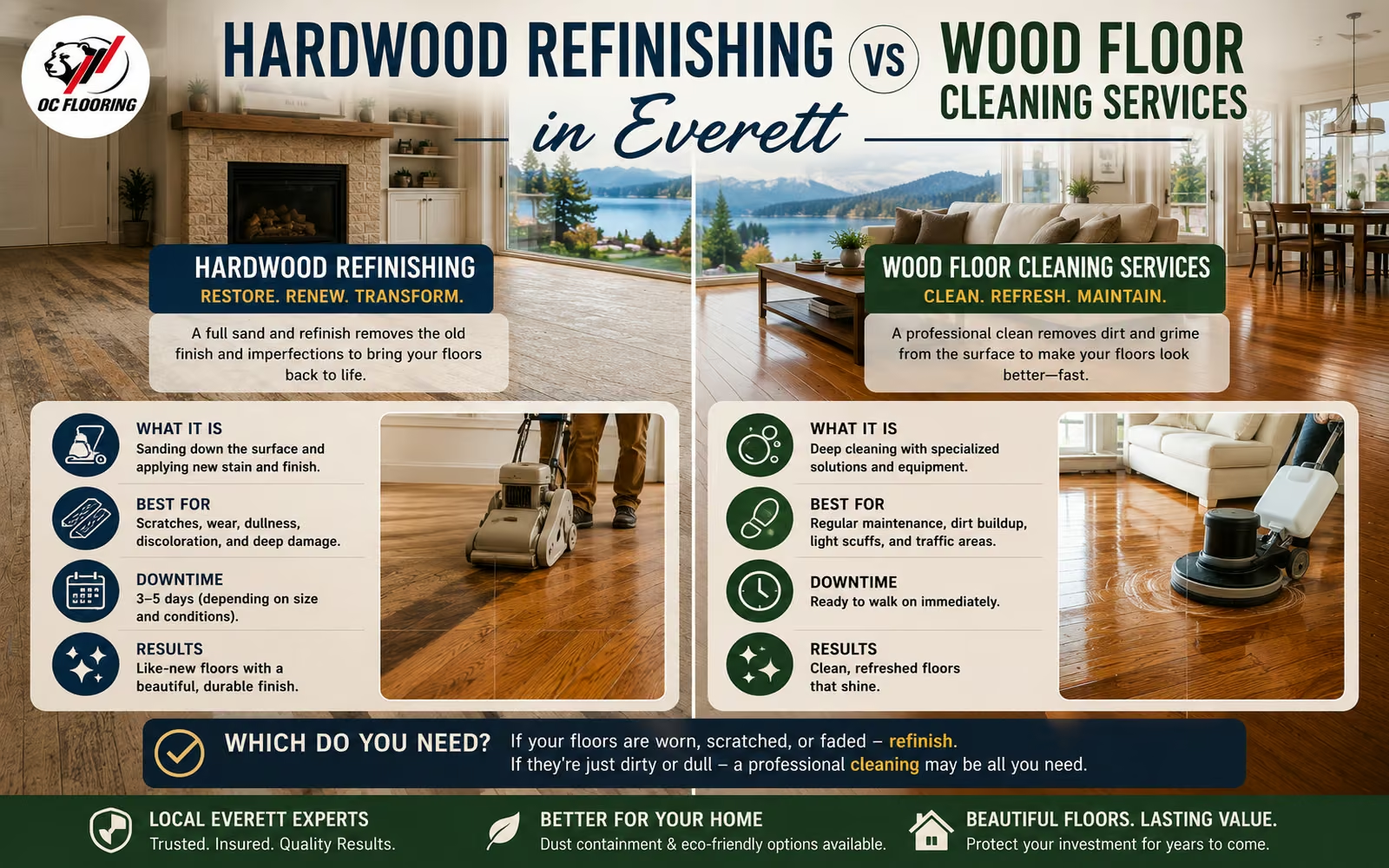
The good news hiding in all this photochemistry: sun damage is shallow. The color change lives in the top fraction of a millimeter — well within the first sanding pass. A full sand and refinish removes the faded layer entirely and exposes wood the sun has never touched, resetting the whole floor to one uniform color for $3.99/sq ft natural or $6.50/sq ft if you take the opportunity to re-stain. One flag from experience: a screen & recoat cannot fix sun fade — it renews the finish but the color mismatch is in the wood, so it just seals the shadow under fresh gloss. Anyone quoting you a recoat for fading is solving the wrong problem.
Slowing It Down Next Time
Worth doing
- Rotate rugs and furniture seasonally so exposure evens out
- Use UV-filtering window film on south- and west-facing glass
- Choose a non-yellowing waterborne finish at your next refinish
- Close blinds during peak sun in rooms you rarely use
- Accept gentle, even patina — it's how wood is supposed to age
Not worth it
- Blocking every window forever — you live here, and light is the point
- Expecting Low-E glass alone to stop fading; it only slows it
- Recoating to “fix” color — the mismatch is in the wood, not the finish
- Replacing a sun-faded floor that one sanding would fully reset
- Fighting fast-coloring exotics — manage exposure or embrace the change
A local note: don't let Seattle's cloud cover lull you. UV passes through overcast, our summer days run sixteen hours long, and south- and west-facing windows in view homes — Sammamish plateau, Mukilteo bluffs, anything staring at the Sound — deliver serious light. The floors with the strongest rug shadows we see are rarely in the sunniest rooms; they're in the rooms where nothing ever moved.
Sun-Faded Floor Questions, Answered
Why is the floor a different color under my area rug?
Which hardwood species change color fastest in sunlight?
Can sun-faded hardwood be fixed without sanding?
How long does it take rug shadows to blend away on their own?
Do UV window films actually protect wood floors?
Does a refinish remove sun fading completely?
Will the new finish stop future sun damage?
Is sun exposure structurally harmful or just cosmetic?
Do floors fade even in Seattle's cloudy climate?
Sun-Faded Floors? We'll Tell You If They Need Sanding or Just Time
Free in-home look at the fade, the finish, and the species — and a straight answer, even when the answer is “move the rug and wait.” Serving King & Snohomish County since 2013.
Related reading: Hardwood refinishing: the complete guide · Recoat vs full refinish · Choosing a stain color · Floor refinishing service