



Refinish if the problems live in the finish or the top 1/16″ of wood — scratches, dullness, gray traffic lanes, sun fade, most pet stains, dated color. Replace when damage goes through the board or the wear layer is spent: widespread cupping or buckling, rot, or a floor already sanded to the nails. Our working rule: if more than ~25% of boards need replacing, full replacement usually wins the math. Refinishing runs $3.99–$6.50/sq ft; new hardwood lands at roughly 2–3× that, all-in. The triage guide is below.
This is the fork-in-the-road question we answer most at estimates across King and Snohomish County, and the good news is that it’s rarely a judgment call — the floor itself usually makes the decision once you sort the damage into two piles: problems that live in the top sixteenth of an inch (sandable) and problems that go deeper (structural). Here’s the same triage we run in your living room, plus the cost math with real numbers.
The Decision in Three Numbers
our board-replacement threshold. When more than about a quarter of the boards in a room need swapping, patch-and-refinish loses its cost advantage and full replacement starts winning.
what new hardwood typically costs versus refinishing the wood you own, once labor ($3–$4.25/sq ft), materials, tear-out, and disposal are all counted.
what a refinish buys before the next one — and a solid floor holds 4–6 refinishes, so “keep the floor” is rarely a short-term patch. It is decades.
Damage Triage: What Sanding Fixes and What It Can’t
| What you’re seeing | Refinish? | Why |
|---|---|---|
| Scratches, dullness, gray traffic lanes | Yes | All finish-layer problems — a sanding removes them completely |
| Sun fade, dated orange/yellow color | Yes | New bare wood, new color choice — stain if you like |
| Most pet stains (surface to moderate) | Usually | Many sand out or bleach out; deep black spots may need board swaps — see our pet-stain guide |
| A few damaged or cracked boards | Yes, with repairs | Boards get woven in first, then the whole floor sands as one |
| Minor seasonal gapping | Yes | Normal PNW winter behavior; refinishing neither causes nor cures it |
| Widespread cupping or buckling after a water event | Usually no | If boards moved structurally, sanding flat often fails as they keep moving; source must be fixed first |
| Rot, insect damage, soft spongy areas | No | Structural — replacement plus subfloor correction |
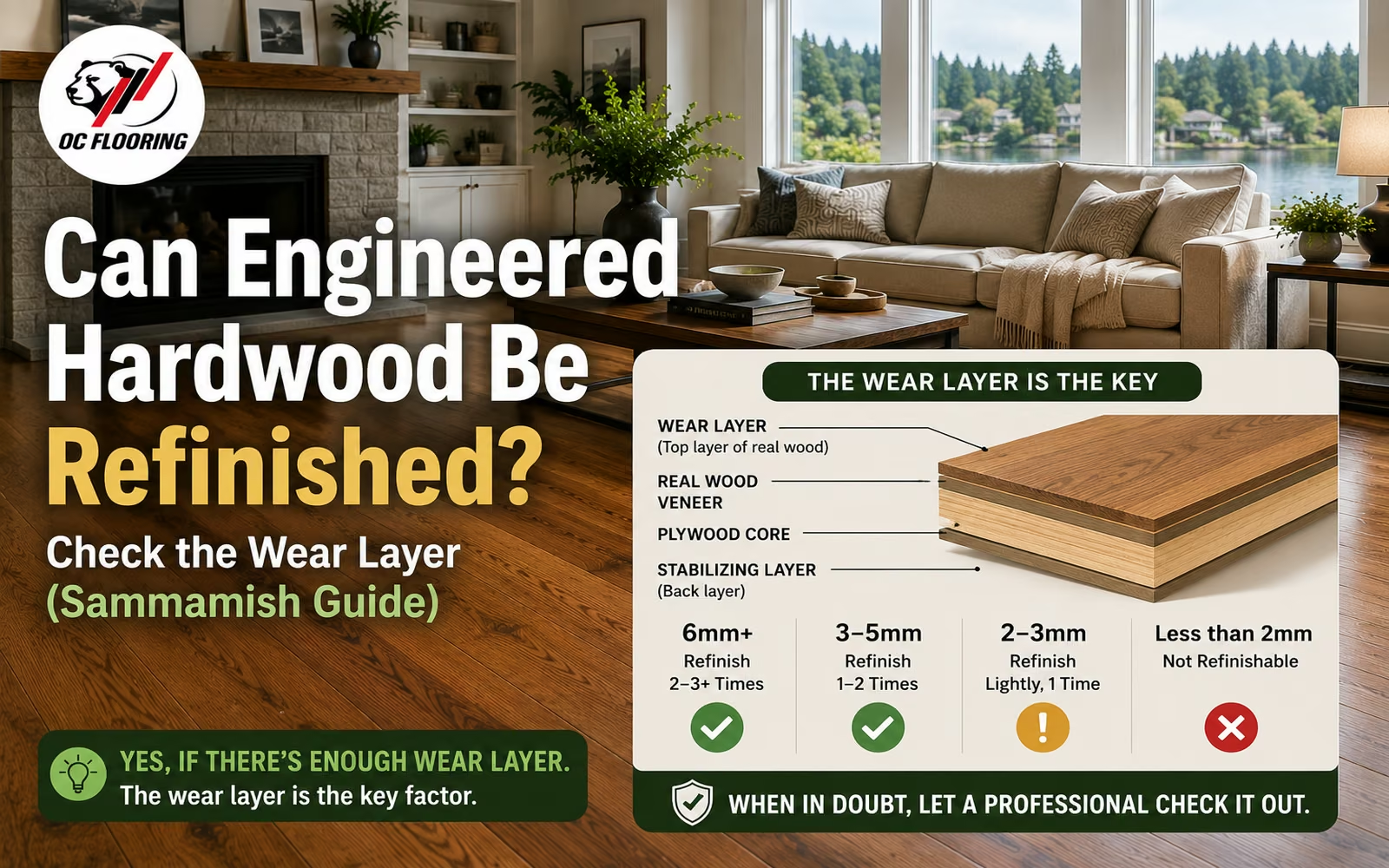
| Wear layer sanded to the tongue/nails | No | Nothing left to sand — this floor is done, honorably |
The Middle Path Everyone Forgets: Board-Level Repair
The refinish-or-replace question is often framed as all-or-nothing, but the most cost-effective answer on damaged-but-sound floors is the hybrid: weave in replacement boards where damage is deep, then refinish everything as one surface. Done properly — boards laced into the existing pattern, not patched in as a visible rectangle — the repair disappears completely under the new finish, because the entire floor gets sanded and coated together. This is how we save floors with a pet-stained corner, a water-marked dishwasher zone, or a wall-removal scar from a remodel. It’s the core of our flooring repair service, and it’s the option phone quotes never mention because it requires actually looking at the floor.

The Cost Math, Side by Side (1,000 sq ft example)
| Option | What it costs | What you end up with |
|---|---|---|
| Screen & recoat | ~$1,990 ($1.99/sq ft) | Renewed finish over sound wood — maintenance, not restoration |
| Full refinish, natural | ~$3,990 ($3.99/sq ft) | Functionally new surface on the wood you own, 10–15 years of life |
| Refinish + stain | ~$6,500 ($6.50/sq ft) | New surface plus a new color identity |
| Replace with new hardwood | $3–$4.25/sq ft labor + materials + tear-out & disposal | A new floor — at typically 2–3× the refinishing total, plus longer disruption |
Two honest footnotes. First, replacement isn’t only more expensive — it’s slower: tear-out, disposal, acclimation of new wood (3–7 days for solid stock in our climate), installation, then sanding and finishing anyway if you choose site-finished flooring. Second, some floors deserve replacement even when refinishing is technically possible — if you want a different species or plank width, or the floor is a thin engineered product on its last recoat, putting money into old wood is sentiment, not strategy. Our installation team handles that side of the fork.
When Replacement Genuinely Wins
Keep and refinish when…
- Damage is cosmetic: finish wear, scratches, fade, surface stains
- The floor is solid hardwood with wear layer remaining above the tongue
- Damage is deep but concentrated — a corner, a doorway, one appliance zone
- It’s pre-1950 old-growth fir or oak: irreplaceable material at any budget
Replace when…
- More than about a quarter of the boards need repair
- Water, rot, or insects have reached the boards’ full depth or the subfloor
- The wear layer is spent — nails visible, edges splintering, tongues cracking
- You want a fundamentally different floor: new species, wide planks, or a move to LVP in wet zones
The Local Wrinkles That Tip the Scales
Two Puget Sound specifics worth weighing. Old fir is worth heroics: pre-1950 Seattle, Everett, and Snohomish homes carry old-growth Douglas fir that cannot be bought new — we’ll weave, patch, and conservatively sand to save it, and the result outclasses anything at the lumberyard. Moisture history matters more here: with 150+ rainy days and vented crawlspaces under most older homes, cupped floors are common — and cupping that came from a chronic crawlspace problem will return after refinishing unless the moisture source is corrected first. We check subfloor moisture at every estimate for exactly this reason; it’s the difference between refinishing a floor and refinishing a symptom.
Refinish vs. Replace: The Deciding Questions
How much money does refinishing save compared to replacing the floor?
How damaged is too damaged to refinish?
Can water-damaged or cupped floors be refinished?
Can just one section of a hardwood floor be replaced?
Do pet-stained floors have to be replaced?
Will refinishing fix squeaks and creaks?
Which adds more resale value, refinishing or new floors?
How long does replacement take compared to refinishing?
My floor has been sanded several times already. Is it done?
Not Sure Which Way to Go? Get an Honest Answer, Free
We measure the wear layer, check the moisture, price both paths — and tell you straight when the cheaper one is the better one. Free in-home assessments across King & Snohomish County.
Related reading: How many sandings are left in your floor? · Saving floors with pet stains · Best flooring for the PNW climate · Board repair & weaving service